
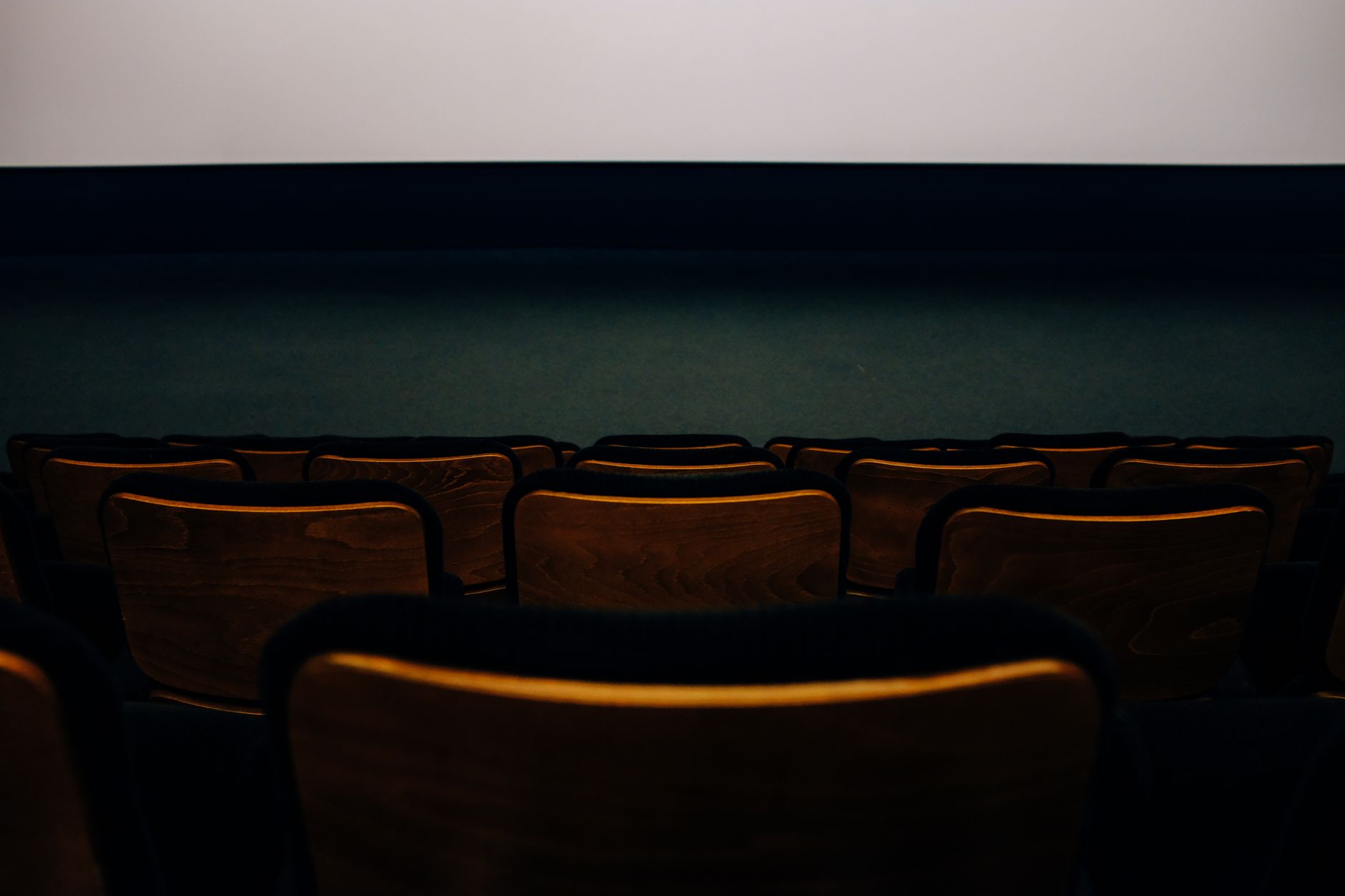
Every film tells you something. The best films also decide what not to tell you. Negative space in filmmaking is the deliberate gap between what the story shows and what it withholds: the conversation that stops before the hard thing is said, the door that closes just before the violence, the character backstory that never arrives. Used with precision, those absences carry more emotional charge than anything that fills the frame.
This isn't the same as ambiguity for its own sake. Vague storytelling frustrates audiences because they sense the filmmaker hasn't committed to anything. Negative space, done well, makes audiences feel the shape of something clearly even when they can't name it. It's the difference between a puzzle with missing pieces and a sculpture where the hollow is the point.
How restraint creates pressure
Think about the way a scene builds tension when a character clearly wants to say something and doesn't. The camera holds. The pause extends past comfort. The other character looks away. Nothing is spoken and yet the scene communicates something precise: shame, love, fear, grief. That pressure comes entirely from what's withheld. Fill it with dialogue and you release it. Leave it empty and it accumulates.
Directors who understand this use negative space structurally, not just moment to moment. Chloe Zhao's films often refuse to explain a character's history directly. Nomadland gives you Fern's grief obliquely, through her objects and her silences, not through scenes of remembered loss. The result is that audiences construct her emotional life themselves, which makes it feel owned rather than delivered.
That act of construction is the real mechanism. When viewers fill in a gap, they invest. The inference they draw feels like their own discovery. Michael Haneke has built an entire career on this principle: his films withhold motivation, backstory, and resolution in ways that leave audiences genuinely unsettled, because the discomfort can't be discharged by explanation.
Visual negative space vs narrative negative space
There are two distinct registers where filmmakers can apply this idea. Visual negative space is compositional. It's the use of empty frame area to direct focus, isolate a subject, or create unease. Deep focus cinematography plays with this constantly, populating the background and leaving the audience to decide what matters. A character standing in a wide, empty frame reads as isolated or exposed. That's the visual register doing emotional work.
Narrative negative space operates at the level of plot and character. It's the backstory that doesn't appear as a flashback. It's the relationship whose breakdown we infer from behaviour rather than witness. It's the event the screenplay refers to in three lines of dialogue and never dramatises. Great films often identify which scenes would be redundant and cut them before they exist.
Both registers amplify each other. Slow burn films tend to use visual negative space in tandem with narrative withholding: long static shots of empty interiors, characters filmed from behind, action that happens off-screen. The combined effect is a film that trusts its audience to tolerate incompleteness and rewards them for doing so.
The screenplay's role in deliberate omission
Negative space doesn't happen in the edit. It's a writing decision. A screenplay that over-explains its characters leaves nothing for the director or the actors to find. The best scripts identify the load-bearing silences: the moments where a character must not speak, the scenes the story can afford to skip, the motivation that should remain partially obscure.
Aaron Sorkin is famous for the opposite approach: dialogue that fills every gap with wit and argument. His scripts work for what they are, but they leave no room for the audience to breathe into the story. Contrast that with a Kelly Reichardt script, where characters often fail to articulate exactly what they're feeling and the film is richer for it. Both approaches are craft. They produce fundamentally different emotional experiences.
What screenwriters and directors who use negative space share is a willingness to trust the audience. It's a risk. Some viewers will misread the gap as a mistake rather than a choice. But films built on that trust tend to accumulate meaning over time in ways that heavily explained work can't. They're the films people return to and find something new.
Negative space in sound
Silence in a film's sound design is its own form of negative space. Most editors fill scenes with ambient noise, music, or effects because silence reads as a technical error in a world accustomed to constant sound. But a deliberate cut to silence can be the loudest moment in a film. The scene stops. The audience notices. Their attention sharpens.
Sound design shapes viewer experience most powerfully at its extremes: when it's overwhelming and when it disappears entirely. Both are active choices. Filmmakers who understand the value of silence treat it the same way they treat music: as something to be composed, placed deliberately, and kept scarce enough to retain impact.
Composer Ennio Morricone understood this at the musical level. His scores for Sergio Leone films are famous for their dramatic themes, but equally important are the stretches of no music at all, extended sequences where the image and the diegetic sound carry everything. When the theme finally enters, it hits harder because silence prepared the room for it.
What gets lost when filmmakers over-explain
The impulse to explain is understandable. Studios worry audiences will be confused. Producers ask for clarity. Test screening audiences circle moments that felt unresolved. But over-explanation has its own cost. It treats the audience as passive recipients rather than active participants. It removes the pleasure of inference. And it collapses the emotional resonance that ambiguity creates into something flat and finalised.
Exposition that explains character motivation destroys the experience of watching that motivation play out. A flashback that shows why a character is afraid removes the more interesting work of watching them behave fearfully and drawing your own conclusions. The backstory scene is often the scene that kills the film's mystery without replacing it with anything.
The most consequential negative spaces are the ones that don't exist in the finished film because they were cut from the screenplay first. The director who asks "do we need this scene?" and answers honestly is already working with the tool. The deleted scene that explains too much is a scene that would have diminished the final cut. Its absence is part of the craft.
Negative space requires the discipline to stop before the full picture is drawn. That's not easy when the instinct is always to add more. It's the same instinct that fills a frame, fills a mix, fills every pause with a line. Resisting it is what separates a film that lingers from one that simply concludes.