Deep focus is one of cinema's most misunderstood compositional strategies. Most people think of focus as something that lands on the subject and blurs everything else. Deep focus does the opposite: it holds the entire frame sharp from the foreground object a metre from the lens to the wall thirty metres behind it, and in doing so, it hands the audience a choice. Who do you watch? That question, sitting quietly in the composition, is where the technique earns its power.
What deep focus actually is
Deep focus isn't just a camera setting. It's a deliberate production choice that requires a short focal length lens, a small aperture (typically f/8 or tighter), and often a brighter lighting setup to compensate for the light lost through that narrow aperture. The result is an extended depth of field where nothing goes soft. Every element in the frame competes equally for the viewer's eye. That competition is the point.
Orson Welles and his cinematographer Gregg Toland made deep focus famous in Citizen Kane (1941). A scene near the film's beginning shows a young Charles Foster Kane playing in the snow outside a window, tiny and sharp, while his mother signs away his future in the foreground. The audience sees both events simultaneously. No cut is needed to establish what the child is losing. The geometry of the frame carries the entire emotional weight of the moment.
How it differs from shallow focus
Shallow focus isolates. It throws the background into a soft blur, directing the viewer's attention to a single subject with no ambiguity. It's a closed instruction: look here. Deep focus opens the frame. It says: look at everything, and decide what matters. Both approaches can serve a story, but they create fundamentally different relationships between the audience and the action on screen.
Shallow focus has become the visual default in commercial video and social content, partly because modern camera sensors and fast lenses make the blurred background easy to achieve and visually striking on a phone screen. Deep focus requires more deliberate effort and, in digital production, sometimes a return to techniques borrowed from the film era. That difficulty is one reason the approach is used less often, and one reason it lands harder when it appears.
What deep focus does to the audience
The key effect is democratisation of the frame. Nothing is automatically privileged. A figure in the background of a deep focus shot carries as much visual clarity as the figure in the foreground. This means the storytelling burden shifts from editing and focal cues to composition, blocking, and performance. The director can't rely on focus to tell you where to look. The actors and the set design have to do that work.
Jean Renoir used this principle throughout The Rules of the Game (1939), staging characters across multiple planes of a deep, sharp frame to show class structures and social hierarchies coexisting in the same physical space without commenting on them directly. The style matched the subject. Understanding how cinematographic choices like this connect to the broader grammar of camera work reveals just how much meaning gets embedded before a word of dialogue is spoken.
Deep focus in modern production
Contemporary directors reach for deep focus in specific narrative situations, not as a general aesthetic. Alfonso Cuarón used it throughout Children of Men (2006) and Roma (2018) to place characters inside environments that feel real and inhabited rather than staged. The world presses in from every corner of the frame. Nothing is blurred away as irrelevant. The technique reinforces both films' central concern: individuals caught inside history they can't control.
Paul Thomas Anderson returns to the technique repeatedly, particularly in ensemble scenes where the emotional centre shifts between characters in the same shot. Rather than cutting to assign importance, he lets the blocking establish it. The camera holds still. The actors move through the depth of the field, and the audience's attention follows the drama rather than the editor's instruction.
Production design becomes far more consequential in deep focus work. Because backgrounds remain sharp and readable, every prop, colour, and architectural detail carries narrative information. This is one reason deep focus connects naturally to the craft of production design: when nothing can hide in soft blur, the set has to be built to the same standard as the performance happening in front of it.
The technical decisions behind the look
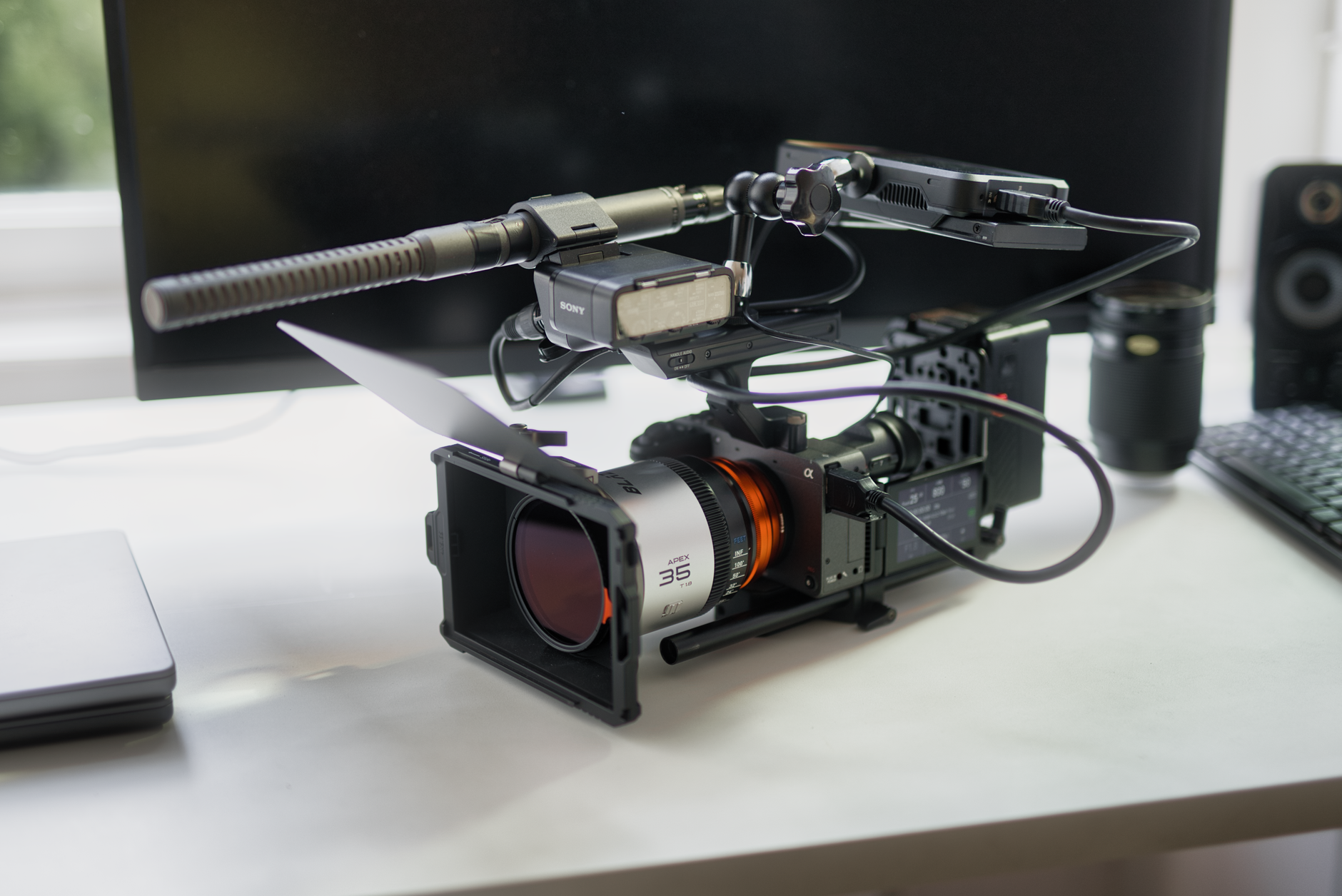
Achieving deep focus in a modern digital production involves a handful of specific choices. Wide lenses in the 18mm to 24mm range maintain depth of field more easily than a 50mm or 85mm portrait lens. Small apertures require more light, which means either a brighter set or a faster sensor pushed to compensate. Shooting in daylight exteriors makes the technique more accessible; replicating it in a controlled interior requires a larger lighting rig.
Some cinematographers use a split diopter, a half-lens attachment that allows two different focal planes to appear sharp in the same frame simultaneously, even when they're widely separated in space. Brian De Palma used split diopters extensively in the 1970s and 1980s to create compositions that felt simultaneously claustrophobic and spatially impossible. The technique is visually distinctive enough that audiences often register it subconsciously as "something strange about this shot" without identifying the cause.
Digital tools have expanded the options available. Focus stacking, which composites multiple passes of footage shot at different focal distances, can simulate deep focus in post-production. But most cinematographers prefer to achieve the look in-camera, because the optical properties of a true deep focus lens create a specific quality of sharpness that compositing doesn't fully replicate.
When not to use it
Deep focus isn't a universal improvement. Intimate scenes between two characters often benefit from the emotional isolation that shallow focus provides. A conversation between a parent and child gains warmth and privacy when the world behind them softens and disappears. Dropping deep focus into that moment would introduce a visual restlessness that works against the scene's intent.
Horror uses shallow focus deliberately to withhold information. The monster at the edge of the frame stays blurred. The character walking toward it stays sharp. That asymmetry creates dread. Replace it with deep focus and the audience sees everything clearly, which removes the specific fear of the unknown that the genre depends on.
The craft decision is always about what the story needs. Deep focus serves scenes where context, environment, and the relationship between multiple elements matter simultaneously. It works against scenes that need a single emotional point of contact. Knowing the difference is most of the skill.