
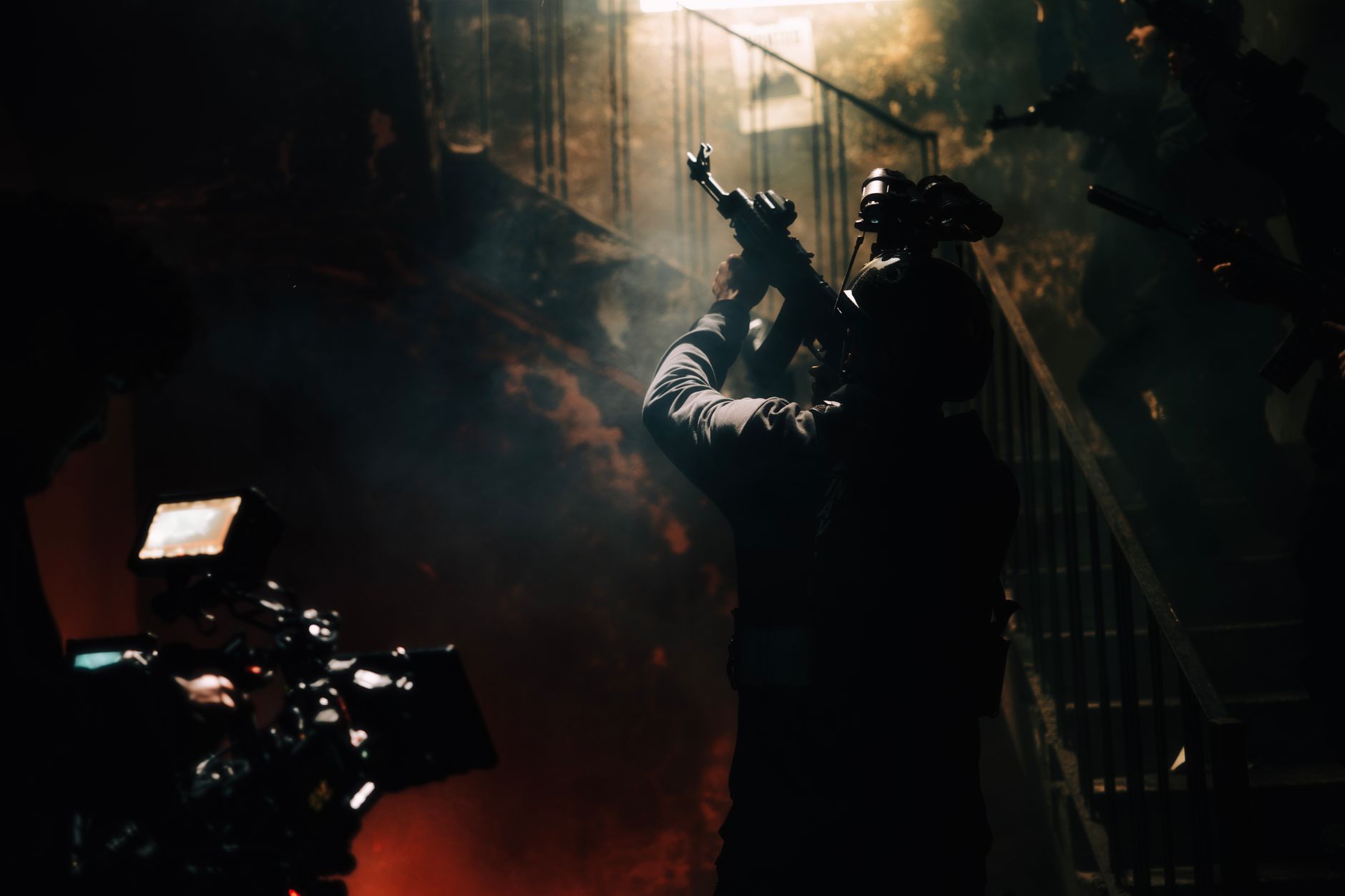
The slow burn is one of the most demanding things a filmmaker can ask of an audience. No explosions in the first act, no guaranteed payoff by the midpoint. Just a quiet, accumulating pressure that the viewer has to trust will go somewhere. When it works, it produces a kind of grip that action cinema rarely manages. When it doesn't, it produces a film that nobody recommends to anyone.
What separates those two outcomes isn't luck. It's craft.
What makes a film a slow burn
The term gets used loosely, but a slow burn has a specific shape. Exposition is parcelled out gradually. Characters are observed more than explained. Scenes end before the obvious confrontation. The audience is kept in a state of low-level unease, aware that something is building but unsure exactly what.
Think of Robert Eggers' The Witch (2015). Nothing in that film screams at you. The dread accumulates through the landscape, the family's silences, the slow erosion of certainty. By the time the film reaches its final minutes, the audience hasn't been worked up suddenly. They've been tightened, notch by notch, across the entire runtime.
That's the mechanism: incremental tension rather than episodic shocks.
The role of withheld information
A slow burn runs on a deficit of knowledge. The audience knows less than they want to. Information is a currency the filmmaker controls tightly, spending it in small amounts at carefully chosen moments.
This is distinct from a plot twist. A plot twist gives you wrong information and corrects it. A slow burn gives you almost no information and makes you feel the absence. The technique is closer to what a novelist does when they describe a scene through a character's limited perspective. You see exactly what the character sees. Nothing more.
The danger is that withheld information can slide into obscurity. Audiences will tolerate not knowing, but only if the film signals that the filmmaker knows. Tone does this work. A film with confident, controlled cinematography and precise sound design communicates to the audience that it's in capable hands. That trust buys the filmmaker time. Understanding how sound design shapes the viewer experience in film reveals just how much of that trust is built through audio rather than image.
Character as the engine of tension
Slow burns can't outsource tension to plot mechanics. If nothing is exploding and no countdown timer is running, the audience needs someone to care about deeply. Character work isn't decorative in this genre. It's structural.
The best slow burn performances carry the weight of subtext constantly. What a character doesn't say matters as much as what they do. Cate Blanchett in Carol (2015), Anthony Hopkins in The Remains of the Day (1993), Tilda Swinton in We Need to Talk About Kevin (2011): all are exercises in controlled expression where the internal state of the character is always visible and never quite stated.
This is also why flawed or contradictory characters tend to thrive in slow burn narratives. A character with competing drives is inherently watchable, because the audience is always trying to predict which impulse will win. The subject connects directly to why flawed protagonists win audiences across so many of the most celebrated films.
Pacing: slow doesn't mean uneventful
A common misreading of the slow burn is that it means nothing happens. That's a mistake. Events occur constantly in a slow burn. The key is their scale. A look held a beat too long. A door left ajar. A question answered with a question. These are events. They're just small ones.
What varies is the frequency and intensity of release. Conventional genre filmmaking releases tension regularly, in short bursts, to keep the audience comfortable enough to stay. A slow burn delays that release, sometimes indefinitely. The payoff, when it comes, is proportionally larger because the pressure behind it has been allowed to build.
Paul Thomas Anderson works this way almost exclusively. There Will Be Blood (2007) takes 16 minutes before Daniel Plainview speaks a word of dialogue. The film isn't wasting time. It's establishing a register. The audience learns to read small signals, which makes every subsequent signal carry more weight.
How colour and visual language carry the load
In a film where dialogue is sparse and plot movement is gradual, the visual layer has to work harder. Colour grading, aspect ratio, and shot composition all become communicative rather than merely aesthetic.
Cold, desaturated palettes communicate isolation and threat without a single scene of violence. A wide shot that keeps a character small in the frame communicates powerlessness. Handheld camera that refuses to settle communicates instability in a character's world. These aren't subliminal choices. They're a language that attentive audiences read in real time.
The way a colourist's choices direct emotional response is a craft that slow burn filmmakers rely on more heavily than almost any other genre. The deliberate visual grammar of these films is one reason they tend to reward a second viewing so well: details that felt atmospheric on first watch reveal themselves as precise on the rewatch.
The payoff problem
Every slow burn carries a risk that the other genres don't: the payoff can fail to justify the wait. This is the real test of whether a filmmaker has earned the audience's patience.
A payoff doesn't have to be loud. A Ghost Story (2017) ends on an image, not an event. Caché (2005) ends on a question. Neither is unsatisfying. They're unsatisfying in the wrong reading, which expects a slow burn to detonate like an action film. The right payoff is proportional: it resolves the specific tension the film built, not a generic version of climax.
Films that fail here are often films that started slow and then tried to recover by switching genre in the third act. The audience, trained over two hours to read small signals, is suddenly confronted with a screaming finale they haven't been prepared for. The tonal whiplash reads as a loss of nerve.
Why the format endures
Slow burn films occupy a particular position in cinema: they're harder to market, harder to sell, and harder to make. A two-minute trailer for a slow burn is almost a contradiction in terms. The entire experience depends on accumulation, and accumulation can't be cut into a montage.
Despite this, the format keeps producing some of the most critically admired work in any given year. There's an audience for it. Not the largest audience, but a loyal one that returns reliably to filmmakers who demonstrate they can hold tension without releasing it prematurely.
For studios and independent filmmakers alike, that loyalty is worth building toward. The slow burn isn't a niche indulgence. It's a demonstration of control, which is, in the end, what craft in cinema actually means.