
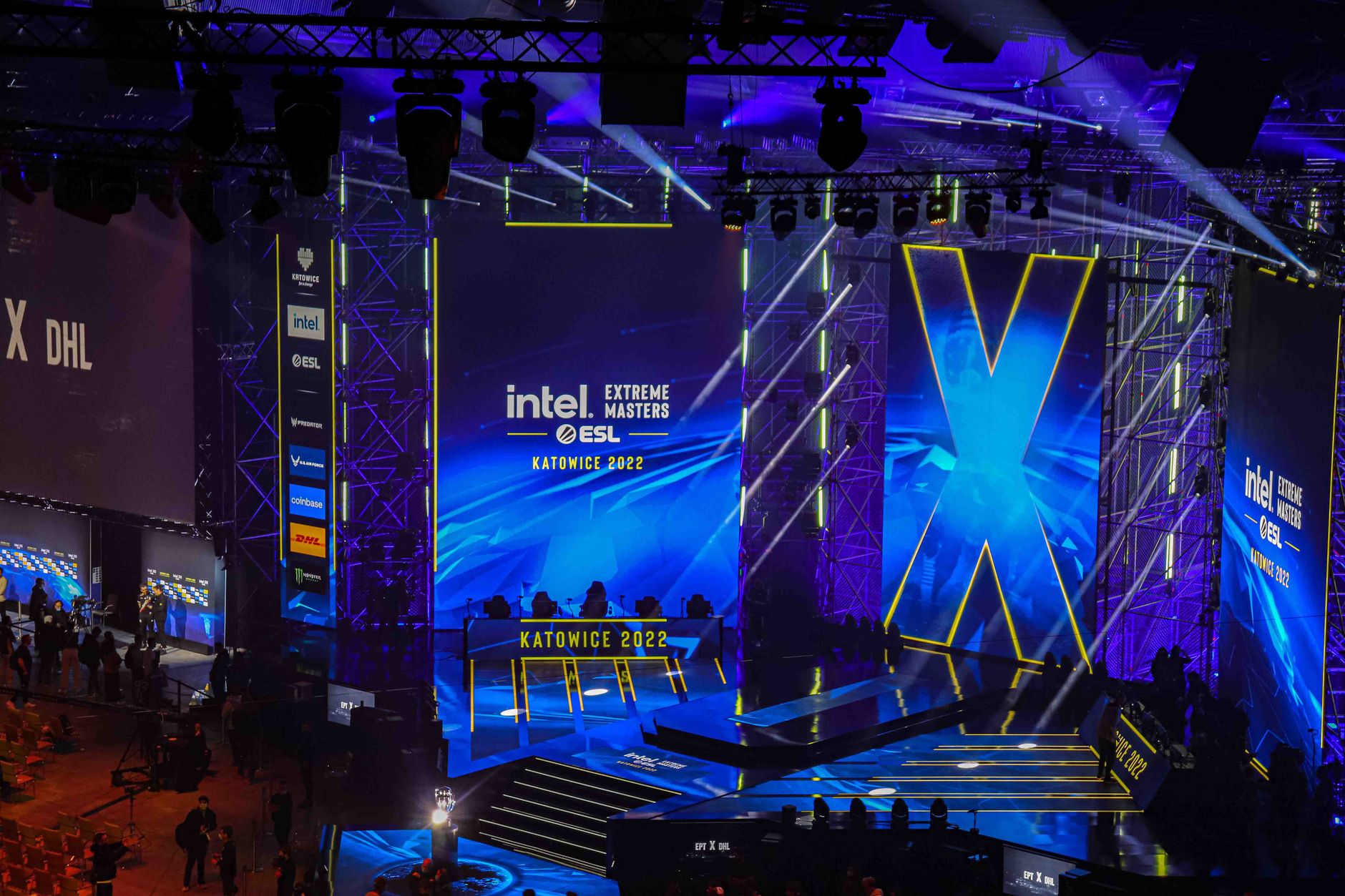
If you tuned into a major esports tournament today without knowing what it was, you could easily mistake it for a primetime sports broadcast or a live awards ceremony. The crane shots, the LED walls, the orchestral score swelling between rounds, the slow-motion replays with cinematic colour grading. The reason esports productions look like Hollywood broadcasts is not accidental. It is the result of years of deliberate investment, a maturing audience, and the arrival of broadcast-trained talent into a space that used to run on passion and improvisation.
How esports production grew up fast
In the early 2010s, esports events were streamed from hotel conference rooms, sometimes with a single camera operator and a commentary desk borrowed from a trade show booth. The audience forgave the rough edges because the games were compelling enough on their own. That latitude disappeared as viewership scaled. When League of Legends World Championship peaked at tens of millions of concurrent viewers, organisers could no longer treat production as an afterthought. The stakes were too high, and advertisers, sponsors, and broadcast rights holders expected something that matched their standards.
Tournament organisers began hiring directly from television and film. Producers who had worked on network sports coverage, live concert broadcasts, and red-carpet events moved into esports, bringing their technical playbooks with them. Multi-camera rigs, broadcast-grade vision mixers, and real-time graphics engines replaced the improvised setups of the early days. The workflow started to look less like a startup livestream and more like a premium live television production.
The technology borrowed from film and TV
The visual language of modern esports borrows heavily from Hollywood production design. Large-format LED volumes, the same technology now central to virtual production studios in film, appear in purpose-built esports arenas to create immersive backdrops and real-time environmental effects. Augmented reality overlays place dragons above stadium crowds and project player statistics into three-dimensional space above the playing surface. These moments are engineered as broadcast set pieces, designed to clip well on social media and to give broadcasters a visual signature that rivals anything on network television.
Real-time game engines like Unreal Engine power the in-broadcast graphics that audiences now take for granted. Replay systems can reconstruct any in-game moment from any camera angle, including impossible angles that exist only in the game world, and play them back in slow motion with cinematic depth of field and lighting. The result is something neither sport nor film had done before: a form of live visual storytelling that exists partly inside a computer simulation and partly in a physical arena, edited together seamlessly in real time.
Why the audience demands it
The core esports audience grew up watching YouTube and streaming platforms, where production quality benchmarks are set by creators and studios competing for the same attention. They know what a well-lit shot looks like, what a tight edit feels like, and when a broadcast is cutting corners. As live streaming has come to dominate online entertainment, viewers have developed sharper instincts for production value than any previous generation of sports fans. A bad broadcast does not just look amateurish. It signals to that audience that the organisation does not take itself, or them, seriously.
This pressure has pushed even mid-tier esports leagues to invest in production infrastructure they would not have considered five years ago. Broadcast directors now plan tournaments the way a network plans a season of television: scripted opening segments, narrative arcs tracked across multiple days, player profiles shot like mini-documentaries, post-match interviews framed and lit for emotional impact. The game is the sport, but the production is the show.
The business case behind the spectacle
Production investment is not purely about aesthetics. It is a commercial lever. Sponsors pay premium rates for broadcast placements that look broadcast-grade. Broadcast rights holders will not license content that embarrasses their own production standards. And global audiences, particularly in markets like South Korea, China, and increasingly Australia, reward polished tournaments with the kind of sustained viewership that attracts the next tier of investment.
The connection to Hollywood is also literal in some cases. Major publishers and tournament organisers have brought in film composers to score live events, hired narrative directors to script broadcast segments, and commissioned short-form cinematic content to air between competitive rounds. This content strategy mirrors what gaming companies apply to their cinematic trailers: the game itself is the product, but the surrounding visual world builds the emotional investment that keeps audiences loyal.
What this means for the broader production industry
The crossover between esports and broadcast-quality production is reshaping both industries. Freelance camera operators, colourists, motion graphics designers, and broadcast engineers now move between traditional sports, live events, and esports without treating any of them as a step down. The skills are the same. The budgets, in some cases, are larger in esports than in conventional sports broadcasting.
For production studios and filmmakers, the esports sector represents a genuine and growing market for high-end live production work. The demand is not slowing. If anything, it is expanding as new titles attract competitive scenes and as regional leagues invest in their own broadcast infrastructure. The line between a Hollywood broadcast and an esports broadcast is now a matter of content, not of craft. Both industries are drawing from the same talent pool, the same technology, and the same understanding of what a contemporary audience expects when they press play.
The shift happened faster than most people in either industry predicted. What started as gamers pointing a webcam at their monitors has become one of the most technically sophisticated forms of live entertainment on the planet. And it is still accelerating.