
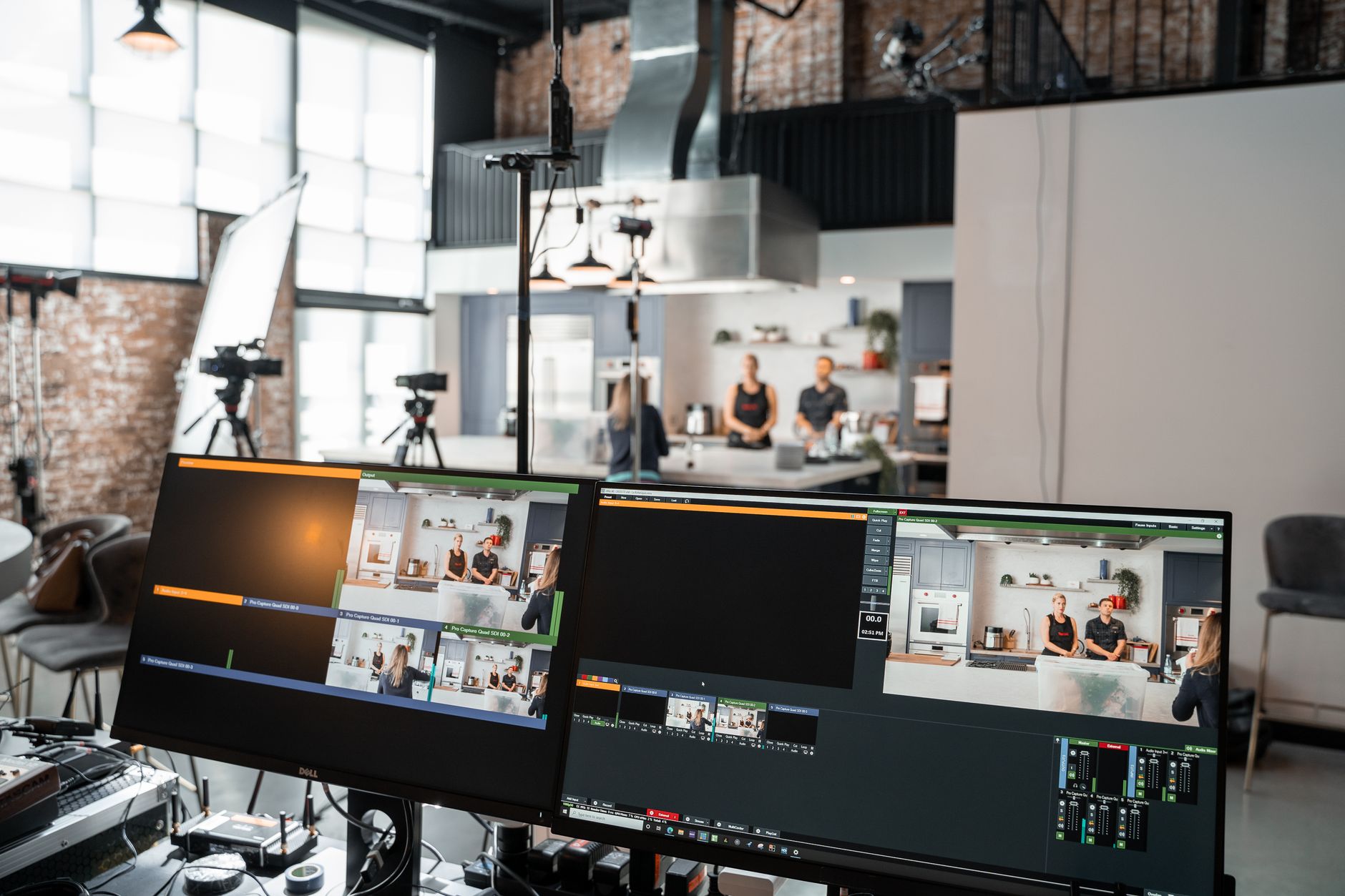
Live streaming dominates online entertainment not because it replaced television, but because it does something television never could: it puts the audience inside the moment. Whether it is an esports final watched by hundreds of thousands on Twitch, a product launch streamed directly to a brand's social followers, or a live dealer table running in real time for casino players around the world, the format has become the default mode of engagement for a generation that grew up expecting immediacy. Understanding why this happened matters for any business that produces video content or competes for attention online.
The psychology of "right now"
Recorded content asks viewers to choose when they watch. Live content makes that choice for them, and that constraint turns out to be a feature, not a limitation. When something is happening now, the fear of missing out becomes a genuine pull. Viewers are more likely to drop other activities, stay for longer sessions, and engage actively through chat, polls, and reactions because leaving feels like a real loss, not just a tap of the pause button.
This is amplified by the social layer that most platforms wrap around live streams. Watching a live event alone still feels communal because thousands of other people are reacting alongside you in real time. The chat window is not a distraction from the content. For many viewers, it is the content. That shared, synchronous experience is something on-demand streaming platforms have struggled to replicate, even when they experiment with watch-party features.
Platform economics and the creator incentive
Live streaming also dominates because the economics work for creators. Platforms like YouTube, Twitch, and TikTok have built monetisation structures (super chats, channel subscriptions, bits, gifted memberships) that reward live content with direct, real-time revenue. A creator earning through recorded videos depends entirely on ad impressions accumulated over weeks. A creator going live can generate the same income in two hours from an audience willing to pay to be seen in the moment.
That incentive structure has pushed enormous amounts of creative energy into live formats, which in turn has grown the audience, which in turn has made platforms invest more heavily in live infrastructure. It is a self-reinforcing cycle that shows no sign of slowing down.
The business case: beyond entertainment
Brands and businesses have followed audiences into the live space, and for good reason. Live streaming converts. Research across e-commerce markets consistently finds that live shopping events outperform static product pages on conversion rate, because the real-time demonstration removes purchase hesitation in a way that a photo gallery simply cannot.
The iGaming sector offers one of the clearest examples of live video becoming a core product rather than a marketing tool. Live casino platforms now use video production at broadcast quality to deliver the feel of a physical casino floor directly to a player's screen, with multiple camera angles, professional lighting, and real-time interaction between players and hosts. The video is not advertising the experience. It is the experience. That distinction matters enormously for how businesses think about production quality and investment.
Fintech companies, sports organisations, software brands, and entertainment studios have all built live streaming into their marketing calendars precisely because it generates a level of attention and engagement that pre-produced content rarely matches. The format signals openness and authenticity, two qualities that are increasingly hard to manufacture in a market where audiences have grown sophisticated at spotting polish as a substitute for honesty.
Technology that lowered the barrier
A decade ago, streaming at broadcast quality required satellite trucks, specialised encoders, and teams of technicians. Today a single creator can stream at 1080p from a smartphone with a stable 4G connection. Cloud-based encoding, content delivery networks with global reach, and consumer-grade hardware capable of real-time production have democratised the format entirely.
At the high end, production ambitions have scaled upward to match. Studios now design dedicated live streaming environments with low-latency protocols, multi-camera switching, integrated graphics overlays, and real-time quality adaptation to handle fluctuating network conditions without dropping viewers. The gap between a casual stream and a professional broadcast has narrowed technically, even as the expectation gap from audiences has widened. Viewers now expect polished live content, and businesses that treat streaming as an afterthought tend to feel the difference in their engagement metrics.
Where AI and live video intersect
Artificial intelligence is beginning to reshape live streaming in ways that compound its dominance further. Automated moderation tools handle toxic chat at scale without human intervention. Real-time translation features are unlocking multilingual audiences for creators who previously could only speak to their native language base. AI-driven highlight clipping can take a three-hour live stream and surface the two minutes worth sharing within seconds of the broadcast ending, extending the reach of live content long after it finishes.
These tools sit alongside broader changes in how video content is made. AI video tools are changing content creation across the board, but their application to live formats is particularly significant because they address the one traditional weakness of live content: the inability to control every variable before an audience watches.
What this means for content strategy
For any business thinking seriously about video, the dominance of live streaming is not a trend to wait out. It is the direction audiences have already moved. That does not mean abandoning produced content. Long-form documentary, branded films, and high-quality short-form video all still carry weight. But a strategy that ignores live entirely is a strategy that cedes ground on engagement, community, and the kind of real-time connection that builds loyalty faster than any other format available.
The businesses winning in online entertainment right now tend to treat live and produced content as complementary rather than competing. Live builds the relationship. Produced content deepens it. Getting both right, at the quality level audiences now expect, is the production challenge that defines the next phase of digital media.