
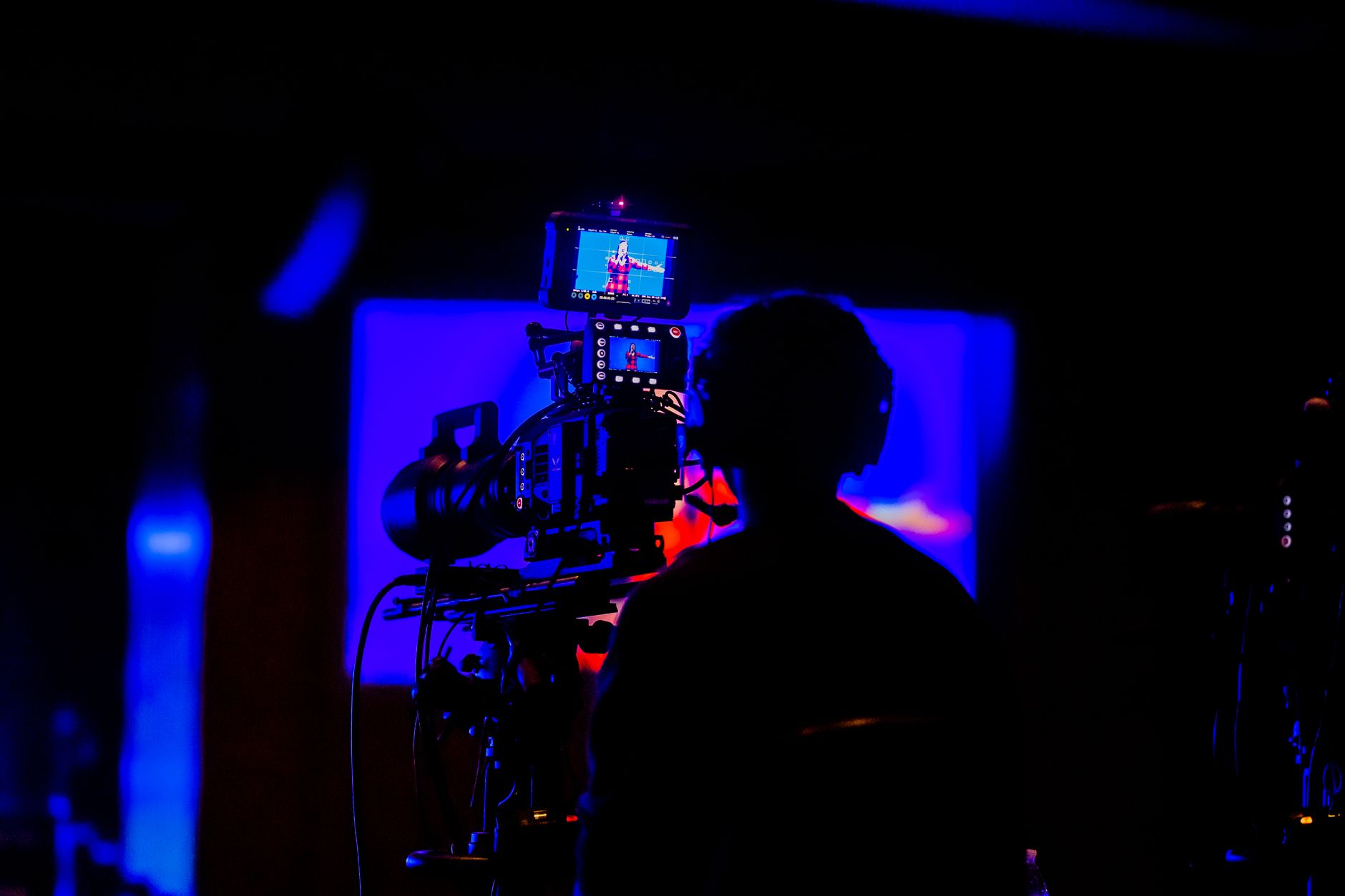
The rise of virtual production studios is one of the most consequential shifts in filmmaking since the arrival of digital cameras. Where traditional production once demanded location scouts, expensive travel, and months of post-production compositing, virtual production collapses much of that work into a single stage. Using LED volume walls, real-time rendering engines, and camera-tracking technology, these studios let directors see finished-looking environments on set, in the moment, before a single visual effects artist touches the footage in post.
What virtual production actually involves
At its core, virtual production is the practice of integrating digital environments with live-action performance in real time. The most visible form involves massive curved LED screens, sometimes filling an entire stage wall-to-ceiling, that display photorealistic backgrounds rendered by game engines like Unreal Engine. The camera tracks its own position and angle, and the background perspective shifts accordingly, so the illusion holds even as the operator moves freely around the set.
This is far more than a glorified green screen. Green screen asks actors to perform in a blank void, then asks editors and VFX artists to build the world around them later. Virtual production gives actors, directors, and cinematographers the world immediately. Lighting reacts to the on-screen environment. Reflections appear on chrome surfaces. Skin tones are lit by the same source the audience will see. The creative feedback loop tightens considerably.
Why studios are investing in the technology now
The investment surge has a few clear drivers. Production costs on location shoots have risen sharply across the past decade, with insurance, permits, and crew logistics becoming harder to contain. Virtual stages, once built, provide a controllable, repeatable environment that significantly reduces those variables. A shoot that might have required a week in a distant country can, in many cases, be achieved in two days on a virtual stage.
Game engine technology has also reached a maturity point that makes real-time rendering viable for broadcast and theatrical quality. The same engines powering the growth of cloud gaming in Australia have benefited from years of investment in real-time graphics, and that investment is now paying dividends for filmmakers who need photorealism without the render farm wait times of traditional CGI pipelines.
The demand side is equally powerful. Streaming platforms require enormous volumes of original content, and the economics of commissioning dozens of series each year push producers toward workflows that compress time and cost without sacrificing visual ambition. Virtual production addresses both pressures simultaneously.
Who is using virtual production stages
The technology first found a mainstream audience through productions like The Mandalorian, which used a large-scale LED volume called The Volume at Industrial Light and Magic's facility in Los Angeles. Since then, adoption has spread quickly. Major studios in the United States, United Kingdom, and Australia have built or are building permanent virtual production stages. Advertising agencies have followed, recognising that a controlled environment with near-cinematic quality can be more efficient than a two-day outdoor shoot with unpredictable weather.
Commercial video production has been particularly quick to adopt. Brands producing automotive content, fashion campaigns, and product launches have found virtual production stages a practical alternative to international shoots. The ability to place a vehicle on a digital alpine road or a product against a Tokyo skyline without leaving a Melbourne studio is not a gimmick. It is a genuine business case. Studios exploring how AI is changing commercial video production are increasingly pairing those tools with virtual production workflows to further reduce turnaround times.
The limitations worth understanding
Virtual production is not without constraints. The capital cost of building a high-quality LED volume stage is significant, which means access is currently concentrated among well-resourced facilities. Smaller productions can hire existing stages, but booking windows and day rates can be prohibitive at the lower end of the budget spectrum.
There are also creative limitations. Exterior scenes requiring large-scale natural light, crowd sequences, or highly dynamic camera movement can still be difficult to achieve convincingly on a volume stage. The technology rewards careful pre-production planning: environments must be built and optimised before the shoot begins, which demands a closer collaboration between pre-vis artists, VFX supervisors, and directors of photography than traditional production schedules typically allow.
Workflow integration is another adjustment. Crew accustomed to conventional production techniques need time to understand how decisions made during the shoot affect the digital assets that were prepared in advance. The learning curve is real, but most practitioners who have worked on virtual production stages describe it as surmountable with proper preparation.
What this means for the broader industry
The rise of virtual production studios is reshaping not just how content is made, but where it can be made. Regional production hubs that might have struggled to attract international projects due to limited location variety can now offer global environments from a purpose-built stage. For Australia in particular, this is a meaningful competitive advantage in an industry that competes globally for prestige projects.
Creatively, the technology is expanding what storytellers can attempt within realistic budgets. Science fiction, period drama, and fantastical settings that once required either enormous budgets or compromise are becoming accessible to a wider range of productions. That democratisation is early-stage, but the trajectory is clear.
For studios and production companies watching this space, the question is not whether virtual production will become a standard tool. It already is at the upper tier of the industry. The real question is how quickly the costs reduce and the workflows mature enough to bring the technology within reach of mid-budget productions. Based on the pace of development observed across the past few years, that moment is closer than most expected.