
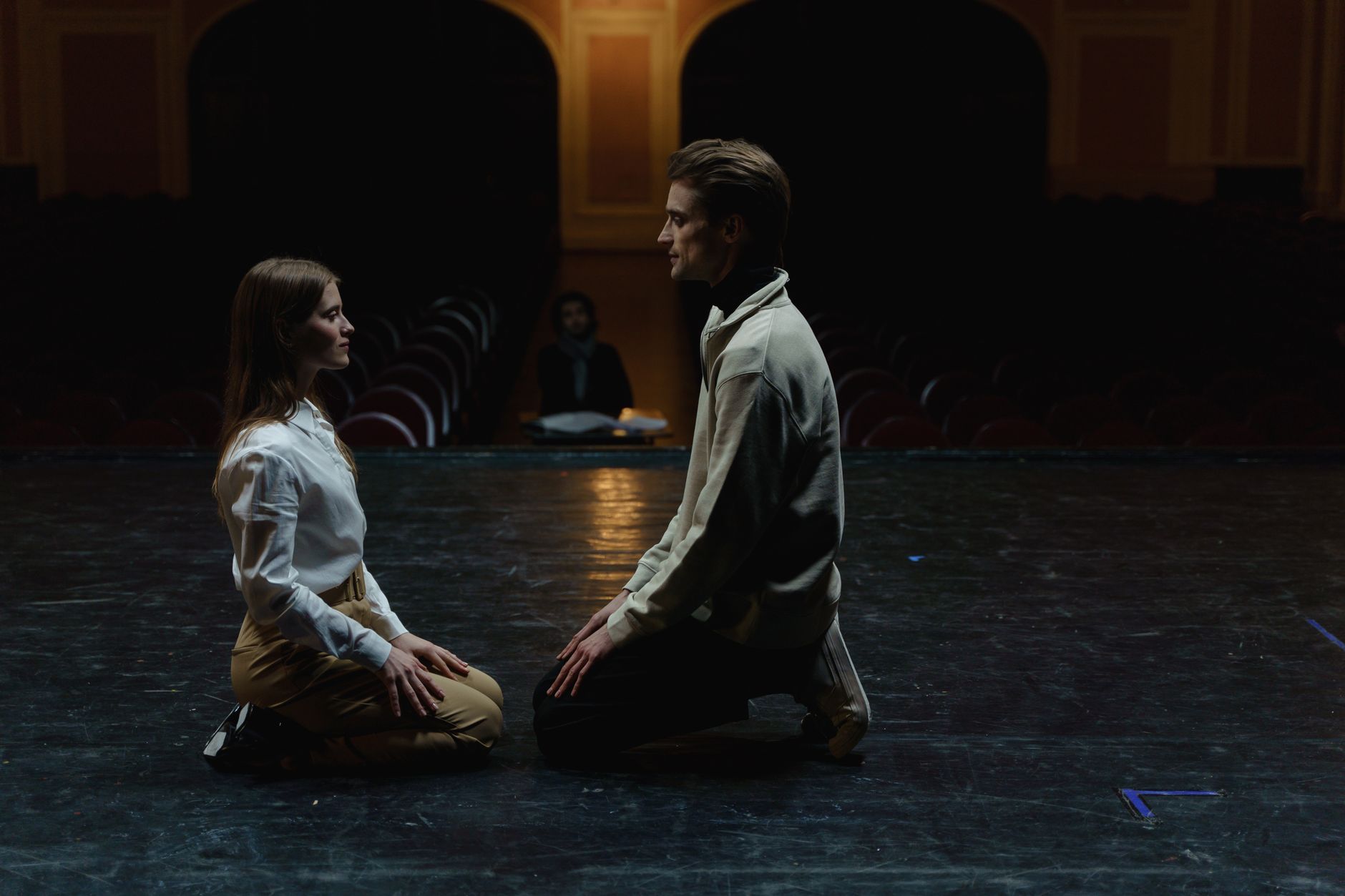
A two-hander is cinema's most exposed format. Strip away the ensemble, the location changes, the action set pieces, and what remains is two people in a room with something unresolved between them. No stunt choreography to fall back on, no visual spectacle to paper over a thin script. Just performance, dialogue, and the space between two faces. The films that do it well rank among the most emotionally precise work in the medium. The ones that don't collapse within the first twenty minutes, and the audience knows it before the characters do.
What defines the two-hander
The label gets applied loosely, which muddies the conversation. A two-hander isn't simply a film with two lead actors. It's a film whose dramatic engine runs entirely on the dynamic between exactly two characters. Other people may appear, but they function as pressure from outside. The core conflict lives between the two principals, and every scene either tightens or releases that tension. Before Sunrise, Locke, Carnage, and All Is Lost (which uses only one actor, testing the format from the opposite direction) all sit in or near this territory. So does Coherence, though it starts there and widens. The strictest examples give us two people who cannot leave each other, literally or emotionally, until something breaks or transforms.
The casting decision in a two-hander carries more weight than in almost any other format. With an ensemble, a weak performance gets absorbed by the surrounding material. Here it can't. The casting decision shapes a film's fate before rehearsals begin, and in a two-hander, a mismatch between the leads isn't a problem you can solve in the edit suite.
The dramatic mechanics underneath
Two-handers depend on asymmetry. If both characters want the same thing in the same way, there's no scene. The format works when each person holds something the other needs, and neither can simply take it. Information, forgiveness, admission, acknowledgement. The negotiation over that exchange is the film's plot, even when nothing visibly happens on screen.
Power shifts are the pacing mechanism. A scene starts with one character in control and ends with the other holding the advantage. The audience tracks these micro-transfers the way sports fans track momentum, which is why a well-written two-hander can sustain ninety minutes without a single action sequence. The conflict is kinetic even when the bodies are still.
Silence is load-bearing. This is the detail most first-time writers of two-handers miss. In a scene with eight characters, silence from one person reads as thinking. In a two-hander, silence from one character is an act of aggression, capitulation, or grief, and the audience reads it that way immediately. A skilled director uses that weight deliberately. The pause after a confession is not empty screen time. It's the moment the film actually lands.
Space as a third character
Every accomplished two-hander makes a careful decision about where its characters are trapped together. Carnage uses a New York apartment. Locke uses a car. Phone Booth uses, exactly as the title suggests, a phone booth. These aren't just locations. They're the architecture of the pressure. A space that can't be escaped without consequence forces characters to confront what they'd rather avoid.
The best production designers working on two-handers think hard about sightlines. Where does one character look when they can't meet the other's eyes? What does the room contain that either person can pick up, move, or use to redirect the conversation? Props become emotional proxies. A glass of wine refilled at the wrong moment tells the audience something about denial that a line of dialogue would flatten into exposition. Production design builds the world that characters believe in, and in a two-hander, that world is measured in square metres.
Why cinematography carries a heavier load
With two subjects, the cinematographer faces a deceptively difficult problem. Shot-reverse-shot is the default grammar of conversation on film, and it works. But a ninety-minute film of alternating close-ups becomes visually exhausting. The best directors of two-handers resist the reflex. They shoot both actors in the same frame more than convention demands, forcing the audience to choose where to look. That choice is uncomfortable. It mirrors the character's own discomfort about who to trust in the room.
Camera distance tracks intimacy. A wide shot at the start of a scene says: these two people are strangers, or are performing as strangers. A slow push into a two-shot says: something has shifted. The audience registers these moves in the body before the brain names them. Deep focus work suits the format particularly well, keeping both faces sharp and letting the viewer read both simultaneously. Deep focus cinematography turns the background into a storytelling tool as powerful as the actor in the foreground, and in a two-hander, both foregrounds matter equally.
Where the format fails
The most common failure is a script that mistakes repetition for accumulation. Two characters arguing the same point in different words across three scenes isn't tension. It's stagnation. Each scene in a two-hander must leave the characters in a different position from where they started. Not necessarily a different emotional position. Sometimes the revelation is that nothing has changed, and the characters are further from resolution than they thought. But something must shift, even if what shifts is the audience's understanding of what the conflict is actually about.
Dialogue-heavy two-handers often fall into a second trap: characters who speak in finished thoughts. Real conflict produces half-sentences, interruptions, words abandoned mid-utterance because the speaker can't finish them. Writers who craft perfectly articulate arguments for both sides of a dispute have written a debate, not a drama. The form demands the mess of people who don't fully understand their own feelings and are discovering them in real time, in front of each other, with nowhere to retreat.
The format's particular strength for independent film
Two-handers attract independent filmmakers for practical reasons that don't diminish the art. Two actors, one location, and a tight shooting schedule can produce a feature-length film on a fraction of what ensemble productions cost. But budget pressure doesn't explain why some of the most admired two-handers in recent decades have come from independent productions. The format rewards writing and performance over scale. A studio with a nine-figure budget has no advantage in a genre where the currency is truth between two people.
The format also suits a particular kind of story that mainstream production tends to avoid: the story where the conflict doesn't resolve in a satisfying direction, where both characters are partly right and partly ruinous, and where the audience leaves with something to argue about rather than something to feel good about. That ambiguity is commercially difficult. In a two-hander, it's often the point.
The two-hander asks more of its audience than most formats. It offers fewer places to rest attention, fewer spectacles to compensate for difficulty, and fewer characters to identify with safely. What it offers instead is the closest cinema comes to the feeling of overhearing something you were never supposed to hear. That intimacy, when it's earned, is the format at its full reach.