
Production design is the discipline that decides what a fictional world looks like, feels like, and tells us about the people who live in it. Before an actor steps in front of a camera, the production designer has already made hundreds of choices: ceiling heights, paint colours, the degree of wear on a door handle, the books on a shelf nobody will ever read aloud. Every single one of those choices is a form of storytelling. Most audiences never consciously register them. That invisibility is the point.
What a production designer actually does
The role is often confused with set decoration, which is only one part of it. A production designer oversees the entire visual environment of a film: the architecture of sets, the selection or construction of locations, the colour palette that unifies a visual world across every scene. The production designer works directly with the director and director of photography from the earliest stages of pre-production, often before the script is locked. West Melbourne Studios works with production designers on commercial and corporate projects for the same reason major studios do: a designed environment always performs better on camera than an improvised one.
The job demands a strange mix of skills. A production designer needs to think like an architect, read like a historian, and collaborate like a therapist. Ken Adam built the war room in Dr. Strangelove (1964) out of pure imagination because Stanley Kubrick couldn't find a real one. Hannah Beachler designed the Afrofuturist world of Wakanda for Black Panther (2018) by researching real West African architecture and then extrapolating forward by several centuries. Both were constructing truth from nothing.
Sets as character: the environment tells the story
A production designer's greatest tool is the set's relationship to its inhabitant. Think of the apartment Tony Montana occupies in Scarface (1983): as his wealth inflates, the rooms grow grotesquely oversized, the furniture too large, the staircase too grand. The set isn't background. It's a portrait of a man consumed by excess. The audience reads the character through the space before he says a word.
This is the principle that separates considered production design from mere set dressing. A set can express a character's aspiration, their denial, their hidden grief, or their self-delusion. A minimalist apartment tells us one thing. The same apartment with one incongruous and clearly beloved object tells us something far more interesting. Restraint is often the hardest skill to teach.
Colour does enormous work in this area. Just as colour grading shapes the mood of a film in post-production, the production designer controls colour upstream, in the physical construction of the set itself. The two disciplines have to agree. A warm amber set graded cold in post creates cognitive dissonance; a cold, clinical set graded warm produces an unease the audience feels but can't name.
The grammar of space: how architecture guides the camera
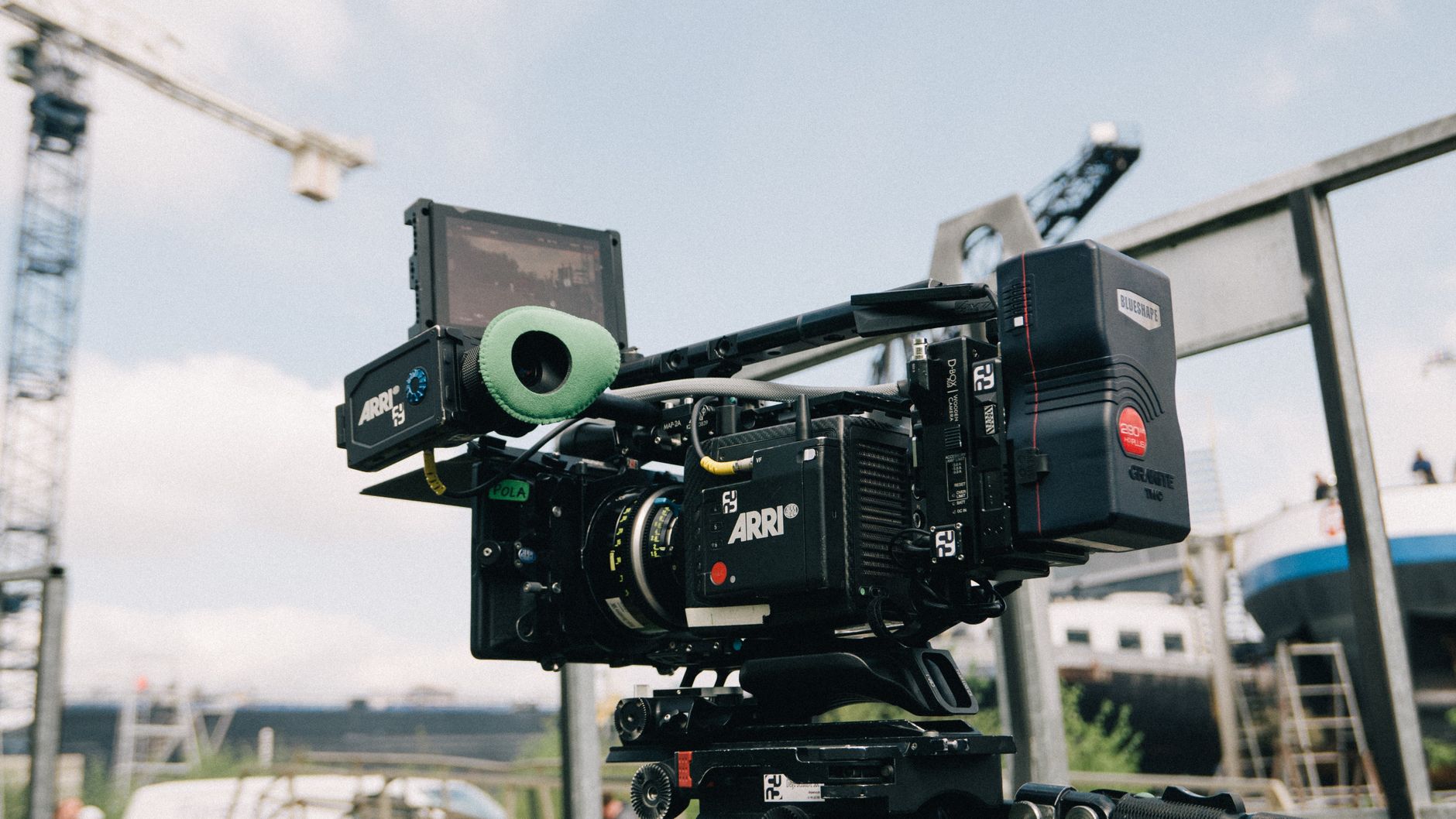
Sets are built for cameras, not for people. That distinction changes everything about how they're designed. Ceilings are often removable to allow overhead rigs. Walls are wild (detachable) to accommodate different shooting angles. Doorways are wider than building code requires so a camera can track through them cleanly. The practical result is that a set, viewed from outside the frame, looks like a strange partial structure. Inside the frame, it looks like the only possible world.
A well-designed set also guides the camera toward the right choices. Long corridors create depth and draw the eye toward a subject. Low ceilings force close-ups. Curved walls soften a scene or suggest psychological enclosure. These aren't accidents; they're instructions written in plaster and timber. The director of photography reads the room and the best rooms give clear answers.
This relationship between space and the lens connects directly to cinematography. Camera work shapes storytelling through framing and movement, but the production designer determines what the camera has to work with. The two disciplines are in constant negotiation, and the best films show it.
Period design: building the past from research
Historical films impose a particular burden. A contemporary set can be judged only by whether it feels right. A period set can be judged against documented fact. Production designers working on period films employ researchers who pull primary sources: photographs, diaries, trade catalogues, architectural drawings. The goal isn't a museum-accurate reconstruction. It's a selective, emotionally truthful version of a period that serves the story.
The craft here is compression. A real Victorian parlour in 1880s Melbourne would have been crowded, smoky, and slightly chaotic. A film set representing it must carry the essential visual signals of that world without the clutter that would confuse the frame. Production designers talk about editing the room the same way editors cut a scene: keep only what the story needs.
That editing instinct is sharpest when the period design has to co-exist with the film's genre. A horror film set in Edwardian England has to be historically grounded and visually menacing at the same time. The production designer uses shadow, asymmetry, objects slightly out of scale, and surfaces that catch light wrong. The audience recognises the period. It doesn't recognise why they feel uneasy. That gap is the craft.
Practical sets vs digital environments
Virtual production has changed the conversation around physical sets in complex ways. LED volume stages now allow backgrounds to be generated in real time, meaning a production can shoot a desert scene in a studio in Melbourne and have the environment rendered around the actors live, eliminating costly location shoots. Screen Australia has tracked significant growth in domestic virtual production capability since 2023, with several major facilities now operating at international standard.
The question the industry is still working through is what physical sets do that digital environments can't fully replicate. The answer involves light, reflection, and actor response. A real set bounces practical light off real surfaces. Actors interact physically with the space and respond to its texture, its smell, its temperature. These inputs produce performance details that a rendered background, however convincing, doesn't generate on its own. The best productions now use a hybrid approach: digital environments for large-scale establishing contexts, physical set pieces for close-quarters performance.
Production designers who trained in physical construction are learning new software. Those who trained in digital environments are learning what a scene needs to feel inhabited. The skill set is converging, and the films that handle it best treat the distinction as a toolkit rather than a philosophical argument.
Texture, decay, and the lived-in world
One of the hardest things to fake is age. New sets look new. They carry no history. The craft of making a set feel lived in is called aging or distressing, and it's more detailed than it sounds. Paint is applied in layers and selectively removed. Furniture is scuffed on the load-bearing surfaces where real use would leave marks. The corners of a carpet are worn down, but only the corners people actually walk across. Get it wrong and the set reads as a costume, not a world.
This attention to texture is what separates production design that audiences unconsciously trust from design they feel vaguely suspicious of without knowing why. The human eye is calibrated for the real world. It notices instantly when a surface lacks depth or when wear patterns don't match use patterns. Production designers talk about the difference between a set that's been aged and a set that's been lived in. Only one of those reads as true.
Great production design, like great sound design, operates below conscious attention. It sets the terms for what the audience believes, then steps aside. The story takes the credit. The craft made the story possible.