
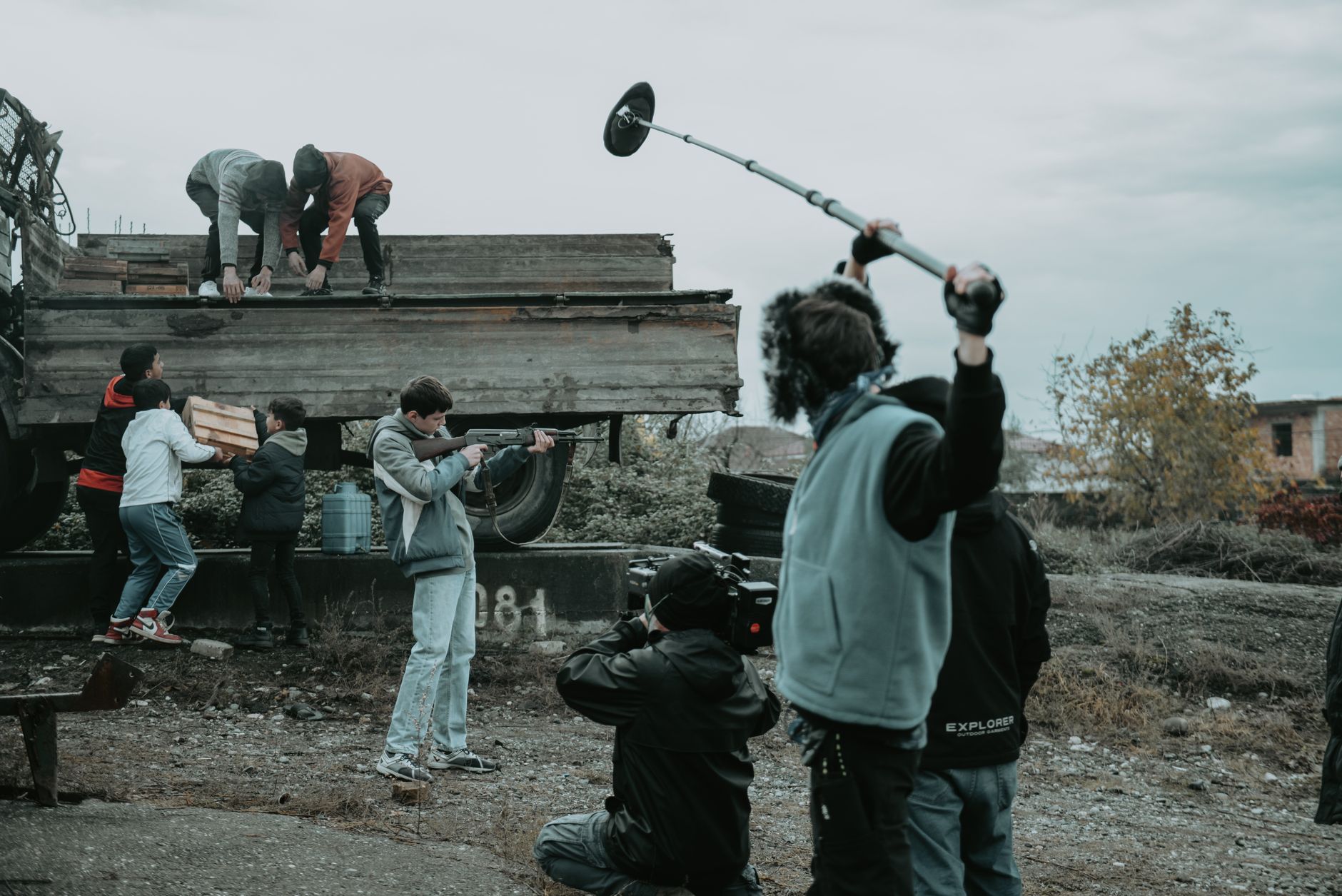
Every finished film hides another story beneath it: the arguments over casting, the locations that fell through, the scenes rewritten at midnight. The making-of documentary is the format built to tell that story. It's part promotional tool, part historical record, and part cinematic craft in its own right. The best ones do something remarkable: they make you feel the weight of a film's creation while deepening your experience of the film itself.
What a making-of documentary actually is
A making-of documentary, sometimes called an "EPK" in its shorter form (electronic press kit), is a behind-the-scenes film that chronicles how another film was produced. The format ranges from a 10-minute promotional featurette bundled with a DVD release to a feature-length work of documentary filmmaking. The Criterion Collection has long used extended behind-the-scenes supplements to reframe canonical films for new generations, treating the making-of as an editorial choice, not an afterthought.
The scope varies enormously. Some making-of films focus on a single department: the costume design, the visual effects, the score. Others follow production from the first table read to the final grade. The subject shapes the form. A war film made under difficult location conditions demands different coverage than an animated feature built entirely inside a render farm.
Why studios commission them
The commercial logic is straightforward. A compelling making-of extends a film's marketing cycle, generating press coverage and viewer engagement beyond the theatrical window. Behind-the-scenes footage becomes trailer material, social content, and interview fodder. Done well, it builds anticipation rather than spoiling it.
But the function goes deeper than promotion. Making-of documentaries build parasocial investment in a film's cast and crew. When audiences watch a director describe a shot they agonised over for three days, the resulting scene carries new weight on the screen. The creative process becomes part of the viewing experience. This is precisely why the format survives long after a film's theatrical run ends.
Studios also use making-of content to manage expectations. A production that ran famously over budget or over schedule can be reframed through a well-edited documentary that repositions the difficulty as evidence of ambition. The narrative of struggle-toward-excellence is one the format handles naturally.
The craft inside the format
Making-of documentaries are harder to make well than they look. The crew filming a film's production is usually small: a single cinematographer, sometimes a director/producer in one role, embedded with the main unit for weeks or months. They're capturing a moving target. Schedules change overnight. The most revealing moment might happen in a production meeting, not on the soundstage.
The editorial challenge is selecting what to show. A six-month shoot generates far more footage than any documentary can absorb. The best making-of films find a throughline: a performance that evolves, a technical problem that gets solved, a creative disagreement that resolves into something better than either original position. That structure gives the documentary its own narrative arc, independent of the film it covers.
Sound design is one area where the making-of format regularly earns its keep. Watching a Foley artist stomp cornstarch bags to simulate snow, or a composer find the four-note motif that eventually carries an entire act, reveals the deliberate construction behind what feels natural on screen. This connects directly to how sound design shapes the viewer experience in film: every element that moves an audience was chosen by someone with a specific intent.
When the making-of becomes the story
Some productions are so turbulent that the making-of documentary overshadows the finished film. Chaos on set, directorial clashes, last-minute cast changes: these become the story audiences want to understand. The Burden of Dreams (1982), Les Blank's documentary on Werner Herzog's Fitzcarraldo, is the clearest example. The documentary is now considered artistically significant in its own right, studied alongside the film it covers rather than beneath it.
This happens when the filmmakers allow genuine access. The making-of that feels like a curated highlight reel delivers little beyond marketing. The one that captures creative uncertainty, failed takes, and honest disagreement becomes a document of how films are actually made. That honesty is rare and deliberately chosen. It requires a level of confidence in the final product, and a willingness to let audiences see the seams.
The making-of as a preservation tool
Beyond promotion and storytelling, the making-of documentary serves a preservationist function that's rarely acknowledged in discussions of the format. Film sets are temporary worlds. Locations get redressed. Practical effects rigs get dismantled. Makeup and costume designs exist only for the duration of principal photography. The making-of documentary is frequently the only detailed visual record of how these elements were created.
For productions that use significant practical work, such as large-scale set construction, animatronics, or period costuming, the behind-the-scenes footage is an irreplaceable archive. Decades later, researchers, filmmakers, and enthusiasts return to these documents to understand how specific techniques were executed before digital tools changed the options available. This archival value is something the art of production design shares: the physical craft captured in making-of footage is often the only record of decisions that shaped a film's entire visual world.
What separates a great making-of from a mediocre one
The difference is almost always access and editorial courage. A making-of filmed with full co-operation but strict creative control from the studio tends to produce content that feels like extended advertising. Everyone is enthusiastic. Every department is celebrating. Nothing went wrong that didn't get solved immediately and gracefully.
A making-of with genuine editorial independence looks different. Directors describe scenes that didn't work until the third attempt. Actors talk about the roles they weren't sure they could carry. Producers acknowledge the compromises made under budget pressure. These admissions don't undermine the film. They humanise it, and they make the audience's relationship to the finished work more complex and more durable.
Three qualities separate the best from the rest:
- Specificity over generality: close attention to one craft, one sequence, or one problem rather than a tour of every department
- A genuine arc: a creative question raised early that the documentary answers by its end
- Permission to show failure: a take that collapsed, a decision that was reversed, a design that was abandoned
Making-of content in the streaming era
Streaming platforms have changed the distribution model for making-of content significantly. Where bonus features once lived on physical media, they now compete for attention within the same interface as the film itself. Netflix and its competitors occasionally release standalone documentary series about productions: multi-episode works with their own promotional budgets and dedicated launch strategies. This shifts the making-of from supplement to product.
The format has also migrated to social media. Short-form making-of content, behind-the-scenes stills, and production diary clips now circulate during a film's campaign as organic marketing material. The full documentary still exists, but it sits at one end of a spectrum that now extends down to a 30-second Instagram clip of a director blocking a scene.
What the format hasn't lost in any of its iterations is its core function: it closes the distance between the finished film and the people who made it. That connection is what audiences return to, long after the opening weekend has passed.