
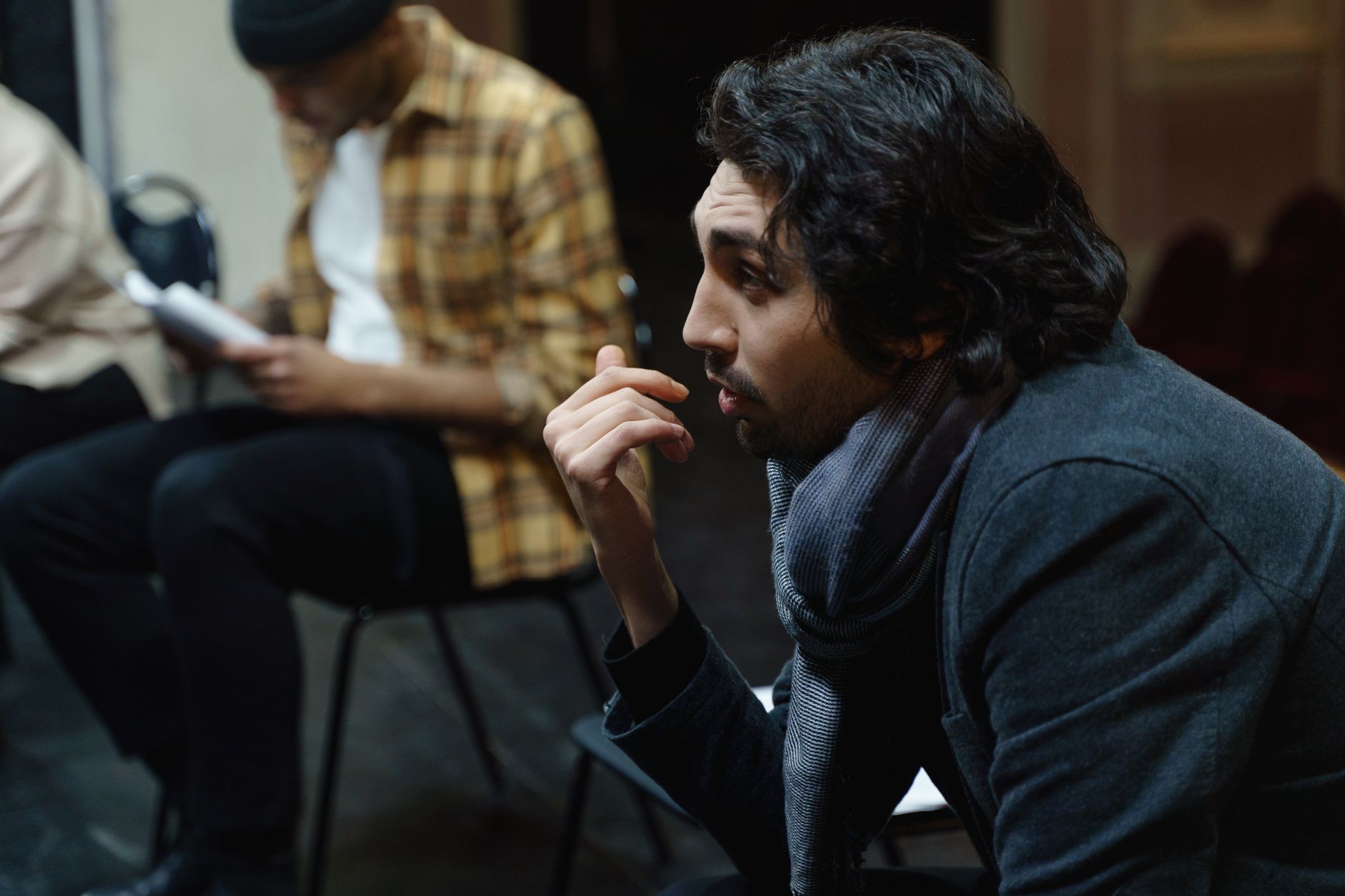
A cold read gives an actor a script they've never seen and asks them to perform it. No preparation, no line-learning, no blocking notes from a director. The process appears brutal, but it's one of the most revealing tests in all of performance. Casting directors, directors, and producers rely on it precisely because it can't be faked. What an actor does in that room, with unfamiliar pages in hand, is close to what they'll do on set when things go sideways.
What a cold read actually is
The term gets used loosely, but a genuine cold read happens when material arrives moments before the performance. It's distinct from a prepared audition, where an actor has days or weeks to work on the text. Cold reads appear in two main contexts: first-round auditions where casting directors screen large numbers of actors quickly, and network or studio tests where a shortlisted actor is handed revised pages at the last minute. The second context is common in television, where scripts change overnight and a performer needs to shoot new dialogue by morning.
The cold read is also the central mechanic of the table read, even when actors have seen the script before. The best table reads reveal how performers respond to the rhythm of a scene in real time, and the most useful data comes from the moments of genuine surprise.
What skilled actors do in the first 30 seconds
The instinct for most people facing unfamiliar text is to read every word on the page before speaking. Skilled actors do the opposite. They scan for the emotional engine of the scene first: who wants what, who's blocking that want, and what the stakes are if they fail. That triangulation can happen in seconds. The words become secondary because the character's goal is what drives every line reading.
Actors trained in this approach tend to work from one simple question: what does my character need right now? Not eventually. Not by the end of the scene. Right now, in this moment. That present-tense urgency is what makes a cold read feel alive rather than recited.
Contractions matter here. A stiff, over-careful delivery drains the scene of credibility. Actors who let themselves trip over a word, catch it, and keep going often land a more truthful performance than those who read with mechanical precision.
The physical dimension most actors overlook
Holding the page is a problem nobody warns you about in training. An actor gripping a script tends to look down at critical moments, breaking the connection that makes a performance compelling on camera. The solution isn't to memorise the text, which is impossible in a true cold read. It's to master the quick glance: absorb a phrase, look up, deliver it, look down for the next phrase.
This technique has a name in some acting schools: the eye-lift. It was a core discipline for stage actors performing script-in-hand readings long before film cameras existed. On set, the same skill becomes essential when an actor is handed revised pages an hour before a take. Directors know which performers can do it, and they schedule accordingly.
Breath control sits underneath all of this. Nerves compress the breath. Compressed breath flattens the voice. A flat voice makes every line sound the same, which destroys the internal rhythm a scene needs. Experienced performers will take a slow breath through the nose before stepping in front of a camera, not as a relaxation ritual but as a physical reset for the instrument.
How directors use cold reads in production
On major productions, cold reads serve a diagnostic purpose beyond casting. A director who hands revised pages to an actor and watches how they respond learns something specific: does this performer read for character or for text? An actor who reads for text delivers the words. An actor who reads for character delivers the intention behind the words, even when they're still uncertain of the exact phrasing.
This connects directly to how improvised scenes function on set. The best improvised moments come from performers who are so grounded in their character's needs that the specific words become interchangeable. A cold read trains exactly that skill: trusting the impulse over the line.
Some directors, including Mike Leigh and John Cassavetes before him, built entire working methods around variations of the cold read. Leigh famously develops characters with actors over months before writing the script, so that by the time dialogue exists, performers are responding to it rather than performing it.
Preparing for something you can't prepare for
The paradox of the cold read is that it rewards preparation, just not the kind most actors focus on. Line-learning is useless here. What transfers is everything else: a wide knowledge of human behaviour, a practised ability to find stakes quickly, and enough confidence in technique to trust the first instinct rather than second-guess it into flatness.
Working actors build that confidence through consistent exposure to unfamiliar material. Some read plays they've never heard of. Some work with sides (short scenes from real scripts) that a friend selects and hands over without context. Others use the early pages of novels, reading aloud to a camera and reviewing the footage to study how their body and voice respond under uncertainty.
The result, for the strongest performers, is a particular kind of readiness: not knowing what's coming, but being utterly confident in how they'll respond to it. That readiness is what a casting director looks for in the room. It's also what a director looks for on set, when the script has changed and there's no time to start over.
Casting decisions ultimately hinge on it. As explored in the craft behind how actors shape a film's fate, the choice of who fills a role is rarely about the prepared audition alone. It's about what a director believes the actor will do when the unexpected arrives. A cold read answers that question directly, and often permanently.