
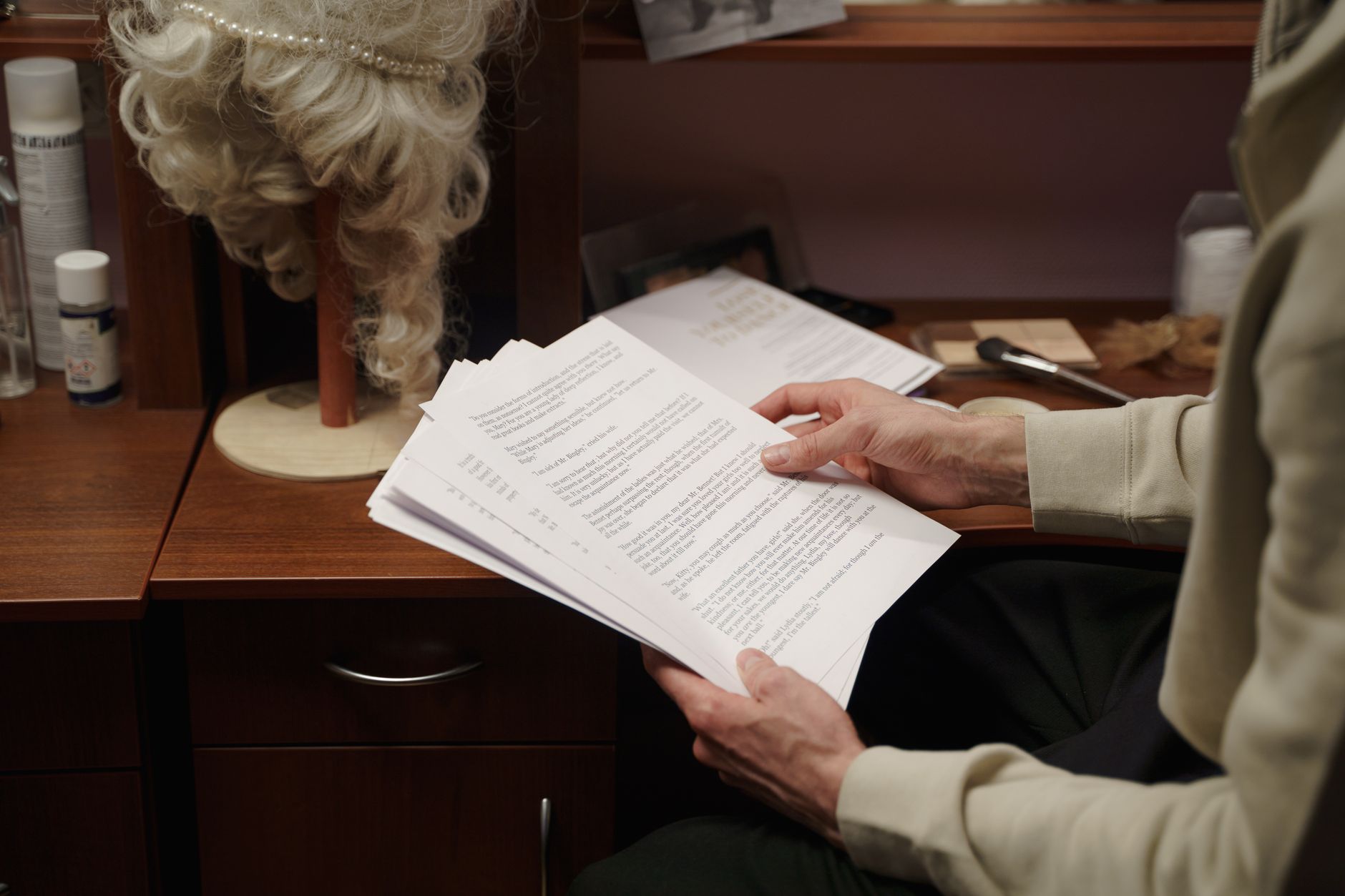
A table read in television is a different creature to its film equivalent. On a film, the read-through is a single reckoning with a finished script. In TV, it's a recurring ritual: writers, showrunners, directors, and the full ensemble cast gathered around a conference table, reading an episode aloud before the shoot week begins. The room listens, laughs, goes quiet in the wrong places, and the writers take notes on every second of it.
Why television's table reads carry more weight than film's
A feature film typically holds one or two read-throughs across an entire production. A television series can hold one per episode, running for 22 episodes a season. That's 22 separate moments where a room full of people hears the material fresh and tells the writing staff, without meaning to, exactly what's working.
The stakes differ too. Film productions are self-contained. Television showrunners are managing a long-form narrative across months of production and years of broadcast. A joke that doesn't land in episode four of a sitcom isn't just a bad joke. It might signal a character drift that will compound across the season. Catching it at the table costs a rewrite. Missing it costs audience goodwill.
Showrunners like Shonda Rhimes and David Chase have spoken publicly about how much they rely on actor response during read-throughs to gauge whether dialogue rings true. An actor who delivers a line with visible discomfort is telling the room something the page didn't. That feedback loop is irreplaceable, and it's why the table read has survived every shift in how television is made.
What the room reveals that the page conceals
Scripts look different in isolation than they sound in a room. Three things surface reliably in a television table read that rewrites rarely catch before that moment.
Pace is the first. Television scripts are written in acts, and a read-through reveals whether the act breaks land with enough propulsion to carry a viewer through a commercial or a streaming autoplay prompt. Scenes that read quickly on the page can drag when spoken aloud, especially if a scene carries too much exposition. Writers learn to feel the room losing interest. It's physical. People shift in their seats.
Character voice is the second. When an ensemble cast reads together, inconsistencies in voice become obvious. A line written for one character type, delivered by an actor who has inhabited that character for two seasons, can sound completely wrong. The actor will often say so. Good showrunners want that friction. It's cheaper than ADR.
The third is tonal mismatch. A table read makes drama and comedy clash in ways the page hides. A gag that sits between two emotional scenes can puncture the tension entirely when delivered aloud. Or it can release it perfectly. The room tells you which.
How actors influence the final script
The power dynamic in a television table read is different to film. Series regulars spend more time with their characters than the writers do, in a sense. An actor playing the same role across 80 episodes develops instincts about motivation and voice that are genuinely useful. Showrunners who ignore that input leave good material on the table.
It doesn't happen through formal notes. The influence is subtler. An actor reads a line flat because it doesn't feel right. A cast member adds an improvised response and the room laughs harder than anything scripted did. The showrunner circles something on their copy and the rewrite reflects it. Writers credit this process constantly when discussing their best episodes.
This dynamic is explored in depth by studies of ensemble ensemble casts, where the interplay between character and performer is most visible. The art of the ensemble cast illuminates why chemistry read at the table so often predicts what an audience will feel on screen.
The showrunner's role in running the room
Not every table read is productive by default. The showrunner controls whether the session generates useful information or just consumes a morning.
Effective showrunners set a rule early: the table read is a performance, not a discussion. Notes happen after. During the read, the goal is to create the closest thing to a real audience response the writers can get. Actors who stop to query a line mid-read break the spell. Directors who interrupt with blocking ideas derail the feedback the writers need.
After the read, the debrief is structured. Which scenes got silence when they needed energy? Which jokes landed cold? Where did the story feel unclear because the audience in the room had information a real viewer wouldn't? The showrunner synthesises those observations into a punch-up session with the writing staff, often the same afternoon.
It's intensive. It's also one of the reasons television at its best produces character work that feels genuinely alive. The table read builds in a correction mechanism that film rarely has the time or structure to replicate.
Table reads in the streaming era
Streaming has changed the format of television in almost every structural way, and table reads are no exception. Netflix series with 8-episode orders run fewer read-throughs than broadcast networks producing 22. Limited series sometimes skip the read entirely and rely on rehearsal time instead.
The argument for skipping is usually efficiency. A streaming production with a tight schedule and a single director across all episodes may feel the read-through is redundant if the director has already worked through the script with the cast in rehearsal. The argument against is that rehearsal between a director and individual actors doesn't replicate a full ensemble read. The chemistry isn't the same in a one-on-one setting.
Some platforms have adapted. Remote table reads became common during production disruptions earlier in the decade, and several showrunners kept the format even when in-person sessions were available again. The loss of the room's physical energy is real. So is the gain in scheduling flexibility and the ability to include cast members spread across different cities. For a series being produced simultaneously across multiple countries, a remote table read is better than no table read.
The question of how performers shape stories before a camera rolls connects to the broader craft of cinematic storytelling. Understanding how improvised scenes change a script, for instance, adds useful context to the table read's role. The art of the improvised scene covers the moments when actors depart from the text entirely, which often trace back to instincts sharpened at the table.
What a failed table read looks like
Not every session goes well. Failed table reads are part of the process too. An episode that reads flat across the board tells the writing staff something important: the script isn't ready. The question is what happens next.
Studios and networks that understand the purpose of the read-through treat a poor session as a production asset. It saved them from shooting a weak episode. Writers who go into the revision with that clarity produce better work. Productions that treat a flat read as an embarrassment, or worse, shoot the episode anyway to stay on schedule, tend to produce the kind of television that gets cancelled mid-season.
The read-through's value, ultimately, is that it puts the script in front of the only test that matters: other human beings hearing it for the first time. Everything that goes wrong in that room is a problem that won't reach the audience. That's the point of the whole exercise. Four walls, a table, a stack of scripts, and the most honest feedback in television.