
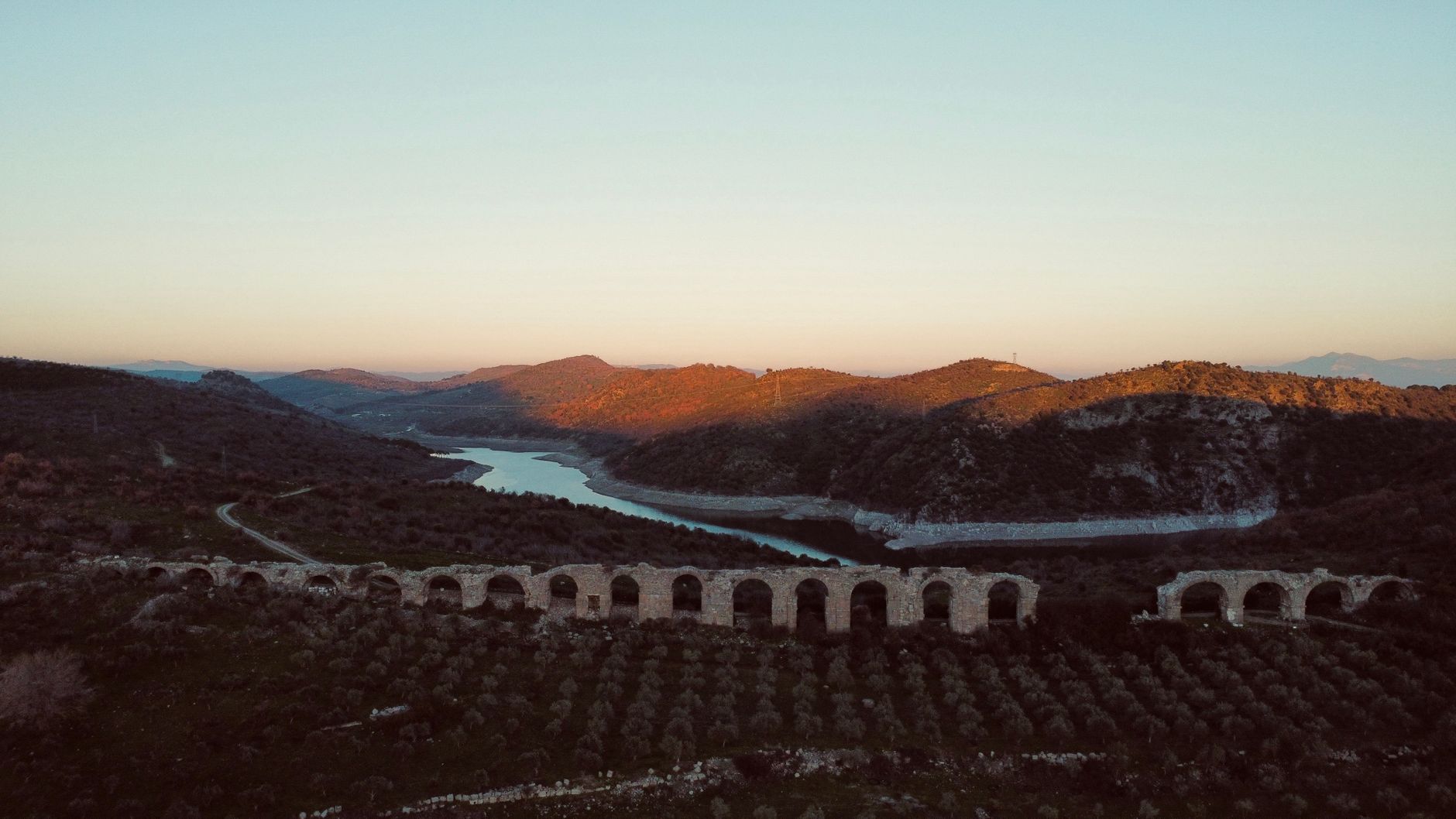
The aerial shot used to be the most expensive image in cinema. A helicopter, a specialist operator, a gyro-stabilised mount, weather windows, airspace permits, and half a day of logistics just to capture thirty seconds of footage from the sky. Directors reserved it for moments that earned the cost. The reveal of a vast battlefield. The isolation of a farmhouse in an empty plain. The city sprawling beneath a character who had just lost everything. Weight was built into the shot by necessity.
Drones changed the economics in roughly five years. What once cost tens of thousands of dollars per hour now costs a fraction of that, and the aerial shot has become accessible to independent filmmakers, commercial producers, and documentary crews working on modest budgets. That access is genuinely good news. But it's also produced a generation of aerial footage that's technically competent and narratively empty, because the operators learned to fly before they learned why the shot existed in the first place.
What the aerial shot is actually doing
In classical film grammar, height equals information. When a camera rises above a scene, it shifts the audience from participant to observer. Characters shrink. Context expands. The emotional register moves from intimacy to scale, from urgency to reflection. Directors like David Lean used that shift deliberately: an epic landscape shot wasn't decoration, it was a statement about the insignificance of one person against history or geography.
That logic still applies. The question a cinematographer should ask before launching a drone isn't "would this look impressive from the air?" It's "what does height add to this moment that ground-level framing cannot?" The answers are narrower than most operators assume. Aerial framing earns its place in three situations: when the physical scale of a location is central to the story, when the audience needs to understand spatial relationships between characters or places, and when emotional distance from the action is the intended effect.
Outside those three situations, the aerial shot is usually the most expensive way to say nothing.
How drone technology reshaped the visual language
Before drones, aerial cinematography had a limited physical vocabulary. Helicopters couldn't hover silently at ten metres above a subject. They couldn't thread between buildings, descend into a forest clearing, or track a subject at running pace along a narrow alley. The physics of rotary-wing aircraft set hard limits on what was possible, and those limits shaped how aerial shots were designed and used.
Drones removed most of those limits. A modern cinema-grade drone, something like the DJI Inspire 3 or comparable systems from Freefly, can shoot at low altitude, track moving subjects with gimbal-stabilised precision, and operate in locations where a helicopter would be physically impossible. The visual vocabulary expanded dramatically. Filmmakers gained the reveal descent (approaching a subject from directly above, then tilting down to face level), the tracking pull-back (following a character forward while climbing to reveal the world behind them), and the architectural orbit (circling a building or landmark in a continuous arc).
Each of these moves has a genuine storytelling function. The reveal descent builds anticipation. The tracking pull-back creates emotional separation, often used at endings. The architectural orbit establishes place without the static dullness of a held wide shot. The problem isn't that these techniques exist. The problem is that they've become default rather than deliberate.
The grammar mistake most drone operators make
Film grammar works on contrast. A close-up hits harder after a wide shot. A fast cut lands with more force after a slow sequence. The aerial shot is no different: its power depends entirely on what surrounds it. When filmmakers cut from a ground-level scene to an aerial, then back to ground, then aerial again, they don't double the impact. They halve it. The audience stops reading height as meaning and starts reading it as habit.
The strongest aerial sequences in contemporary cinema use the shot sparingly and always in contrast to what precedes it. Denis Villeneuve's use of aerial framing in his science fiction films is a useful reference: the camera moves to height at exactly the moments when human comprehension is meant to fail, when a landscape is too alien, a structure too vast, a situation too far beyond individual control. The aerial shot marks the limit of the human frame. Used that way, it carries enormous weight. Used every two minutes, it's wallpaper.
This is the same principle that governs cutaway footage and B-roll more broadly: the shots that carry a film's emotional texture are almost never the ones audiences consciously notice. They work because they're chosen, not because they're available.
The specific challenges of drone cinematography
Beyond grammar, drones introduce practical problems that affect how aerial footage integrates with ground-level material. The most persistent is the mismatch in light quality. Aerials are typically shot at magic hour, early morning, or golden afternoon, because that's when the landscape is most visually striking. Ground-level coverage is often shot across a full day. Cutting between the two creates colour and contrast discontinuities that colour grading can soften but rarely eliminate entirely.
Sound is the second problem. Drone footage is almost always shot silent, with audio added in post. That works when the aerial is clearly an establishing or transitional shot with score beneath it. It creates difficulties when the aerial is meant to feel observational or documentary, because the absent ambient sound signals artifice to the audience even when they can't articulate why.
The third challenge is movement. Consumer drone operators tend to fly in sweeping arcs because sweeping arcs look impressive. Professional cinematographers think about camera movement the same way they think about any other editing decision: what is this movement doing to the viewer's relationship with the scene? A slow lateral drift reads as contemplative. A fast ascent reads as revelation. A jittery unmotivated spin reads as operator inexperience. The drone doesn't make those choices. The person controlling it does.
Aerial shots in documentary and commercial work
Documentary filmmakers have embraced drone cinematography more thoughtfully than narrative filmmakers in many respects, partly because the aerial shot has a clearer evidentiary function in non-fiction. Showing the scale of a flood, the layout of a protest, the reach of a bushfire, or the isolation of a remote community: these uses of aerial framing justify themselves without needing complex grammar arguments. The camera shows what a ground-level operator cannot show, and the information itself is the point.
Commercial video production presents a different set of considerations. Property developers, tourism bodies, and infrastructure clients have used drone footage extensively since the technology became affordable, often to the point of oversaturation. A real estate listing, a tourism reel, and a mining company's sustainability report can now all open with the same slow drone drift over landscape, and frequently do. The aerial shot has become the establishing convention of corporate video, which means it no longer establishes anything except that the client had a drone budget.
The counter-move is restraint. Commercial productions that use aerial shots strategically, as a single visual statement rather than a repeated motif, tend to stand out precisely because their competitors have trained audiences to expect airborne excess. Understanding how camera work shapes storytelling is as relevant at three hundred metres as it is at eye level. Height doesn't suspend the rules. It makes them more demanding.
Where drone cinematography is heading
Regulatory changes are beginning to reshape what's possible in urban environments. CASA's drone regulations in Australia have tightened around populated areas, night operations, and beyond-visual-line-of-sight flights, which affects where and how commercial productions can operate. The practical consequence is that urban aerial cinematography now requires more planning, not less, and that pushes operators toward clearer creative intent before the shoot rather than exploratory flying on the day.
Autonomous tracking and obstacle avoidance technology is also changing the skill profile required for aerial cinematography. Drones that can hold a moving subject in frame without active operator input shift the creative challenge from technical flying to shot selection and sequence design. That's arguably where the creative decisions lived all along.
The aerial shot will keep getting cheaper and technically easier to produce. Whether it gets more meaningful depends entirely on whether the people commissioning and executing it understand what it was always meant to do: not fill a frame with impressive scenery, but place the audience at a specific emotional distance from the story and make that distance felt.