
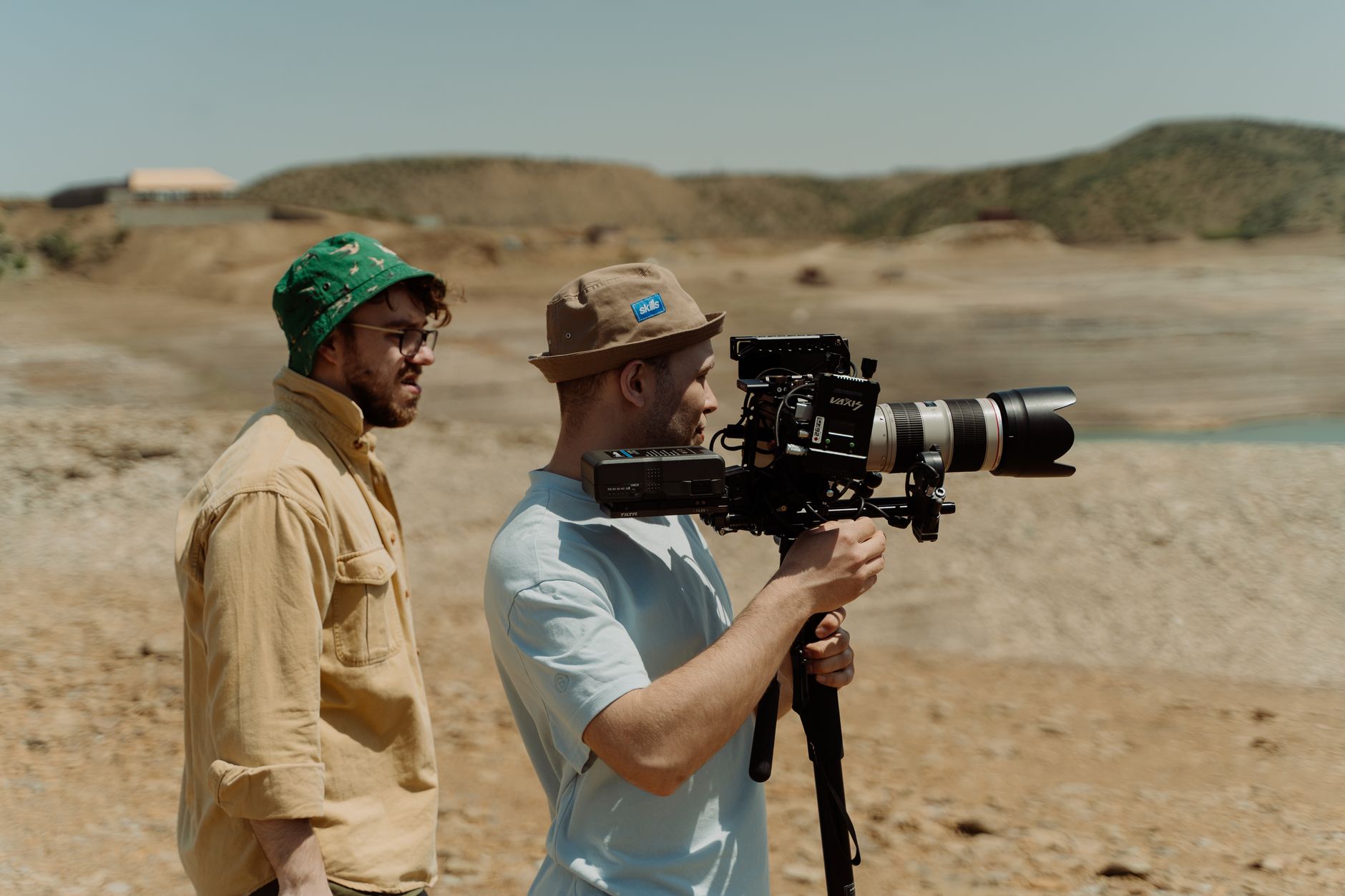
B-roll is one of cinema's least celebrated craft elements. Audiences absorb it without registering it, critics rarely mention it, and on-set it's often shot last, after the principal photography wraps and the budget is thin. That invisibility is precisely the point. When B-roll is working, you don't see it. You feel it.
The term itself comes from the early days of linear film editing, when editors would cut between two reels: the A-roll (interview or primary action) and the B-roll (supplementary footage shot to cover the edit). The hierarchy implied by that naming has misled generations of filmmakers into treating cutaways as an afterthought. The best directors never have.
What B-roll actually does in a scene
Cutaway footage performs at least four distinct functions simultaneously. It covers edit points, giving an editor room to trim dialogue or compress time without jarring jump cuts. It establishes location and context, communicating information that would take a minute of dialogue to convey. It carries emotional subtext, showing what a character sees, desires, or fears without a word being spoken. And it controls pace, giving the viewer's eye somewhere to rest or somewhere to race.
That last function is the one most often underestimated. A tight conversation scene between two actors can feel claustrophobic or electric depending entirely on how the editor uses cutaways to vary the rhythm. Insert a close-up of hands, a window, a glass being refilled, and the scene breathes differently. Remove those inserts and the same dialogue can feel like a stage play on film.
Roger Deakins, whose work across the No Country for Old Men and Blade Runner 2049 productions is well documented, has spoken about how B-roll coverage is often where a film's visual identity is actually built. The establishing shots, the environment work, the insert footage: these are the frames that carry a film's world into the audience's imagination.
The difference between coverage and storytelling
There's a meaningful gap between B-roll shot for coverage and B-roll shot with intent. Coverage footage exists to solve editorial problems. Intentional B-roll exists to communicate something the primary footage cannot.
A documentary crew filming a chef at work will shoot wide angles of the kitchen, close-ups of hands on knives, steam rising from a pan, guests waiting in the dining room. Some of that is coverage. But the close-up of a cook's knuckles, scarred and certain, held for three seconds before cutting back to her face: that's character. The footage tells you something about who she is and what her work costs her. No dialogue required.
Fiction filmmakers use the same principle. Think of the opening of There Will Be Blood, nearly fifteen minutes of almost wordless B-roll: rock faces, drilling machinery, a man crawling through dust. Paul Thomas Anderson uses that footage not to cover an edit but to build a portrait of obsession before a single line is spoken. It's primary storytelling disguised as supplementary footage.
This connects to something explored in the art of cinematography: every frame decision, whether it's a principal shot or a cutaway, carries narrative information. The cinematographer's job doesn't pause when B-roll is on the call sheet.
How editors use B-roll to control time
One of B-roll's most powerful applications is temporal compression. A montage of cutaways can collapse weeks of story time into ninety seconds without confusing the audience. A single insert shot of a calendar, a changing season outside a window, or a coffee cup cooling on a desk tells us that time has passed without requiring an on-screen text card.
This is also where B-roll and the art of the montage intersect most directly. A montage sequence is built almost entirely from B-roll material, edited together with enough rhythmic precision that the sum communicates something none of the individual shots could manage alone. The famous training sequences in sports films, the city-waking-up openings in romantic comedies, the time-lapse grief sequences in dramas: all of it is cutaway footage doing the heaviest narrative lifting in the film.
Editors who understand B-roll's temporal power plan for it in advance. They will request specific insert shots during production because they know they'll need them in post. Those requests come from reading the script and identifying the moments where dialogue will need to be compressed, where pace will need to shift, and where the audience's eye will need somewhere to go while the emotion lands.
What separates great B-roll from wallpaper
Wallpaper B-roll is easy to spot in retrospect. It's generic, disconnected from the scene's emotional content, and feels like footage shot because the production schedule required a certain number of coverage hours. A cityscape used to mark every location change. Hands typing on a keyboard. Exterior building shots that look like stock footage because they essentially are.
Purposeful B-roll is specific. It's particular to this character, this moment, this story. It refers forward or backward to something else in the film. It carries subtext. A close-up of a wedding ring in the middle of an argument between a couple says everything. A cutaway to a child's drawing pinned to a refrigerator in a scene about an absent parent rewrites the emotional stakes of every line of dialogue that follows.
Specificity is the test. Could this footage appear in any film, or only this one? If the answer is "any film," it's wallpaper. If the answer is "only this one," it's working.
B-roll in documentary and corporate video
The principles hold outside of narrative cinema. In documentary filmmaking, B-roll carries an even larger proportion of the storytelling burden because the primary footage is often talking-head interviews with limited visual dynamism. The archive footage, the observational moments, the environmental shots: these are where the film lives.
The same is true in corporate video production. An interview with a CEO filmed in front of a branded backdrop needs B-roll to become watchable. But generic office footage or product close-ups that could belong to any company miss the opportunity. The most effective corporate B-roll is specific to the organisation's culture, its people, and its work in a way that reinforces what the primary speaker is saying rather than simply illustrating it.
West Melbourne Studios builds B-roll shot lists into every production brief as a core deliverable, not an afterthought. The cutaway footage planned in pre-production almost always outperforms the footage grabbed opportunistically on the day, because it was designed to carry specific narrative weight rather than fill time.
The shot list as a storytelling document
Professional B-roll doesn't happen by accident. It starts with a shot list built from a close reading of the script or brief, identifying every moment where the primary footage will need support and every emotional beat that could be deepened with a well-chosen cutaway.
That shot list is a storytelling document. It asks: what does this character see that we haven't shown the audience? What object in this environment carries the scene's emotional weight? What piece of action, if shown before this line of dialogue, would change how the audience hears it?
Answering those questions before the shoot, rather than on the day, is the difference between B-roll that carries a film and B-roll that fills a timeline. The footage is often the cheapest part of the production budget. The thinking behind it is where the value is built.