
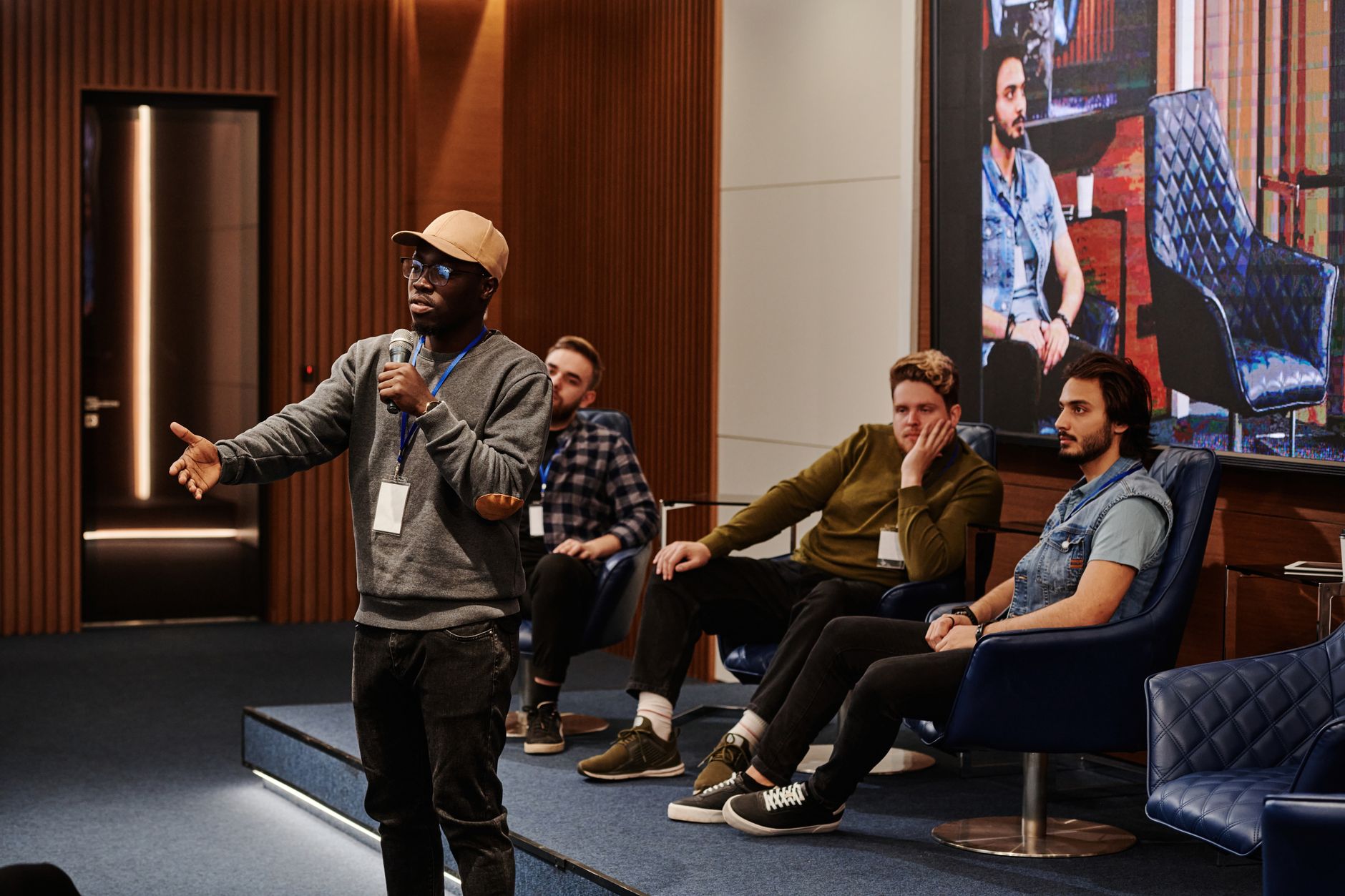
Speaking engagement pitches are one of the most competitive submission processes a professional faces. Conference organisers receive dozens of proposals for every slot they fill, and most of those proposals look identical: a title, a blurb, a LinkedIn profile. Video marketing closes the gap between a speaker who looks qualified on paper and one who actually wins the booking.
Why video changes the pitch dynamic
Event organisers carry a specific fear: booking someone who sounds great in writing but struggles on stage. A well-produced speaker video resolves that fear directly. It doesn't just describe your expertise. It shows your presence, your pacing, and whether an audience would actually enjoy spending 45 minutes with you.
That's a fundamentally different kind of evidence than a CV. Think of it as the speaking engagement equivalent of a film's concept trailer: it sells the experience before the audience commits. West Melbourne Studios works with executives and thought leaders to produce speaker reels that do exactly that job, compressing credibility and charisma into 90 seconds that an organiser can forward to a programming committee without further context.
What a strong speaker reel actually contains
The biggest mistake speakers make is submitting raw conference footage and calling it a reel. Organisers have already seen shaky slides and conference lighting. They want evidence of impact, not evidence that you've spoken before.
A strong speaker reel built for pitching contains three distinct components:
- A live audience moment. Ten to fifteen seconds of genuine audience reaction, not applause, but attention: people leaning in, laughing at a specific line, or visibly reacting to a point you've made.
- A direct-to-camera segment. Thirty seconds filmed in a controlled environment where your tone, energy, and conviction come through cleanly. This is where you state your core idea and why it matters to the specific audience you're pitching to.
- A testimonial or title card. A single quote from an event organiser or attendee, or a graphic showing the name of a credible event you've spoken at. One is enough.
The total length should sit between 90 seconds and 2 minutes. Any longer and organisers stop watching. Any shorter and it feels under-prepared.
Tailoring the video to the specific event
Generic speaker reels get generic results. The more a pitch video speaks to a specific event's audience and theme, the more it converts. This doesn't mean re-shooting the reel for every conference. It means building a modular approach where the opening 10 seconds can be swapped depending on who you're pitching.
If you're pitching a marketing conference, open with a line about marketing transformation. If you're pitching an HR summit, open with something directly relevant to people strategy. The rest of the reel stays the same. That small change signals to the organiser that you understand their audience, which is exactly the thing most speakers fail to demonstrate in written pitches.
West Melbourne Studios builds these modular speaker videos with multiple opening sequences in a single shoot, giving clients the flexibility to personalise pitches without producing new content every time. It's the same principle behind account-based video marketing campaigns, where personalised content targets specific decision-makers rather than a broad audience.
Distribution: where the video actually needs to go
Producing a speaker reel is only half the job. Most speakers upload it to YouTube, paste the link into their bio, and wait. That's not a distribution strategy.
The video needs to live in at least three specific places:
First, on your personal speaker page or website, embedded above the fold so it plays before an organiser reads anything else. Second, in the body of your pitch email rather than as a link buried at the bottom. Organisers who click a link in a follow-up email are a minority. Organisers who press play on an embedded video in the first paragraph are far more common. Third, on the event submission platform itself if it allows video uploads. Most speaker submission portals now accept supporting materials, and most applicants leave that field blank.
LinkedIn is worth separate consideration. Publishing a 60-second cut of your reel as a native LinkedIn video, tagged to the industry the event serves, surfaces your pitch to programme directors who are actively searching for speakers in that space. Video thought leadership in niche industries follows a similar logic: the narrower and more specific the audience, the harder a well-placed video works.
The follow-up video: used by almost nobody
After submitting a pitch, most speakers go silent. A short follow-up video sent 10 days after submission is one of the highest-leverage moves available and almost nobody uses it.
This isn't a second reel. It's a 30-second direct-to-camera message, filmed on a phone in good light, addressed specifically to the event organiser by name. It references the submission, restates the core idea in one sentence, and ends with a genuine offer: a call, a sample session, a relevant article you've written. The production value doesn't need to be high. The specificity does.
Organisers receive hundreds of generic follow-up emails. A personalised video that remembers their event name and speaks to their audience takes less than a minute to watch and almost always gets one. That's the asymmetry that makes the format worth using.
Measuring what's working
Speaker pitch video performance is measurable in ways that written applications aren't. Using a hosted video platform like Wistia lets you track exactly which organisers watched, how much of the video they completed, and whether they watched more than once. An organiser who replays the final 20 seconds three times is signalling something specific. That's a useful follow-up moment.
Completion rate is the metric that matters most. If organisers are consistently dropping off at the 40-second mark, the opening isn't landing. If they're completing the video but not responding, the call to action at the end needs work. These aren't guesses; they're patterns you can read and adjust from one pitch cycle to the next.
Speaking engagements are high-value opportunities. Applying the same data discipline that drives strong investor day video marketing to your speaker pitches turns what most professionals treat as a creative exercise into a system you can actually improve.
One thing to get right before anything else
None of this works if the opening five seconds of your reel are weak. Not a title card with your name. Not a slow zoom onto a conference stage. The first five seconds need to be a specific, interesting claim: a number, a counterintuitive idea, a question an organiser would genuinely want answered. That's the only thing separating a reel that gets watched from one that gets closed.
Get that right first. Then build everything else around it.