
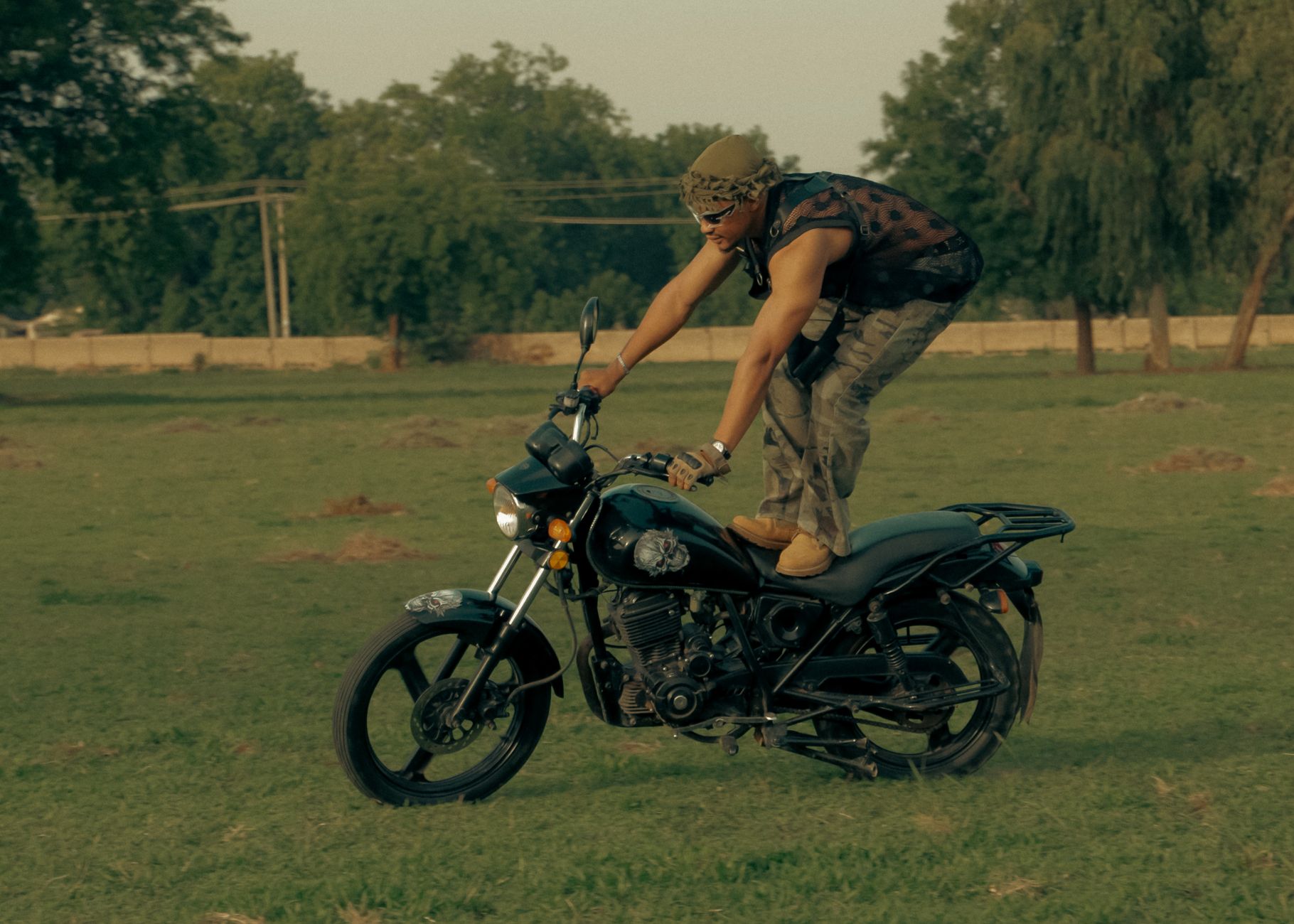
Action choreography is the craft that audiences feel most viscerally and understand least consciously. A fight sequence that lands perfectly doesn't read as technical achievement. It reads as fear, desperation, or triumph. The stunt coordinator's job is to make craft disappear into emotion, and the best in the field do it with the same intentionality that a cinematographer brings to lens selection or a composer brings to a score.
What a stunt coordinator actually does
The title understates the role. A stunt coordinator doesn't just keep performers safe. They work from the script, often months before principal photography, designing physical sequences that express something true about the characters involved. A fist fight between two people who love each other reads differently to one between strangers. The choreographer builds that difference into the geometry of every move.
On a mid-budget production, the coordinator will also double as stunt performer, second unit director, and safety supervisor simultaneously. The role bleeds into production design, costume, and even casting. If a lead actor can't safely execute a particular movement, the story changes. The sequence rewrites itself around physical reality.
Rehearsal schedules for complex action sequences can run six to eight weeks before cameras roll. That's not excess. It's the only way a 45-second corridor fight with 12 performers arrives on set fully resolved and shootable in a day.
How physical storytelling carries character
The best action choreography doesn't separate physical performance from dramatic performance. It merges them. Consider how much you learn about a character from the way they take a hit. Do they absorb it and keep moving? Do they crumple? Do they get angry? Each response is a characterisation choice, and the stunt coordinator is the one writing those choices into the sequence alongside the director.
This is where casting decisions shape a film's physical identity as much as its dramatic one. An actor who commits physically changes what the choreographer can design. Tom Hardy's presence in a brawl reads differently to Tom Hanks's, not because of skill but because of what each body communicates before a punch is thrown.
The choreographer also controls pace. A rapid exchange of strikes compresses time and creates panic. A slower grapple, with pauses and repositioning, builds dread. Neither is inherently better. Each serves a different dramatic purpose, and choosing between them is a storytelling decision, not a technical one.
The relationship between camera work and physical performance
Action choreography doesn't exist in isolation from the camera. A sequence designed for a static wide shot is a fundamentally different beast to one built for a handheld close follow. The two disciplines have to be designed together or neither works properly.
The long-take action sequence, popularised by Korean cinema in the early 2000s and later adopted by Hollywood in films like Mad Max: Fury Road and the John Wick franchise, demands a level of synchronisation between stunt performer and camera operator that's closer to dance than filmmaking. Every position change by a performer requires a corresponding camera movement. Miss the timing by two seconds and the geography of the fight collapses.
This is where the craft of cinematography becomes inseparable from the choreography. The director of photography and the stunt coordinator must share a visual language for the sequence to survive the edit. What looks chaotic on screen has been mapped, timed, and locked before a single frame is shot.
Practical effects vs digital augmentation
The industry sits at a genuine crossroads on this question. Visual effects have made it possible to enhance or entirely replace physical performance in post-production. A performer can fall two metres and have the impact extended to twenty in the edit. Fire, debris, and environmental destruction can be added after the fact with enough budget and time.
But audiences have developed a sensitivity to the difference. Practical stunts carry weight. They produce micro-expressions in performers that are impossible to fake and camera movements that respond to real physics. The body of a stunt performer hitting a real surface moves in ways that digital simulation still doesn't fully replicate, and viewers sense this at a subconscious level even when they can't articulate it.
The strongest productions treat practical and digital as complementary. The stunt team executes what can be executed safely and at full conviction. VFX extends, enhances, and protects. The division of labour, when planned clearly from pre-production, produces sequences that neither approach could achieve alone.
Safety as creative constraint
Every risk assessment on a stunt produces creative constraints. A vehicle can't travel above a certain speed. A performer can't take a fall beyond a certain height without rigging. Fire can only burn for a fixed duration before a safety cutoff. Each constraint shapes the choreography, which in turn shapes the scene.
The best stunt coordinators treat these constraints as design parameters rather than limitations. Working within the boundary of what's achievable, they find solutions that are often more inventive than the original concept. A director who wanted a 10-metre free fall gets a 3-metre rigged fall that cuts to a crash landing from a different angle, and the result is more viscerally effective because it's grounded in physical truth.
Workplace safety legislation in Australia, enforced through bodies like Safe Work Australia, has tightened the risk frameworks on domestic productions considerably over the past decade. For Melbourne-based productions, that means detailed pre-production risk workshops and documented safety plans that now sit alongside the shooting schedule as core production documents.
Why action choreography is underrecognised
The Academy of Motion Picture Arts and Sciences added a stunt design award category to its consideration list several years ago, then deferred the decision repeatedly. As of 2026, stunt coordinators still don't receive an Oscar category of their own, despite the role being credited on virtually every major studio release. The craft is visible enough that audiences notice its absence when sequences fail, and invisible enough that its successes get attributed to the director.
That invisibility is partly the craft's own success. When action choreography works, the audience isn't watching stunt performance. They're watching character under pressure. The technical achievement dissolves into the story it serves, and that's exactly the point.
For filmmakers thinking about physical sequences, the lesson is consistent: bring the stunt coordinator into pre-production before locations are locked, before casting is final, and before the schedule is set. The decisions made in those early weeks determine what's achievable on the day, and what ends up on screen.