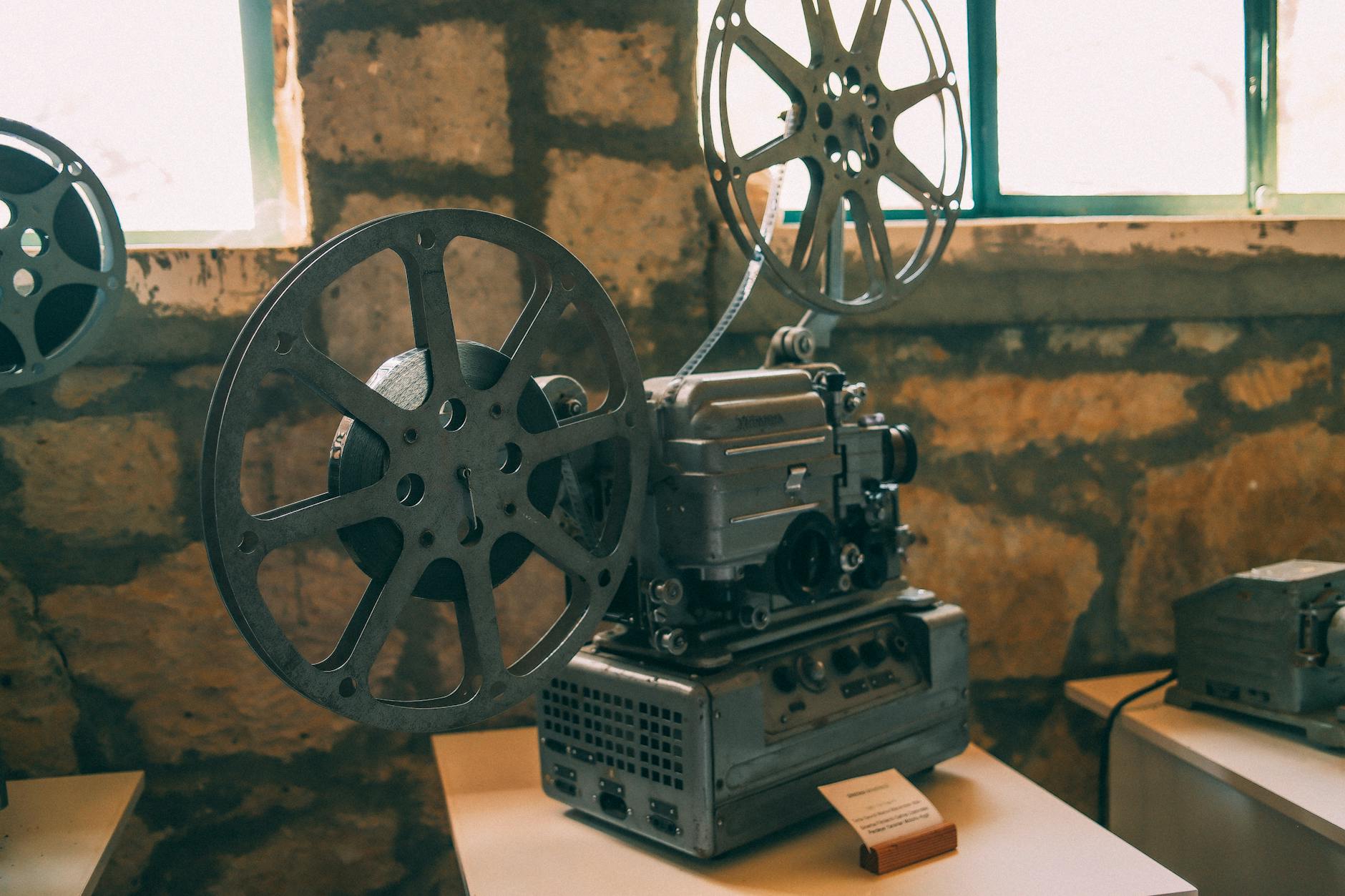
Silent cinema is the foundation most modern filmmakers never examine. The era ended in 1927 when The Jazz Singer made synchronised dialogue commercially viable, yet the techniques developed before sound arrived still operate inside every film made today. Understanding how those early directors solved the problem of wordless storytelling is one of the most practical things a filmmaker can do.
The problem they were solving
Silent filmmakers weren't working in a diminished medium. They were building one from nothing. Without recorded dialogue, every piece of story information had to travel through image, gesture, intertitle cards, or music played live in the theatre. That constraint forced a kind of visual clarity that sound cinema quickly forgot it needed.
D.W. Griffith understood this early. His 1916 film Intolerance cuts between four separate narrative timelines spanning thousands of years. No narration explains the structure. The rhythm of the editing carries it. Audiences at the time reported following the logic without confusion, which tells you something important: visual grammar, when it's precise enough, doesn't need translation.
The constraint also produced a specific performance style. Stage-trained actors exaggerated for the back row. Silent film directors pushed back. Charlie Chaplin insisted on restraint, especially around the eyes. He understood that the camera magnifies everything, and that a small, true gesture reads louder than a large false one. That instinct sits at the heart of every casting decision a director makes today.
What lighting had to carry
Before actors could say "I'm afraid," cinematographers had to show it. German Expressionist films of the 1920s, particularly F.W. Murnau's work, used extreme shadow angles and distorted set geometry to externalise psychological states. The cabinet in The Cabinet of Dr. Caligari (1920) physically leans toward the protagonist. The architecture is the character's anxiety. It's not subtle. It isn't trying to be.
That approach to lighting as emotional information didn't vanish with sound. Film noir borrowed it almost wholesale. Contemporary cinematographers still use motivated shadow, single hard sources, and deliberate underexposure to carry dread without dialogue. The principle is identical; only the film stock changed. Camera work shapes storytelling in ways that dialogue alone never could, and silent cinema proved that first.
Editing rhythm as a narrative voice
Soviet directors of the 1920s formalised what Griffith had intuited. Sergei Eisenstein's theory of montage argued that two images placed together create a third idea that exists in neither image alone. A close-up of a bowl of soup followed by a close-up of a hungry child means something the two shots don't contain independently. The edit is the sentence.
Eisenstein tested the theory systematically in Battleship Potemkin (1925). The Odessa Steps sequence builds unbearable tension through rhythm alone: short cuts, then longer ones, then a devastating slowdown at a pram on the stairs. The audience's nervous system responds to the pacing before the conscious mind has processed the images. That's not a trick. It's the fundamental mechanism of how cinema controls emotional time.
The same principle powers the contemporary montage sequence, the action cut, and the slow-burn withholding that keeps audiences leaning forward through a film's second act. Good editors today know Eisenstein's logic even when they've never read his essays, because it's baked into the craft itself.
Intertitle cards: the punctuation of silent storytelling
The intertitle card is usually dismissed as a workaround for the absence of dialogue. That undersells it. The best silent filmmakers treated cards as a rhythmic element, not a crutch. Too many cards meant the images weren't doing their job. A well-constructed silent scene needed no text at all. When cards appeared, they arrived like punctuation: brief, functional, often ironic.
Buster Keaton was especially precise about this. Many of his most celebrated scenes run for several minutes without a single card, the physical comedy carrying complete narrative logic. When he did use text, it was often to undercut what the audience had just seen. The gap between the image and the words created comedy. That technique maps directly onto how modern title cards, lower thirds, and caption overlays function in contemporary video work.
What survived into sound cinema
The transition to sound was fast and damaging. Early sound cameras were enormous and nearly immobile; the microphone forced actors to speak toward a fixed point. Films that had been kinetically alive became static for almost a decade. Directors who had built visual fluency found the new constraints suffocating. Some never recovered.
What survived was the grammar, not the silence. Directors like Jean Renoir and later Orson Welles reasserted visual storytelling inside the sound era, refusing to let recorded dialogue do the heavy lifting. Welles's Citizen Kane (1941) uses deep focus, overlapping dialogue as sound design, and frame composition to carry information that lesser directors would have written into the script. The technique is Murnau's, applied with a new tool set.
Today's most admired filmmakers continue this line. Christopher Nolan frequently cites silent cinema as the template for how he thinks about exposition. Wong Kar-wai builds emotional meaning through image and music in ways that don't require the viewer to follow a verbal logic. The craft persists because it works. Sound gave filmmakers more tools; it didn't replace the visual ones.
Why this matters for anyone making films now
Watching a silent film critically is one of the fastest ways to identify weaknesses in your own visual storytelling. If a scene only makes sense because characters explain it to each other, the images aren't pulling their weight. Silent cinema couldn't afford that failure mode, so it solved it.
West Melbourne Studios approaches production with this principle active at every stage: from location choice to lighting design to the rhythm of an edit. The tools are different. The problem is the same one Chaplin and Murnau were solving a century ago: how do you make a viewer feel something specific, precisely, without saying it outright?
The answer is still in the images.