
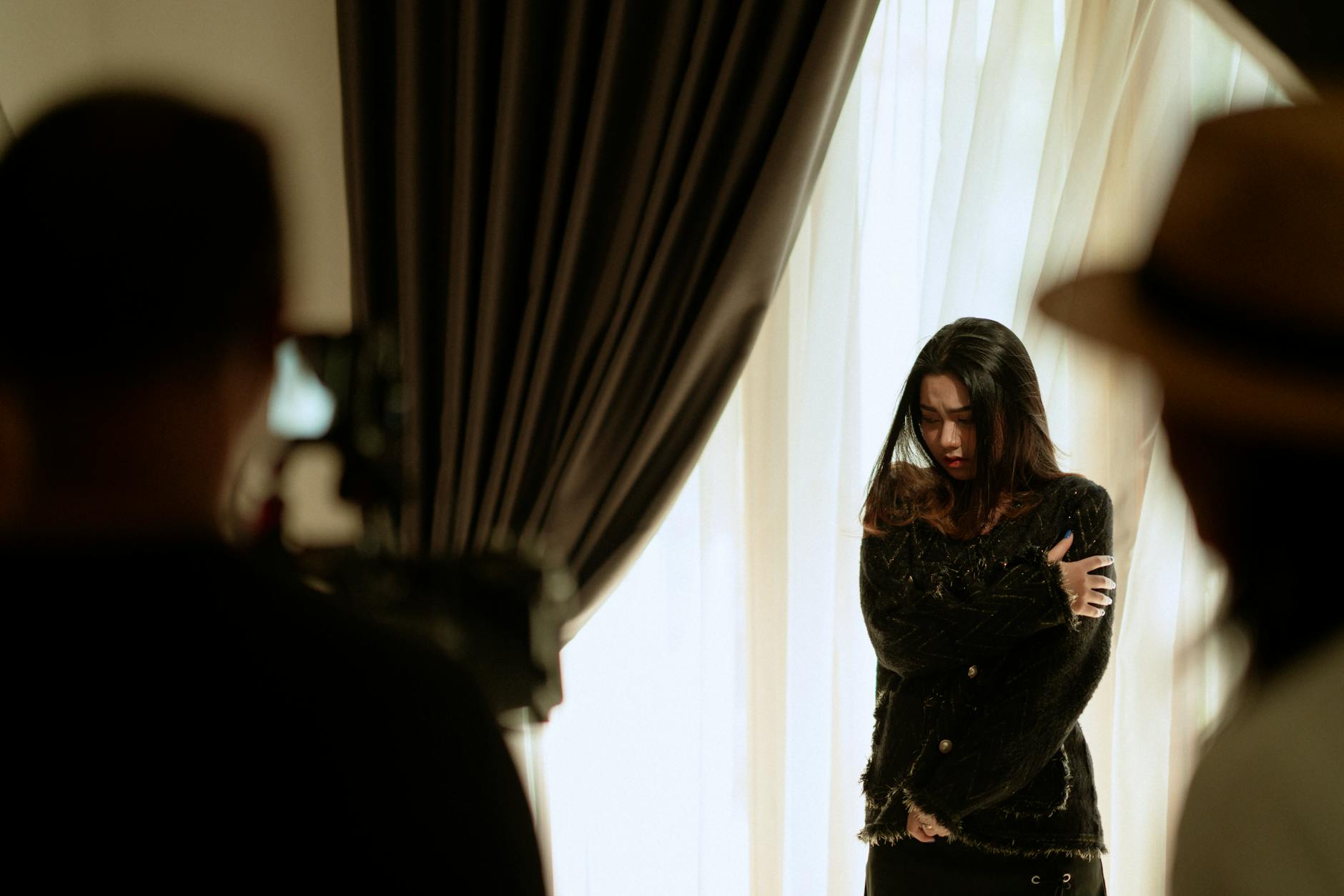
The screen test is one of the oldest rituals in cinema, and one of the least understood. Unlike a standard audition, a screen test puts an actor in costume, under lights, and opposite the actual lens that will shoot the film. The camera doesn't care about charisma in a conference room. It reads something else entirely, and what it finds determines whether a performer gets the role or goes home.
What a screen test actually involves
A screen test is a short filmed sequence, typically two to ten minutes, shot under production conditions. Wardrobe, hair, and makeup are applied. Lighting is set. The actor performs one or more scenes, sometimes opposite a reader or a fellow candidate, sometimes alone. The footage is reviewed by the director, producer, and studio before any offer is made.
Screen tests differ from chemistry reads and self-tapes in one key way: they cost money. A full camera crew, a set or location, and a wardrobe team are assembled for the express purpose of answering a question the audition room couldn't settle. That cost is itself a statement. When a production invests in a screen test, the actor is genuinely in contention.
Not every role gets one. Supporting parts are often cast on self-tape and a brief meeting. Screen tests are reserved for leads, for roles where the wrong decision would undermine the entire film, and for situations where the chemistry between two performers needs to be confirmed before contracts are signed.
What filmmakers are actually watching for
Directors watching screen test footage aren't checking whether an actor knows the lines. That's assumed. They're watching for something harder to name: how the camera relates to that particular face, that particular body, that particular quality of stillness or movement.
Cinematographers use the screen test to assess how a performer photographs. Skin tone under the planned lighting rig, how eyes read in close-up, whether the actor's physical scale works against the production design. These are concerns that have nothing to do with talent and everything to do with the specific visual world the film is building. The decisions a cinematographer makes during a screen test carry forward directly into principal photography.
Casting directors watch for something different again: impulse. An actor who is technically competent in the audition room can become mechanical on camera. The screen test exposes whether the performance has genuine spontaneity or whether it's been rehearsed into rigidity. Directors want to see the actor alive to the scene, not managing it from a distance.
The chemistry test as a variant
When two actors are being considered for roles that require a believable relationship, the screen test becomes a chemistry read on film. The classic example is a romantic lead pairing, where the wrong combination produces footage that simply doesn't convince regardless of individual performance quality.
These tests are sometimes conducted with multiple pairings in a single day. Director and producer watch the footage and often find the answer is immediate. Some combinations produce tension and warmth within seconds. Others, however accomplished the individuals, produce nothing. You can't manufacture it in the edit.
The casting decision that comes out of this footage tends to be confident. When the screen test works, everyone watching the playback knows it. The uncertainty that surrounded the meeting dissolves. This is also why casting shapes a film before a single frame is shot: the screen test is often the moment the film's central relationships become real for the first time.
How actors prepare for screen tests
Preparation is narrower than it might seem. The actor already knows the character. The question is how to translate that knowledge into a performance that reads on camera rather than across a table.
Practical adjustments matter. Stage actors often have to compress their physicality. What reads as natural movement in a theatre becomes restless on a close-up lens. Film performance is built in smaller increments. An actor going into a screen test for the first time often learns this the hard way: the energy that wins a room doesn't win the playback.
Wardrobe and hair changes how an actor moves, which is part of why the screen test includes them. Putting on the actual costume shifts posture, changes the actor's relationship to the character, and feeds the performance in ways no rehearsal room can replicate. Actors who use this to their advantage treat the costume fitting as part of the preparation, not a formality before it.
Screen test footage as an archive
Screen test footage from major productions has become some of the most studied material in film history. Tests for roles that were eventually cast differently are particularly revealing. An actor who didn't get the part leaving behind footage of how the film might have looked is a window into the creative decisions that shaped what audiences ultimately saw.
Studios have treated screen tests as proprietary, but footage has surfaced over time through documentaries, director commentary tracks, and retrospective releases. The material often reveals just how close a production came to a different outcome. A single casting switch, visible in the screen test archives, would have produced a different tone, a different chemistry, a different film.
This is also why screen tests matter beyond the immediate hiring decision. They capture a performer at a specific moment, under specific conditions, giving a specific reading of a role. That document stays in the archive long after the production wraps. For the actor, the test isn't just an audition. It's a record.
What the screen test tells us about filmmaking itself
The screen test reflects something true about how films actually get made: the gap between what a script promises and what the camera produces is wide, and people spend enormous effort bridging it. A screenplay describes a character. The screen test answers whether a specific human being can make that character real on a specific lens.
That question is not answerable in the abstract. It requires the equipment, the light, and the film running. It requires, in other words, a production decision made under real conditions rather than imagined ones. The screen test is the industry's honest admission that some things only become clear once the camera is rolling.
For studios investing in a major release, that clarity is worth the cost. For the actor standing in front of the lens, it's the moment the job either begins or ends.