
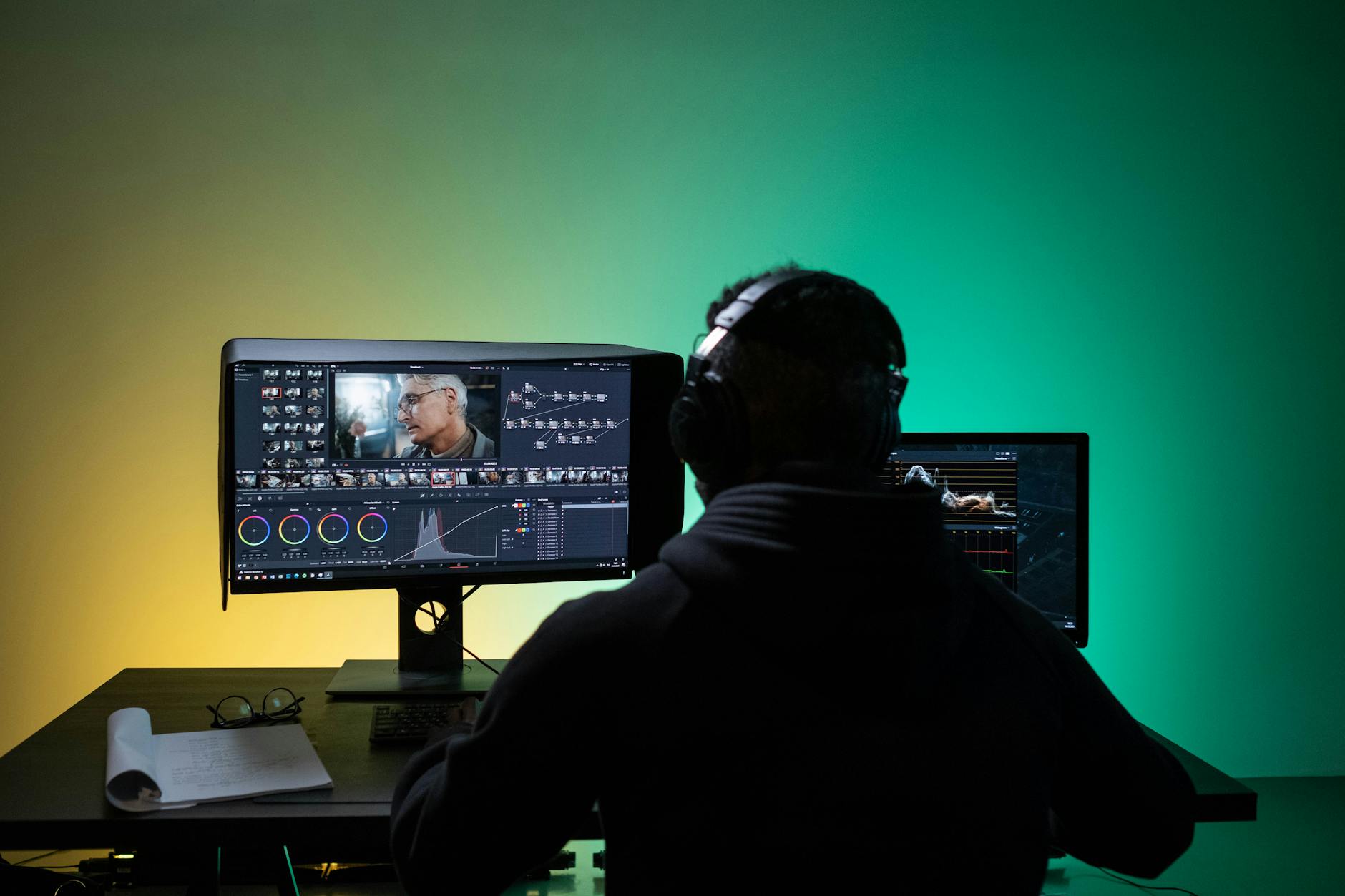
Scene transitions are the most invisible craft in filmmaking. When a cut works, nobody notices. The audience is simply somewhere else, with no friction, no confusion, and no awareness that a decision was made. That invisibility is the whole point, and it takes real skill to achieve.
Every time a film moves from one moment to another, the editor and director are making a claim about time. They're telling the audience how long something took, what happened in the gap, and how the next scene relates to the one before it. A clumsy transition breaks that contract. A masterful one extends it without the viewer ever knowing they agreed to terms.
What a transition actually does
A cut isn't just a break between two shots. It's a unit of meaning. The juxtaposition of two images tells the brain something that neither image could say alone. This is the principle that Soviet filmmaker Lev Kuleshov demonstrated a century ago: the same face reads as hungry next to a bowl of soup, grief-stricken next to a coffin, and delighted next to a child. The image doesn't change. The context does.
Scene transitions work the same way, but at a structural level. They don't just connect two shots. They connect two emotional states, two locations, two time periods. The edit makes a statement about the relationship between those things.
This is why colour grading shapes the mood of a film so dramatically at the transition point. The shift in palette between two scenes is part of the cut's argument. Editors don't design transitions in isolation from the visual texture on either side of them.
The main types of transition and what they signal
The hard cut is the default. Two scenes, placed back to back, with no dissolve or fade. It's the workhorse of modern editing and the right tool for most situations. Hard cuts read as immediate and urgent. They don't editorialize. They trust the audience to follow.
The dissolve, where one image slowly fades into another, signals the passage of time. It's a softer bridge, used when the editor wants the audience to feel a gap rather than leap across one. Overuse it and the film starts to feel drowsy. Use it precisely and it lands as elegiac.
The match cut is the transition editors reach for when they want meaning, not just movement. Stanley Kubrick's bone-to-spacecraft cut in 2001: A Space Odyssey is the canonical example: the oldest tool of human violence becomes the most advanced product of human intelligence, in a single frame. Two objects share a shape or a motion, and the cut makes them comment on each other.
The smash cut does the opposite: it collides two scenes with deliberate violence. A quiet moment ends. A loud one begins. Immediately. The contrast is the point. Edgar Wright built a career on smash cuts that hit like a physical force.
Wipes, irises, and page turns read as deliberate stylistic choices. George Lucas used wipes throughout Star Wars as a nod to serialised adventure films of the 1930s. The transition itself becomes a costume.
How transitions control the audience's sense of time
Cinematic time is not real time. A film can compress twenty years into ninety minutes or stretch five seconds into twenty. Transitions are the mechanism that makes that compression feel natural.
The jump cut breaks continuity deliberately. Jean-Luc Godard used it in Breathless (1960) to fracture time and unsettle the viewer. In contemporary film, the jump cut signals instability: a fragmented mind, a fractured memory, a world that won't hold still. The same technique that once read as an editing error has become a deliberate emotional signal.
The ellipsis cut skips over what the audience doesn't need to see. A character walks toward a door. Cut. They're already inside. Nobody misses the thirty seconds of corridor. The editor found the story's actual content and cut straight to it. This is where editing decisions intersect with pace, and pace is where audience engagement lives or dies.
Sound is part of the equation too. An audio bridge carries the sound from the next scene into the end of the current one, before the image cuts. The audience hears the destination before they arrive. Sound design shapes the viewer experience at every level, and the audio transition is one of the subtlest tools editors use to smooth a cut that would otherwise feel abrupt.
The emotional architecture of a transition sequence
Transitions carry emotional weight beyond their structural function. Consider the montage: a sequence of cuts that compresses time while building emotional charge. Rocky training. A love affair beginning. A city being built. These sequences don't narrate events, they accumulate feeling.
The technique works because each individual cut adds a small increment of emotion, and those increments stack. By the end of a well-cut montage, the audience feels something disproportionate to the screen time it consumed. Three minutes of footage can carry the emotional payload of a full act.
This is also why the transition between a film's second and third act is so critical. It's the hinge. The low point, the moment before the climax, the beat that tells the audience they're now in different territory. How that transition is cut, what sounds carry across it, what image opens the third act: these are structural decisions that filmmakers and editors debate at length.
The same craft applies beyond cinema. Productions as varied as music videos, branded content, and documentary work all rely on transition logic. West Melbourne Studios approaches every edit with this architecture in mind, because a cut that misreads the emotional moment breaks the entire sequence, not just itself.
What poor transitions reveal
A poor transition is almost always a symptom of a structural problem upstream. If an editor can't make the cut between two scenes work, the issue is often that the scenes don't belong adjacent to each other. The transition problem is a story problem wearing a technical costume.
Jarring cuts that don't serve a deliberate purpose pull the audience out of the film. So do transitions that linger: the dissolve that runs two seconds too long, the wipe that arrives in a film that doesn't have the stylistic vocabulary to support it. The transition is a promise about the relationship between two scenes. Break that promise and the audience notices, even if they can't name what went wrong.
Understanding how misdirection works in film gives editors another lens on the transition: sometimes the cut is the misdirection. The audience expects the scene to continue in one direction. The edit says no, and what comes next reframes what just happened.
Why this craft matters now
Audiences in 2026 process visual information faster than any previous generation. The average shot length in Hollywood films has compressed steadily over the past thirty years. Attention is competitive. Editing has responded by getting sharper, faster, and more precise about what each cut earns.
That pressure makes transition craft more important, not less. When the audience is making judgements in fractions of a second, a cut that doesn't land its argument instantly loses them. The invisible seam between scenes is where stories hold together or come apart. Getting it right is the editor's fundamental job.