
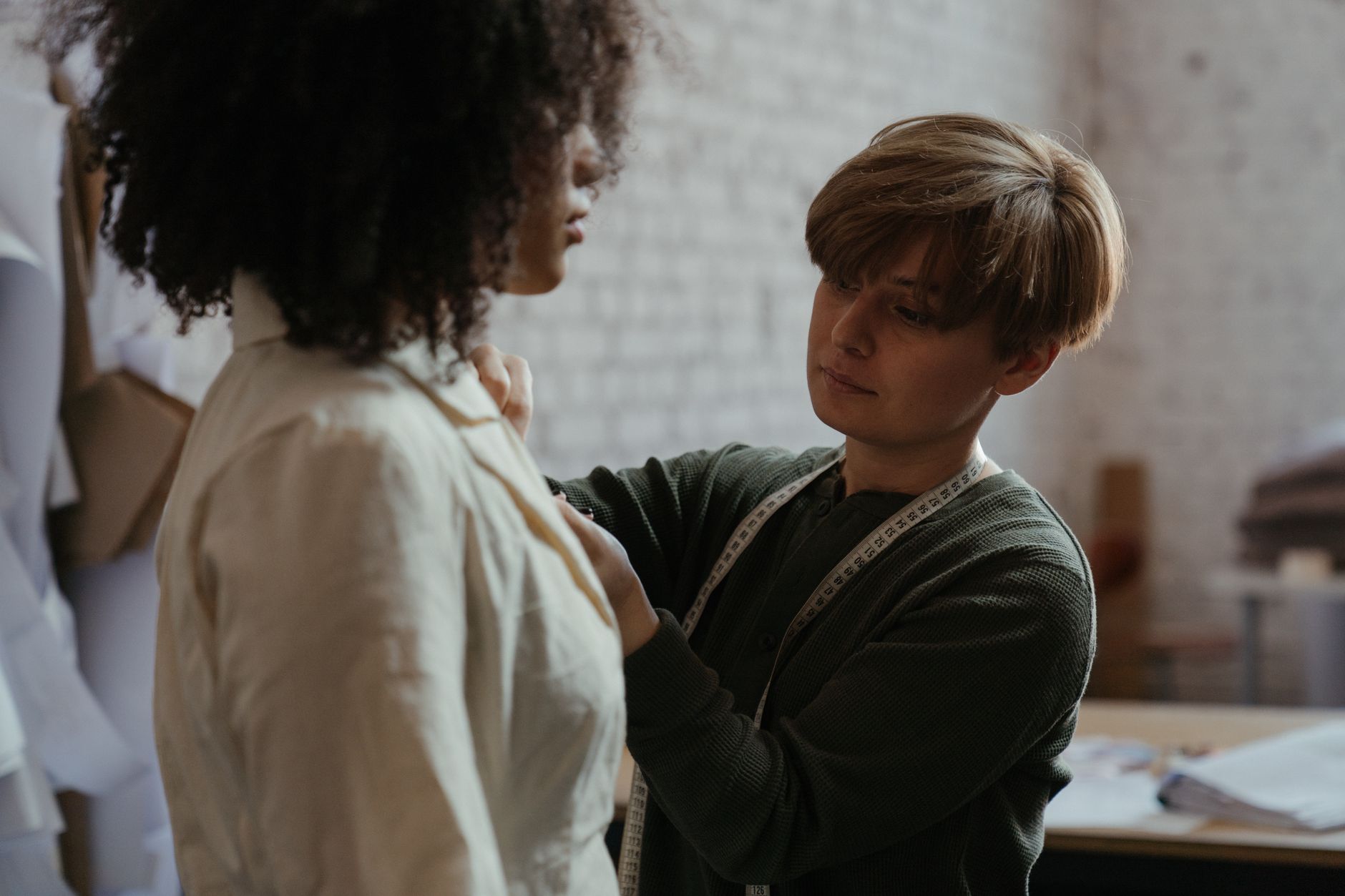
Costume design is the most immediate visual language a film has. Before a character speaks, before they move, before the scene establishes where and when they are, the audience has already made a judgement. That judgement is built entirely from what the person is wearing. The best costume designers understand this and exploit it with precision.
What separates a great costume from a well-chosen outfit is intent. A costume doesn't dress a character. It constructs one. Every seam, colour choice, and level of wear carries information the audience processes without knowing it, which is exactly why the craft is so powerful and so easy to underestimate.
What the first look actually communicates
The first look is the costume designer's most important contribution to any production. It's the audience's introduction to a character's world, psychology, and place in the social order. A costume at its best communicates three things simultaneously: who this person is now, who they used to be, and what they want.
A character in clothes slightly too large for their frame might be recovering from illness, hiding their body, or still wearing a dead spouse's clothing. A character in a perfect suit that's fraying at the cuffs is trying harder than their circumstances allow. Neither of those facts needs to be spoken. The costume makes the argument, and the audience absorbs it as feeling rather than information.
Silhouette does the heaviest lifting. A wide, structured shoulder line signals authority. A soft, draped silhouette signals vulnerability or ease. Tight-fitting clothes press a character into visibility; loose clothes let them disappear. These readings aren't culturally arbitrary. They're rooted in the same visual instincts audiences bring to real life, which makes them immediately legible on screen.
Colour as character biography
Colour in costume design works the same way it does in colour grading: it shapes emotional response before the conscious mind has caught up. A character dressed in muted, desaturated tones tends to register as someone in retreat, either emotionally or socially. A character in saturated, high-contrast colour declares itself.
What makes great costume colour design more than mood board work is consistency across a character's arc. The smartest designers track a character's palette across the entire film. A protagonist who begins in greys and moves towards warmer, richer tones as the story progresses is being costumed to mirror their internal journey. The audience rarely notices this consciously, but they feel the cumulative shift.
Contrast between characters is just as important as individual palette choices. Two characters in opposing colour families create visual tension before they've exchanged a word. Dressing a villain in a colour that rhymes with the hero's palette creates unease. It suggests something shared, something that the plot might eventually reveal.
Texture, wear, and the weight of history
Fabric choice and the state of that fabric tell the audience something no line of dialogue can: how long this character has been living this life. New clothes suggest new circumstances. Worn clothes suggest permanence. Clothes that are visibly mended suggest someone who can't afford to replace what breaks. These details are processed at a glance.
Great costume designers age their garments deliberately. A costume that arrives on set brand new and unworn reads as false, because real people and real clothes have a shared history. Breaking down a costume, distressing the fabric, dulling the sheen, and adding wear at the elbows and cuffs gives the character credibility that no performance note can substitute for.
This is where costume design intersects with production design: both crafts are in the business of making a fictional world feel inhabited. A set that looks lived-in needs costumes that have the same quality. When the two are misaligned, the audience registers the inconsistency even if they can't name it.
When the costume works against the character
Not all costumes express who a character is. Some express who they're pretending to be. This is one of the costume designer's most sophisticated tools, and it requires close collaboration with the director and actors to land correctly.
A character wearing clothes that don't fit their true self is communicating aspiration, deception, or displacement. The socialite in clothes that are technically correct but slightly off in their proportions might be new money performing old money. The spy in an immaculate local costume might be betrayed by a single detail the audience spots before the other characters do.
This kind of costuming demands that the designer have a full picture of the character's psychology. It's not enough to know what they wear. The designer needs to know why they wear it and what that choice costs them. A character who dresses for someone else's approval is being costumed to show the gap between performance and self, and that gap is dramatic material.
The costume reveal as narrative device
Costume changes are story events. The moment a character changes their clothes, the film is signalling a shift: in circumstance, in intention, or in identity. The scene in which a character discards a costume they've worn throughout the film is almost always a moment of transformation, whether it's a hero finally shedding a disguise or a protagonist abandoning the life they've outgrown.
Equally powerful is the costume that doesn't change. A character still wearing the same clothes days into a crisis signals denial, collapse, or obsession. The filmmaker trusts the audience to clock that the costume hasn't changed, and that observation carries weight precisely because it requires no dialogue to establish.
These moments work because costume design has spent the entire film building a grammar the audience has internalised. By the time the costume reveal lands, the audience is fluent in the visual language that makes it meaningful. That's the real achievement of great costume design: it teaches you how to read it, and then pays off the lesson.
Collaboration and constraint
Costume design rarely happens in isolation. The designer works within a production's budget, its colour palette, its period, and its director's vision. The best work comes from treating those constraints as creative parameters rather than limitations.
Budget, in particular, forces ingenuity. A limited costume budget often produces sharper thinking than an unlimited one, because every choice has to earn its place. The designer can't lean on expense to do the work. The garment has to justify itself through specificity, not cost. That pressure tends to produce costumes that are more character-specific, not less.
Period productions add another layer. Authentic period costume requires research, but authentic doesn't always mean accurate. A costume designer working on a historical film is still serving the story, not the archive. A garment that's historically correct but cinematically inert fails the production. The designer's job is to find the costume that feels true to the period and true to the character.
Costume design is one of cinema's most underacknowledged crafts, which is partly what makes it so effective. Audiences don't leave a film thinking about the costumes in the same way they think about the score or the cinematography. They leave having been shaped by them. That invisibility is the whole point: the best costume work disappears into the character so completely that separating the two becomes impossible.