
Film trailers are among the most-watched pieces of video content on the planet, yet the craft behind them rarely gets the analysis it deserves. A well-cut trailer doesn't summarise a film. It engineers a specific emotional state in a stranger and leaves them wanting to resolve it. That's a harder job than it looks, and the people who do it well treat it as a distinct filmmaking discipline.
The trailer editor is not the film editor
This distinction matters. Trailer houses in Los Angeles and London employ specialist editors whose entire career is built around the two-minute form. They rarely cut the films themselves. Where a film editor's job is to serve the story, the trailer editor's job is to sell it, and those two goals frequently require contradictory choices.
A trailer might feature a scene from act three with music from a completely different film. It might introduce a character who dies in the first reel. It might compress a slow-burn drama into a kinetic 90 seconds that bears almost no resemblance to the actual pacing of the feature. None of that is dishonest, technically. It's the job. The craft of concept trailers takes this even further, pitching a film that may not exist at all.
Structure: the three-act trailer
Most theatrical trailers follow a structure so consistent it's effectively a genre convention. The opening act establishes world and character, usually in a quieter register. The second act introduces conflict and raises stakes. The final act hits the peak, often a rapid-fire sequence of images cut to music, before pulling back to a single holding image or title card.
Audiences absorb this structure without noticing it. They know roughly where they are in a trailer at any given moment, which means the moment a trailer subverts the structure, it creates genuine surprise. The best trailer editors understand this expectation and use it deliberately.
The music choice drives much of the emotional architecture. Temp tracks are almost always used in trailers before the film's score exists, and sometimes a licensed track becomes so associated with a trailer that the actual film score feels like a stranger. This is the same temp track problem that shapes the film itself, but compressed into a much smaller window and with less room to recover from a wrong choice.
What trailer editors are actually cutting
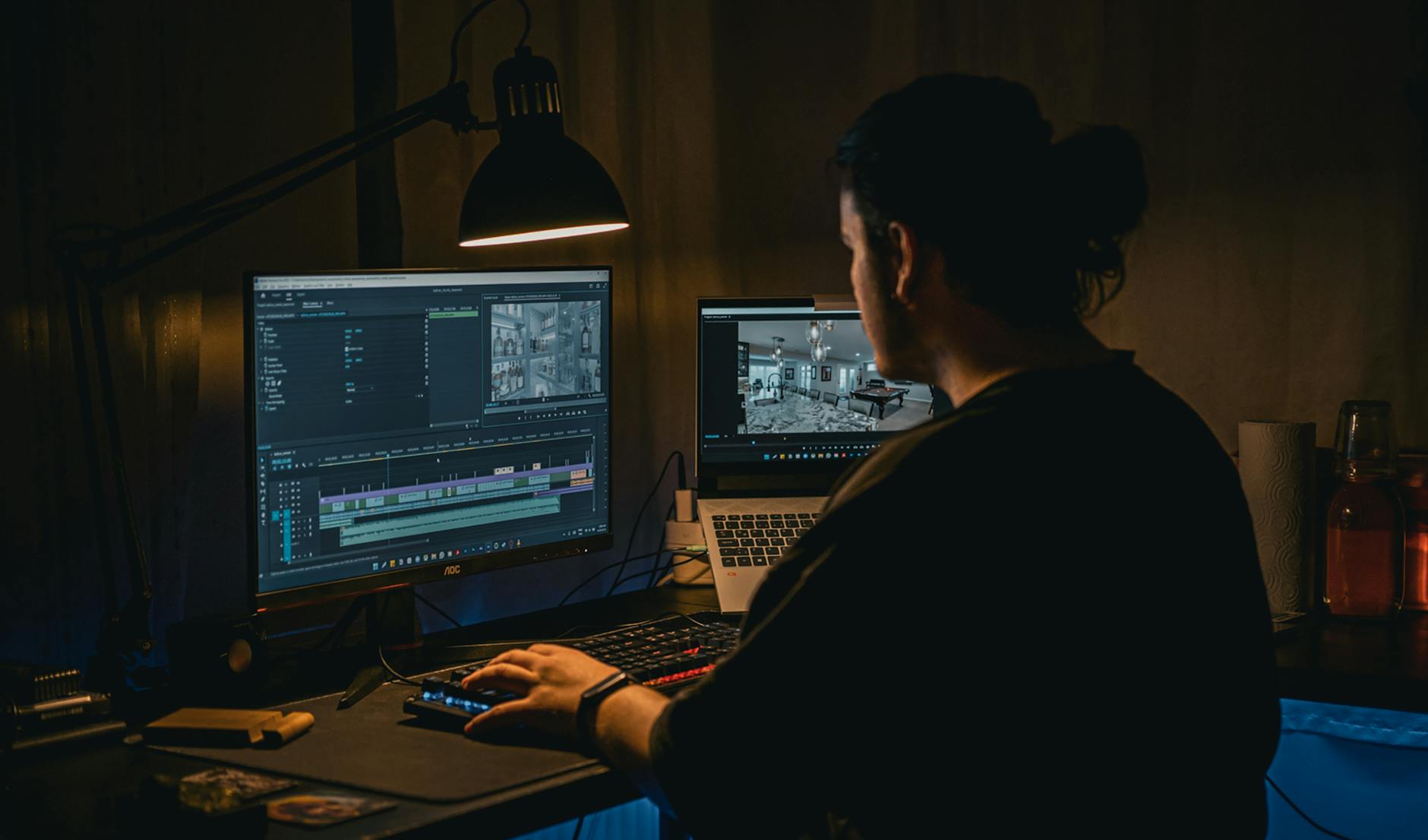
The edit is where most of the craft lives. Trailer editors work with the same raw material as the film editor but make decisions based entirely on viewer psychology, not narrative logic. A few specific techniques appear in almost every successful theatrical trailer:
- The false pause. A moment of quiet before an audio sting or visual cut that hits harder because of the silence preceding it.
- Dialogue isolation. A line that lands differently out of context, often more mysterious or more urgent than it reads in the film.
- Music sync. Cutting image changes to musical beats, which wires the viewer's nervous system into the rhythm and makes the trailer feel physically propulsive.
None of these techniques are secret. They're taught in trailer editing courses and discussed openly in the industry. What makes a trailer work is the specific combination of choices and the precision with which each beat lands.
The thumbnail problem
A theatrical trailer has two jobs: perform in cinemas before a feature, and perform online. Those two contexts have almost nothing in common. A cinema audience is captive, seated in the dark, and already primed for storytelling. An online audience is scrolling, possibly muted, definitely impatient.
The thumbnail is the trailer's trailer. It's the still image that has to communicate enough to earn a click before the video even plays. This is why the visual language of modern online trailers has shifted toward quicker openings, text overlays, and dialogue-forward structure. The first five seconds now carry a weight that theatrical trailers never had to manage.
This pressure is not unique to trailers. It's the same force reshaping how every kind of video content gets made and packaged. The same logic that pushes a trailer editor to front-load the most compelling image also drives the choices behind thumbnail design across every category of digital video.
The spoiler line and where it sits
Every trailer editor draws a line. Too little information and the audience doesn't know what they're buying. Too much and there's nothing left to discover. The line moves depending on the film, the studio, and the audience being targeted, but crossing it has consequences that show up in audience satisfaction data after release.
Horror trailers tend to withhold the most. The monster, the reveal, the full nature of the threat, all kept back. Comedy trailers have historically revealed far too much, burning through the best gags to sell the concept. Action trailers sit somewhere in between, trading in sequences that are spectacular to watch but whose context in the final film adds layers the trailer doesn't show.
The craft of the reveal sequence is closely related to other cinematic techniques built on misdirection and withheld information. The plot twist relies on the same psychological mechanics as the trailer that conceals its best card. Both depend on an audience's willingness to follow a promise without full information.
Why trailers are worth studying seriously
Trailers are often treated as disposable marketing material, a necessary step between greenlight and opening weekend. That's a category error. The best theatrical trailers from the past 30 years are genuinely impressive pieces of filmmaking, edited with precision, scored with intention, and structured around a sophisticated understanding of viewer psychology.
For anyone working in video production, the trailer is worth studying not because it's the work you'll do, but because it teaches compression. Every decision in a trailer has to earn its two seconds. The discipline that produces in a filmmaker is the same discipline that makes any short-form video content stronger: clarity of intent, specificity of feeling, and total intolerance for a moment that doesn't pull its weight.
The best trailer editors aren't hiding what they do. The techniques are visible if you watch closely. What's hard is making those techniques invisible to an audience encountering them for the first time, in the dark, with no idea what comes next.