
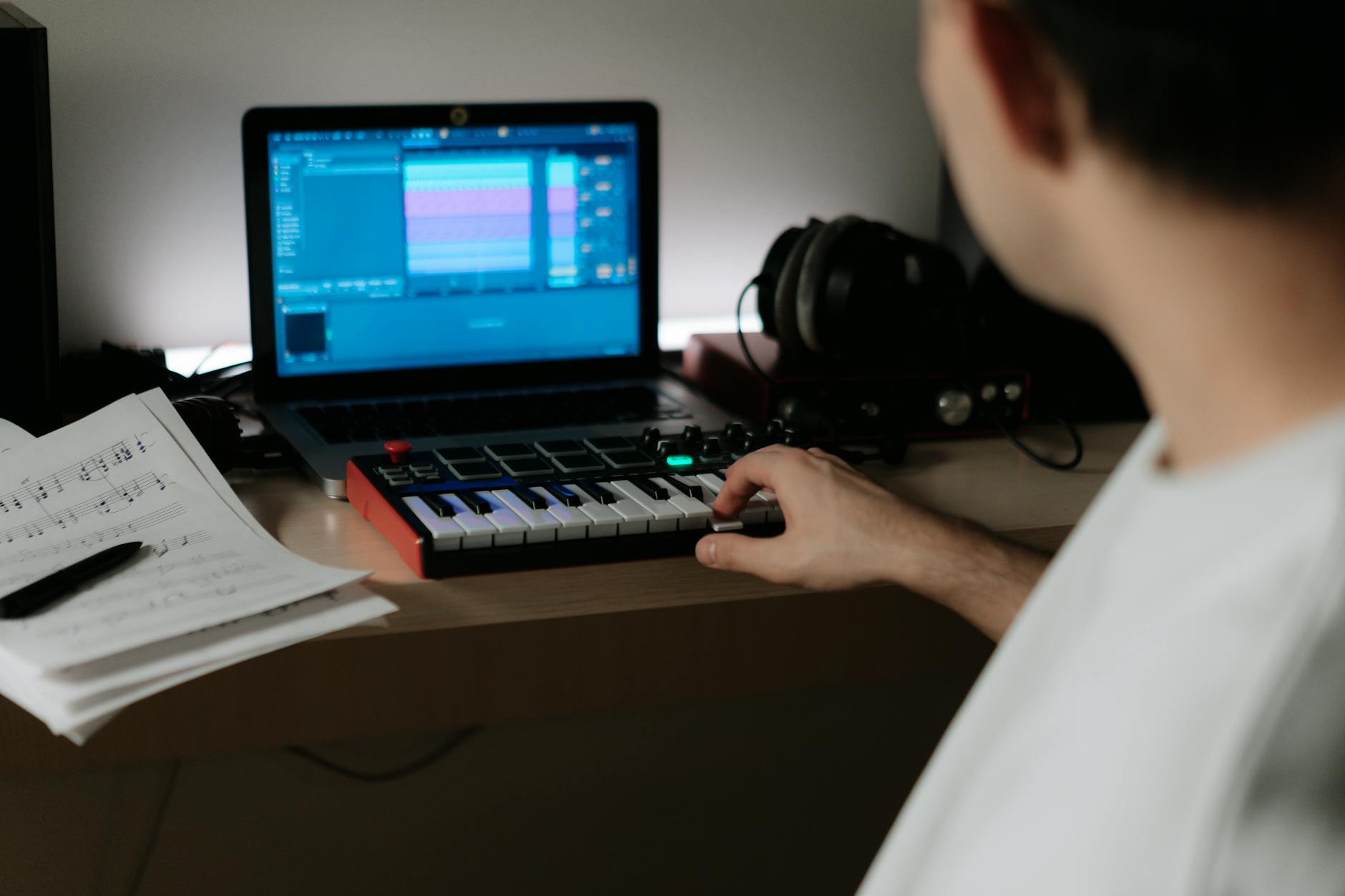
Every film that goes into editing carries a temp track: borrowed music laid in by the picture editor to give scenes emotional context before a composer has written a single note. The temp track is temporary by definition. In practice, it sticks. Editors bond with it, directors fall in love with it, and test-screening audiences respond to it, which makes the job of replacing it one of the most psychologically fraught stages in post-production.
What a temp track actually is
A temp track is usually assembled from existing recordings, most often other film scores, classical music, or well-known orchestral pieces. Hans Zimmer's work appears in roughly half the temp tracks cut in Hollywood. Zimmer has said, only half jokingly, that he has to compete against himself on almost every project he takes on. The temp gives the editing room something to react against. Without it, a rough cut is just images and dialogue, stripped of the emotional signalling that music provides.
Editors use temp tracks to solve a specific problem: silence is disorienting. A scene without music reads differently to a scene with it, and when a director watches a cut, they need to feel the rhythm and mood, not just see the structure. The temp does that job. It fills the emotional architecture of the film before the actual architect has arrived.
How temp tracks start to cause problems
The danger is called "temp love." It describes what happens when a filmmaker becomes so attached to the placeholder music that no original score can displace it. The composed alternative arrives and sounds wrong, not because it is inferior, but because it isn't what the editor and director have been hearing for months. The brain adapts. It calibrates to the temp. The temp becomes the standard against which everything else is measured.
Some of cinema's most discussed scoring disputes have roots here. The production team for Stanley Kubrick's films almost never replaced his temp tracks at all. Kubrick used classical pieces in 2001: A Space Odyssey and The Shining and kept them in the final cut, over the objections of the composers originally hired. Alex North wrote a full original score for 2001 that was replaced entirely with the temp. North didn't find out until the premiere.
That's an extreme case. But the pattern of a composer being asked to write "something like the temp, only different" is so common it has become a cliché of the industry. The request is almost impossible to fulfil. If the music is different enough to avoid copyright infringement, it's different enough to feel wrong to ears that have adjusted to the original. If it's close enough to feel right, the studio's legal team has concerns.
The temp track's effect on editing rhythm
Music sets pace. When an editor assembles a cut against a temp track with a particular tempo, the edits unconsciously land on the beats. Cuts hit at rhythmically satisfying points. The film starts to breathe in time with the placeholder score. When a new composer writes original music at a different tempo, those edit points no longer fall where they should. The film has to be re-cut, or the music has to be forced into a tempo it doesn't naturally want. Neither option is free.
This is why composers who understand temp tracks don't just listen to them for mood. They measure them. They note the BPM of every cue, the harmonic language of every scene, the dynamics of every emotional peak. The original score has to solve the same emotional problems the temp solved, using the same structural grammar, without being the same music. It's a constraint that sits somewhere between creative brief and legal deposition.
West Melbourne Studios produces content where sound and picture are developed in parallel from pre-production. The discipline of the final sound mix is easier when the music hasn't been fighting a temp track for the full duration of post-production. When composers are brought in early, the temp track becomes a conversation starter rather than a standard to be matched.
When the temp track gets kept
Not every temp track is replaced. Sometimes the licensed music fits so precisely that clearing it is cheaper than commissioning an original score. The studio pays sync and master licensing fees, and the temp becomes the final. This happens more often in independent films with limited post-production budgets, and occasionally in sequences within bigger productions where a cue is so perfectly timed that no original composition could improve on it.
The opening of Guardians of the Galaxy works in part because director James Gunn built the film around existing pop songs from the beginning, treating the needle drop as a structural device rather than a placeholder. That's a different relationship to temp music: intentional rather than provisional. The music was always going to be those songs. The editorial approach was designed around them, not despite them.
Understanding the difference between a planned needle drop and an accidental temp love situation matters for anyone working in post-production. The art of the needle drop is a deliberate creative choice. Temp love is an unintended dependency. One is a tool. The other is a trap.
What composers do about it
The best film composers treat the temp track as intelligence, not competition. They use it to understand what the director responds to emotionally, what textures they reach for under stress, and what instrumentation they associate with a character or a scene. Johnny Greenwood has spoken about working with Paul Thomas Anderson on The Master without a traditional temp track, because Anderson wanted to avoid the bias it creates. The result was a score with an entirely different sonic character from what any temp would have produced.
Most composers don't have that freedom. They arrive at the session with a temp track already embedded in the picture, already loved, and already defended by an editor who's been living with it for six months. The professional response is to find the emotional core of the temp and rebuild it in original material. Not imitate the notes. Replicate the feeling the notes produced.
That distinction is where the craft lives. A temp track tells a composer what a scene needs to feel like. The original score's job is to make it feel exactly that way, without borrowing the means to get there.
The temp track as a production planning tool
Some directors use the temp track as a deliberate communication tool during production, before the edit even begins. They will cut a sizzle reel with music that communicates the film's intended tone and show it to investors, distributors, and cast. The temp becomes part of the pitch. It sets expectations. This carries its own risks: if the expectations set by a sweeping orchestral temp are met with a sparse, minimalist original score, the film can feel like it's missing something that was never actually promised.
Planning for the temp track's downstream effects is part of the production design conversation at studios that work at this level of detail. The same planning instinct that goes into the colour script, the storyboard, and the production design should go into the music direction early. A film that knows what it wants to sound like before the edit begins doesn't need to fall in love with borrowed music.
The temp track will never stop being part of the filmmaking process. It solves a real problem. But the films that handle it best treat it as a diagnostic tool, not a destination.