
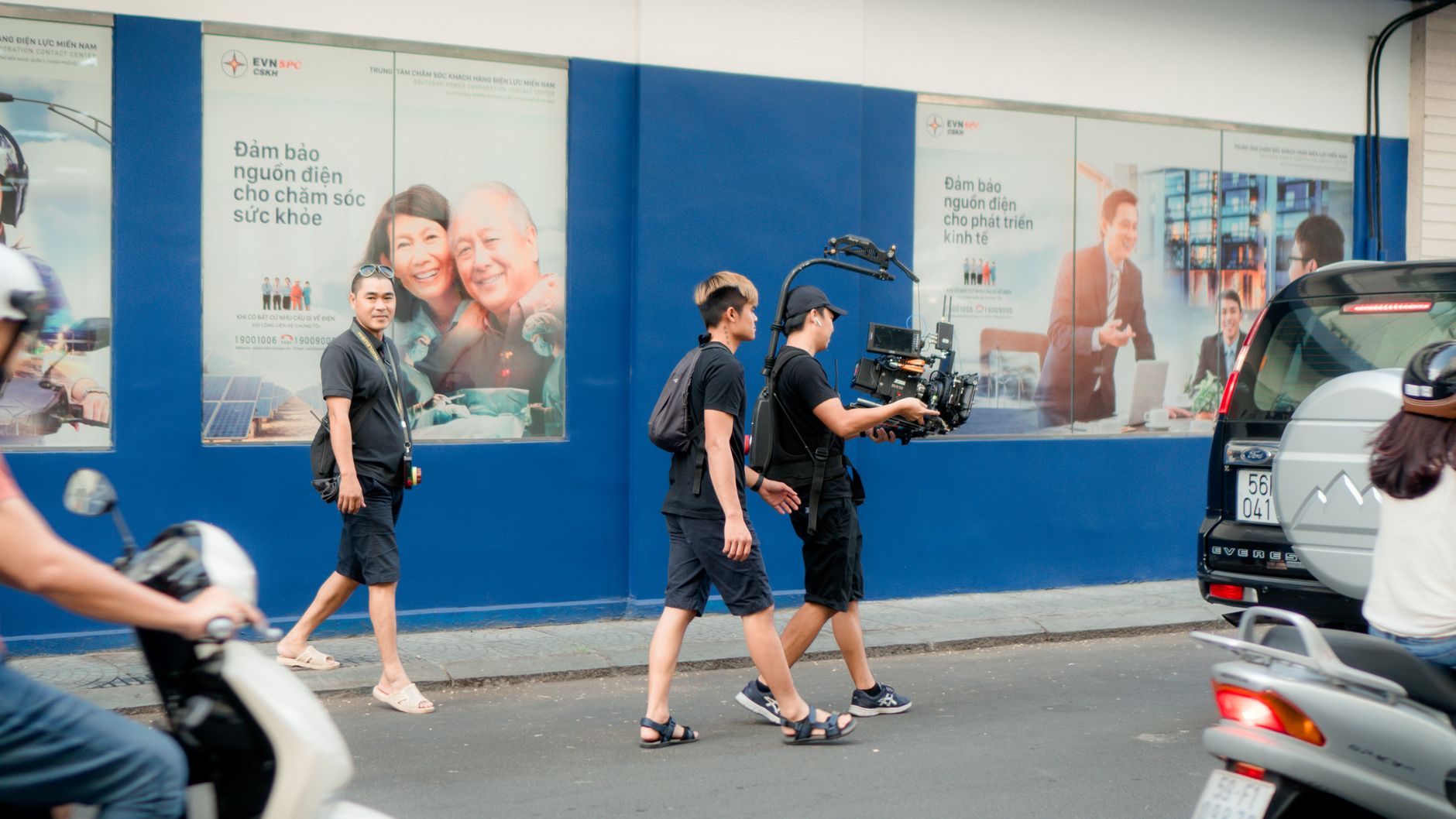
Franchise video marketing tends to have an identity problem. The brand produces polished national content that looks great in a boardroom and lands flat in Ballarat. Meanwhile, individual territory operators film shaky phone clips that embarrass the brand. Neither approach serves the person who actually matters: the local customer deciding whether to book or buy.
West Melbourne Studios works with franchise operators who face this tension constantly. The fix isn't to pick one approach over the other. It's to design a system where national assets and local content coexist without cannibalising each other.
Why local video content outperforms national campaigns at territory level
A national brand video has to speak to everyone, so it speaks to no one with real conviction. Local video can name a street, reference a landmark, or feature a face the audience recognises from their kids' footy club. That specificity is what creates the feeling of relevance that drives enquiry. It's not an aesthetic preference. It's a commercial outcome.
The data pattern holds across industries. Think with Google has consistently reported that local intent searches convert at dramatically higher rates than broad category searches. If the video content sitting behind those searches speaks to the suburb and not just the category, conversion rates follow.
Franchise systems that understand this structure their video budgets in two distinct pools: brand-level content produced centrally, and territory-level content produced with enough consistency to feel on-brand but enough specificity to feel genuinely local. The two pools serve different jobs.
What territory-level video content should actually do
Local franchise video isn't just a shorter version of the national brand film. It needs to do three specific things that national content can't:
- Prove the franchise exists and operates in the viewer's specific area
- Feature real local staff or customers, not actors from an interstate shoot
- Address objections that are specific to the local competitive landscape
A home services franchise in Melbourne's inner north faces different competitive pressure than the same brand operating in Geelong. The local video for each territory should reflect that, not replay the same script with a different suburb name dropped into the voiceover.
This is where most franchise systems go wrong. They create a video template, swap the suburb name, and call it localised. The result is content that viewers read immediately as a production shortcut. It doesn't build trust. It erodes it.
Structuring a territory video system that scales
The most practical approach is a modular production model. Central brand assets form the foundation: brand introduction, service category explainers, and testimonial frameworks that meet brand standards. Territory operators then populate a second layer of genuinely local content using those frameworks as a guide.
West Melbourne Studios builds this kind of system by producing what's sometimes called a local content kit: a set of shot types, interview formats, and editing conventions that any territory can execute with a half-day shoot. The result sits inside the brand's visual language without looking like it was filmed in Sydney and shipped south.
If you're designing a programme from scratch, it helps to start with the brief rather than the camera. A well-structured video marketing brief for a territory shoot should specify the local proof points you need: the operator's name, any community involvement, the specific service area, and the customer story you're trying to tell. Briefing on outcomes rather than shot lists produces far better territory content.
Distributing local video without fragmenting the brand
Production is only half the problem. Local franchise video has to reach the right postcode without accidentally competing with the national brand's paid media. That requires a distribution strategy that the franchisor and operator agree on before a single frame is shot.
The most common structure is geo-targeted paid social: the territory operator runs their local content as a Meta or YouTube campaign with geographic fencing drawn tightly around their service area. The national brand's content runs at a broader level and doesn't cannibalise the local spend because the audiences don't significantly overlap.
Organic placement matters too. A territory operator's Google Business Profile, their local Facebook page, and their suburb-specific landing pages are all distribution channels that benefit from local video without touching the national brand's ad budget. A short, well-made video embedded on a suburb-specific service page does real work for local SEO without costing a media dollar.
Common mistakes that undermine territory video
Three mistakes appear repeatedly when franchise territories try to run local video marketing without a system behind it.
The first is inconsistency in visual quality. One territory shoots on a professional camera. The neighbouring territory uses an iPhone with no lighting. When both appear in a branded context, the brand suffers. Setting a minimum production standard, even a simple one, closes that gap.
The second mistake is ignoring the customer's perspective entirely. Territory operators tend to film themselves and their premises. Customers want to see other customers. A 60-second video featuring a real local customer talking about a specific outcome converts far better than a tour of the showroom.
The third, and most expensive, mistake is treating territory video as a one-off event rather than a programme. A single video made once and never updated becomes stale within months. The franchise operators who see the strongest local results treat video as a quarterly publishing rhythm, not a one-time asset. This connects directly to the broader logic of building a video content calendar that keeps production consistent without overwhelming a small local team.
Measuring what actually matters at territory level
National brand teams often apply national metrics to local content and find it underperforms. Local territory video shouldn't be judged on view counts or brand recall scores. The metrics that matter are enquiry volume, cost per lead from geo-targeted video campaigns, and the conversion rate from local landing pages where the video lives.
Google Business Profile insights can show how often a video view on the profile leads to a direction request or phone call, which is about as direct a local-to-lead signal as you'll find. Pairing that with Meta's geographic breakdowns gives territory operators a clear picture of which video content is generating real local interest and which is just being watched and forgotten.
The honest truth is that most franchise video marketing underinvests in the local layer because it's harder to systemise than national production. Building that system takes more thought upfront. But once it exists, territory operators stop competing against their own brand and start converting the local customers the brand has already spent money to reach.