
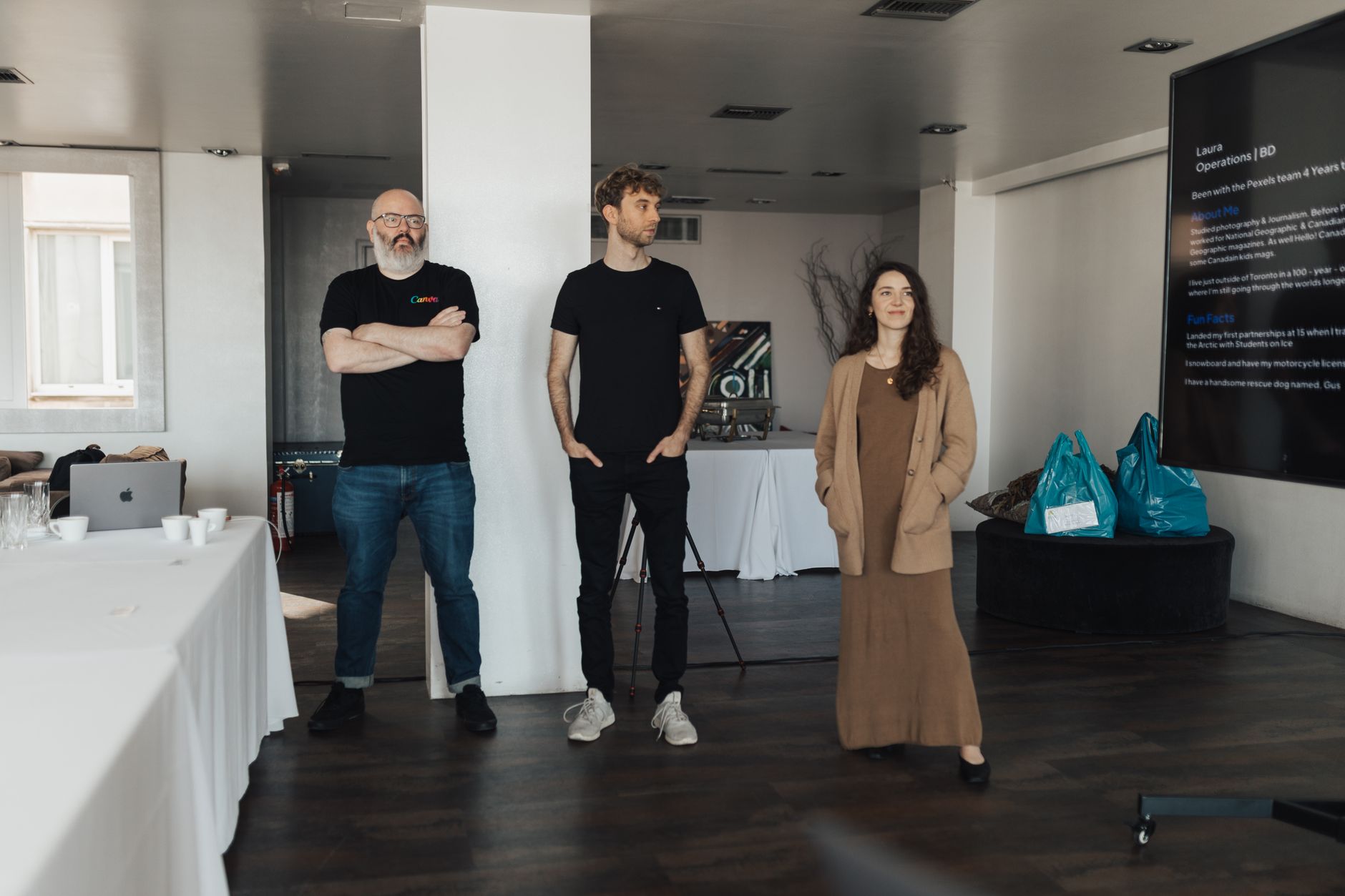
Video marketing budgets flow toward customer acquisition, product launches, and social reach. That's the default. But the organisations with the most consistent brand voice share one trait: their teams understand and believe in the brand before it ever reaches an external audience. Internal brand alignment is the mechanism behind that consistency, and video is the most direct format for building it.
Why internal alignment fails without video
The standard tools for internal brand communication are a brand guidelines PDF, a slide deck at the all-hands meeting, and a values statement printed in the foyer. None of them transfer feeling. A PDF tells people what colours to use. It doesn't communicate why those colours reflect something real about the business. A 40-slide deck delivered over Zoom on a Tuesday afternoon creates compliance at best.
Video carries tone, urgency, and emotion in a way that written documents simply can't replicate. A three-minute film in which a founder explains what the brand actually stands for, with the visual language that represents it, lands differently. People remember it. They use it as a reference point in decisions made weeks later.
The gap between a documented brand and a lived brand is almost always a communication problem. Video closes that gap faster than any other format.
What internal brand alignment video actually looks like
There's no single format. The right approach depends on the size of the organisation, the complexity of the rebrand or values shift, and the gap between what leadership believes and what frontline teams actually experience.
Four formats do most of the work:
- Founder or executive narrative films: A direct-to-camera piece in which a senior leader explains the brand's origin, its current position, and where it's heading. Candour here matters more than production polish.
- Brand world videos: Visual essays that show, rather than tell, what the brand looks and sounds like. These work like a moving style guide, demonstrating the aesthetic in action rather than describing it on a page.
- Team story films: Short documentaries featuring employees from different functions talking about how the brand shows up in their daily work. These are particularly effective in organisations where the brand promise is abstract.
- Values-in-action case studies: Brief filmed examples of the brand's values playing out in a real project or client engagement. These anchor the values to something concrete.
West Melbourne Studios produces all four formats for clients across professional services, retail, and technology. The brief is different from an external campaign, but the craft demands are just as high.
The alignment gap between marketing and the rest of the business
Marketing teams often hold a more developed understanding of brand positioning than the rest of the organisation. That's not a criticism. It's a structural reality. Marketing people spend time with the brand strategy, the creative guidelines, and the competitive landscape. Sales teams, operations, and customer service are often working from a version of the brand that's several iterations out of date.
This creates friction. A customer who watched a beautifully produced brand video and then called a support team that communicated nothing like the brand it represented has experienced that friction firsthand. The video did its job. The alignment gap did the damage.
Internal video closes the loop. It's not enough to use video to build a brand identity with external audiences if the people delivering on that identity haven't internalised what it means. The sequence matters: align internally, then amplify externally.
Scripting for an internal audience
Internal videos fail for one specific reason: they're written like external marketing material. They use the brand's customer-facing language and deliver it to employees who are tired of being sold to by their own employer.
The script needs to do something different. It should acknowledge the real complexity of the business. It can name the things that are hard. It should speak to the audience as participants in the brand, not recipients of a message. That shift in register is the difference between a video that gets watched once and filed away and one that people reference in conversations six months later.
The structure of a good internal brand script follows a clear logic: here is where we came from, here is what we believe now, here is what that means for how we work. That's it. No jargon. No mission statement recitation. Specificity over abstraction at every turn.
The same principles that make storytelling frameworks work in external video marketing apply here, but the emotional target shifts. You're not driving a purchase decision. You're building shared understanding and a sense of ownership over the brand.
Distribution inside the organisation
Producing a well-made internal brand video and uploading it to an intranet nobody visits is a common mistake. Distribution deserves as much strategic thought inside the organisation as it does in an external campaign.
The most effective internal video deployments use a layered approach. The video launches in a live context first, usually a team meeting or all-hands where leadership can answer questions and give the film meaning. Then it's accessible on-demand for new starters, who often arrive mid-conversation and need the context the video provides. Then short clips from the film are used in internal communications and onboarding sequences over the following months.
Timing also matters. An internal brand film released during a period of instability, redundancies, or public controversy will land with a very different tone than intended. If the timing is wrong, hold it. A well-made film released at the wrong moment can do more harm than good.
Measuring whether it's working
Internal alignment is harder to measure than external campaign performance. There's no click-through rate. But there are signals worth tracking.
Watch for how teams talk about the brand in client meetings, proposal documents, and social posts. Conduct brief surveys before and after the internal video release to gauge how confidently employees would explain the brand to a stranger. Track whether the visual language in team-produced assets improves after a brand world video is released. These aren't hard metrics. They're directional indicators that tell you whether the investment is shifting something real.
The clearest signal is unsolicited. When people outside the marketing team start using the brand language correctly, without being prompted, the alignment has taken hold. That's the outcome worth building toward.
Where West Melbourne Studios fits in
West Melbourne Studios produces internal brand alignment video for organisations undergoing rebrands, cultural shifts, and rapid growth phases. The work sits at the intersection of brand storytelling and documentary craft: real people, real language, and a visual approach that reflects the brand rather than describing it. If your team doesn't believe in the brand yet, the external campaign won't land the way it should.