
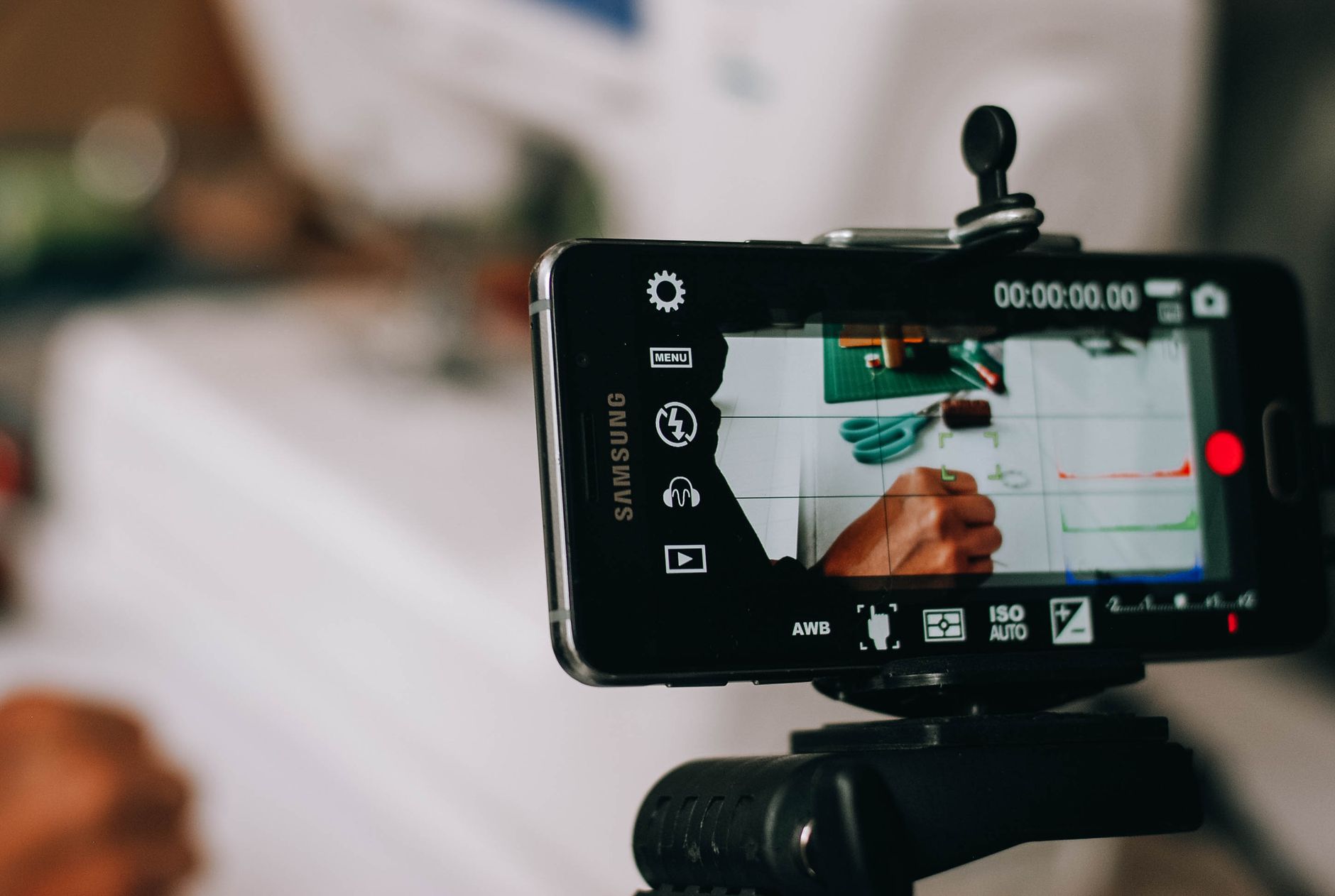
Customer re-education is one of the most commercially underestimated challenges in marketing. A product gets updated, a workflow changes, a feature set expands, and yet a large chunk of your existing user base keeps doing things the old way. They're not disengaged. They're just stuck. Video marketing addresses that gap in a way that a knowledge-base article or an email update rarely can.
West Melbourne Studios works with brands at exactly this inflection point: the moment when a customer base needs to shift its understanding without feeling talked down to. Getting the format and tone right makes the difference between a re-education campaign that lands and one that quietly gets ignored.
Why re-education is different from onboarding
New customer onboarding assumes a blank slate. Re-education doesn't have that luxury. Your audience already has a mental model of your product, and that model is partially wrong. The challenge isn't to inform them, it's to gently overwrite what they think they know.
That distinction changes everything about how the video needs to be scripted. A standard tutorial that starts from zero will feel patronising to a customer who has been using the product for two years. You need to acknowledge what they already know, then show them specifically where the gap sits. This is why anchored messaging in video marketing scripts matters so much in this context: the script has to plant a fixed reference point early, usually the old behaviour, and then pivot toward the new one with a clear reason why.
The tone needs to be collaborative rather than corrective. Phrases like "you may have noticed" or "here's something most users discover around this stage" soften the implicit suggestion that the viewer has been doing it wrong. That framing isn't just polite; it reduces the psychological resistance that makes re-education campaigns fail.
The formats that work best
Not every video format is suited to re-education. Three tend to perform consistently well.
Short explainers (60 to 90 seconds). These work when the gap between old behaviour and new behaviour is specific and narrow. A single changed feature, a renamed menu, a deprecated workflow. Keep the scope tight. If the video tries to cover three re-education moments at once, viewers will lose the thread.
Side-by-side comparisons. Showing the old way alongside the new way is one of the clearest re-education devices available. It gives the viewer an immediate frame of reference and makes the improvement concrete rather than abstract. This format is particularly effective in product demonstration video, where the audience can see the efficiency gain in real time rather than being told about it.
Scenario-based narrative video. A short dramatised scenario (a character encountering a familiar problem, then solving it with the updated approach) works well when the re-education involves a change in behaviour rather than just a change in interface. If you need a customer to form a new habit, showing that habit in context is more persuasive than an abstract walkthrough. The storytelling frameworks used in video marketing apply here directly: a clear before-state, a visible problem, a resolution through the new approach.
Where the distribution strategy usually goes wrong
Most re-education campaigns are deployed as a single email blast with a video link. The open rate is low, the completion rate is lower, and the behaviour change doesn't materialise. The reason isn't the video itself. It's the distribution model.
Re-education needs repeated exposure across multiple touchpoints, not a single broadcast. A sequenced approach works far better: a short teaser that names the change without fully explaining it, followed by the main explainer, followed by a contextual reminder delivered inside the product itself (or at the point of use). This sequencing mirrors how repetition in video marketing builds brand memory, applying the same logic to behaviour change rather than brand recall.
In-product placement deserves particular attention. If you can surface a short re-education video at the exact moment a user is about to use the outdated workflow, the relevance is immediate and the completion rate climbs sharply. A 45-second video watched at the right moment is worth more than a three-minute explainer sent to an inbox.
Measuring whether the campaign actually worked
The metric most teams reach for is video completion rate. It's the wrong primary metric for re-education. What you actually want to measure is behaviour change: the percentage of users who adopted the new workflow within a defined period after watching the video. That requires connecting your video analytics to your product usage data, which takes more infrastructure but produces an answer worth having.
Proxy metrics can bridge the gap if that connection isn't available. Support ticket volume for the old workflow is a practical signal. If tickets related to the deprecated feature drop in the four weeks after the campaign, the video did its job. If they don't move, the video may have been watched but not acted on, which is a script and framing problem rather than a distribution problem.
Set a specific behavioural target before the campaign launches. "Reduce use of the legacy export setting by 40% within 30 days" is a target you can evaluate. "Improve customer understanding" is not. The precision forces the campaign to be specific, and specific campaigns are almost always more effective than broad ones.
A note on tone and trust
Re-education campaigns carry a latent risk that standard marketing content doesn't: they can imply that the customer made a mistake. Handled poorly, that implication erodes trust rather than building it. The best campaigns frame the change as an evolution that the brand and the customer are moving through together, not a correction the customer needs to receive.
Keep the language direct and confident but never superior. Credit the viewer's existing knowledge explicitly before introducing the new information. And keep the production quality high enough to signal respect for the viewer's time. A re-education video that looks like an afterthought communicates, unintentionally, that the change it's explaining isn't that important either.
The brands that handle re-education well treat it as a loyalty moment. A customer who successfully updates their behaviour and gets more value from a product as a result is a customer who stays longer. The video is the mechanism. The outcome is retention.