
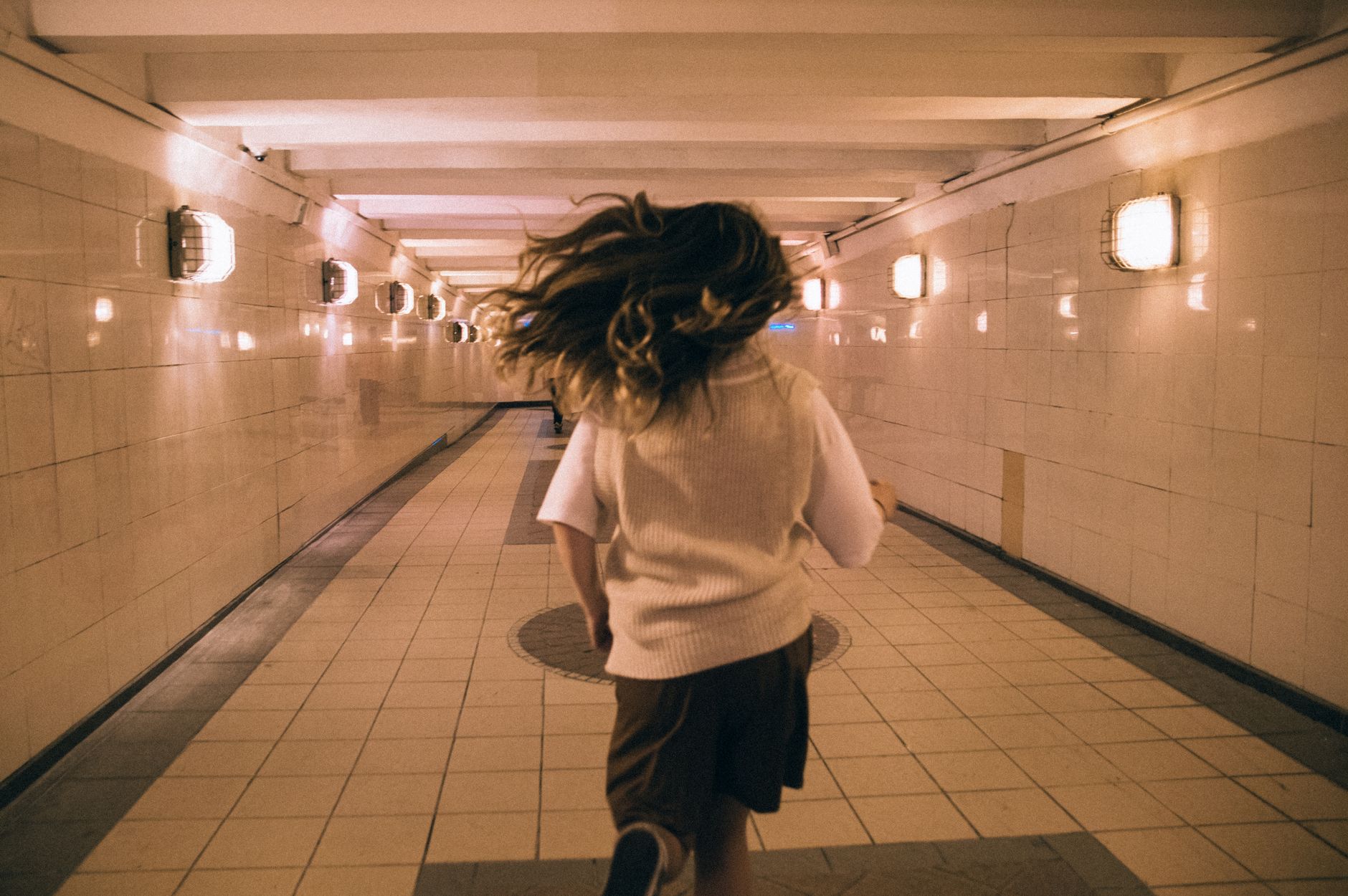
Every chase scene is a lie about geography. The pursued never quite gets away, the pursuer never quite catches up, and somehow an audience sits forward in their seat anyway. The chase is one of cinema's oldest storytelling tools, older than sound, older than colour, and its persistence across a century of filmmaking is not an accident. When a director builds a pursuit sequence that actually works, it does something a dialogue scene can't: it externalises the interior stakes of a story and puts them in motion at speed.
Why chases are really about character, not distance
The trap most filmmakers fall into is treating the chase as a break from story. It isn't. In Mad Max: Fury Road (2015), the entire film is a chase, and every choice about who rides where, who protects whom, and who turns back is a character revelation delivered at 100 kilometres per hour. George Miller understood something that weaker action directors miss: the chase doesn't pause the story, it accelerates it.
The geography of pursuit also encodes meaning. Whether the hunted is running through a crowd, an open desert, or a collapsing building tells the audience something about the forces aligned against them. A character who is chased through familiar territory, their own neighbourhood, their own workplace, feels more violated than one chased through an abstract urban environment. Specificity of place is what turns a chase from a stunt reel into a scene.
This connects directly to the craft of the location scout, where choices made months before filming determine whether a chase feels lived-in or theatrical. The best pursuit sequences are inseparable from the spaces that contain them: Bullitt without San Francisco's hills is just a car going fast.
The grammar of editing under pressure
A chase without rhythm is noise. The editor's job in a pursuit sequence is among the most demanding in post-production, because they're managing three things at once: spatial logic (where is everyone relative to each other?), emotional tempo (when does the audience get to exhale?), and physical stakes (what happens if the gap closes?).
Walter Murch, who edited The Conversation and Apocalypse Now, wrote about the way cuts in action sequences need to land on movement, not just on beats. A cut that arrives a quarter-second early or late breaks the viewer's sense of continuous physical reality. In a chase, that break is fatal. The suspension of disbelief that lets an audience believe they're watching real danger depends on the editor never letting the viewer catch up to the construction.
Parallel editing, the technique of cutting between two simultaneous lines of action, is the chase scene's closest ally. It's the same device used in parallel editing to build suspense, and in a pursuit context it does double duty: it tells the audience both where the hunter is and how far ahead the hunted remains, letting the filmmaker control tension like a dial. Tighten the cutting, close the gap, and anxiety rises. Hold a shot longer, pull back to a wide, and the audience gets a breath they didn't realise they needed.
On foot, by car, by other means
The physical mode of a chase is never neutral. A foot chase is intimate and exhausting in a way a car chase can't be. You see the breath, the stumble, the moment a character's body begins to fail them. The Bourne series built its identity on foot pursuits through dense urban environments, and what made those sequences work wasn't the choreography alone. It was the sense that Jason Bourne was operating at the absolute edge of human capacity and barely clearing it.
A car chase is a different proposition entirely. The machine introduces distance between audience and body. Danger becomes mechanical rather than physiological. The craft shifts: it's now about the relationship between vehicles, the logic of speed differentials, and the way a city's infrastructure becomes obstacle or weapon. The tunnel sequences in Ronin (1998) remain a reference point because director John Frankenheimer shot on location in Paris with real traffic and minimal CGI. The danger wasn't constructed in post. It was present.
Then there are the stranger modes: the ski chase, the boat pursuit through narrow canals, the foot-and-vehicle hybrid that mixes scales of speed. The best of these work because the filmmaker commits to the internal logic of the mode. A horse chase that cuts to a close-up inside a car breaks the spell. The rules of the world, once established, have to hold.
When the chase ends: the importance of the landing
The resolution of a chase carries enormous emotional weight, often more than the pursuit itself. Does the quarry escape? Are they caught? Does something unexpected interrupt the binary? The landing dictates how the audience recodes everything they just felt.
A chase that ends in capture asks the audience to feel the failure of the person they were running with. A chase that ends in escape invites relief, but relief without consequence is cheap. The most satisfying resolutions introduce something new: the fugitive reaches safety but loses something in the process; the pursuer closes the gap but learns something that complicates the catch.
This is the core discipline of the chase as storytelling: it needs to cost someone something. An action sequence that ends with all parties roughly where they started, emotionally and narratively, has wasted its audience's adrenaline. The best chase scenes are not detours from the story. They are the story, run through at speed, revealing under pressure what quieter scenes conceal.
West Melbourne Studios builds cinematic video content that understands structure at this level. Whether it's the compression of the montage or the sustained tension of a full pursuit sequence, the craft decisions that make screen action work are the same ones that make branded and commercial content land. Storytelling isn't a luxury. It's the mechanism.
What the chase scene reveals about filmmaking itself
Strip a chase scene back to its components: location, camera movement, cutting rhythm, sound design, performance under physical stress. These are not specialised tools reserved for action cinema. They're the foundational vocabulary of any sequence where something is at stake. Directors who learn to build a chase well, who understand what holds spatial logic together under fast cutting, carry that knowledge into every other kind of scene they shoot.
The chase is cinema in concentrated form. It demands clarity of geography, commitment to physical consequence, and precision of emotional tempo. When those three things align, the audience doesn't analyse what they're watching. They run.