
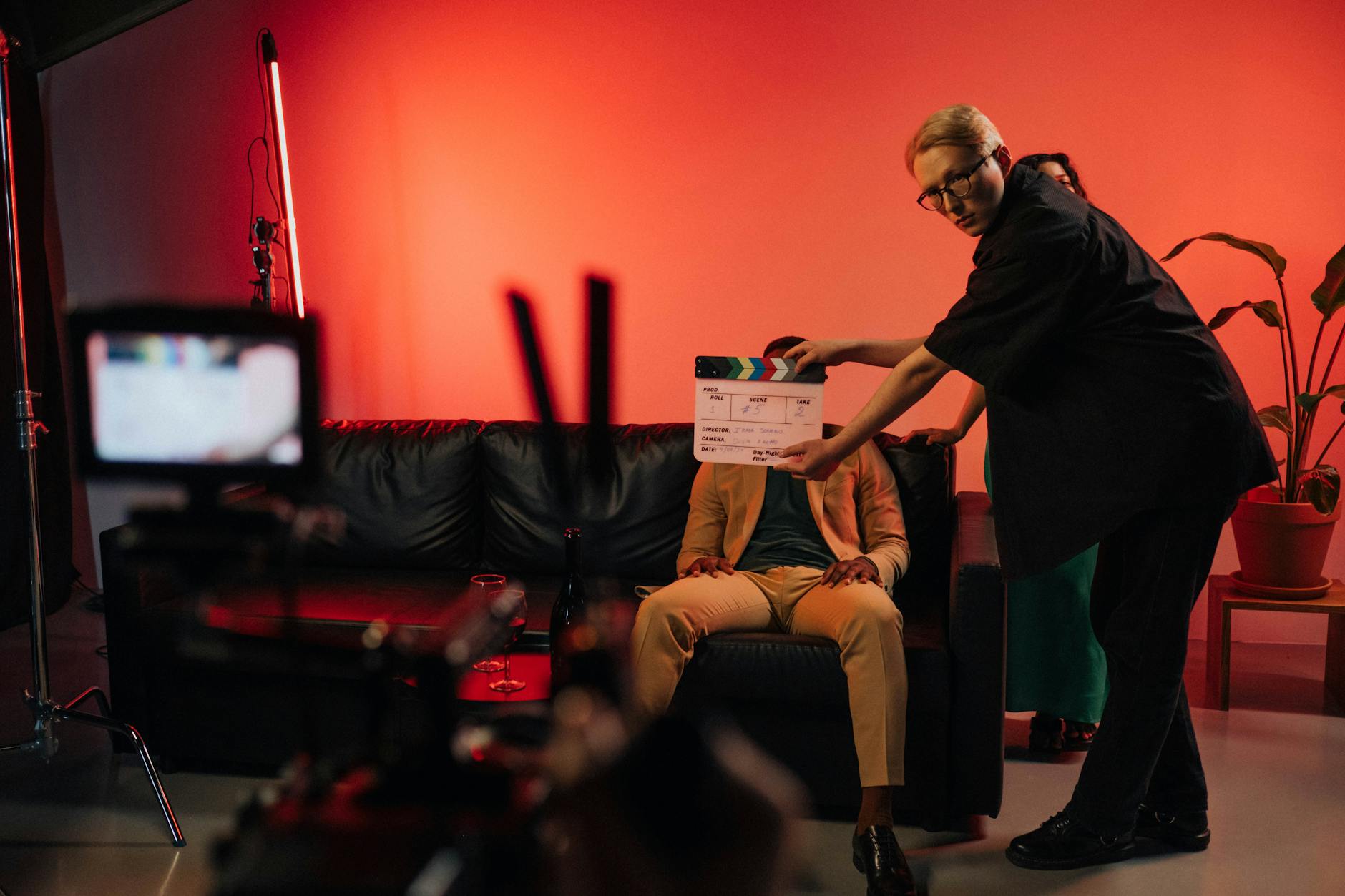
A cameo lasts seconds. Its effect can last the full runtime. Few tools in a filmmaker's kit do more with less than the brief, often unannounced appearance of a recognisable face, and the best examples aren't accidents. They're decisions with a specific job to do: shift tone, deepen context, or give an audience a moment of genuine delight they weren't expecting.
The word itself comes from the carved jewellery piece, small and detailed. That precision is exactly the point. A cameo isn't a walk-on. It's a single image, cut with intention.
What a cameo actually does in a film
Most discussion of cameos treats them as easter eggs, pure fan service with no structural value. That reading undersells them. A cameo lands in a story the way a needle drop lands in a scene: it carries information the rest of the sequence can't deliver through dialogue or action alone.
When Alfred Hitchcock appeared in his own films, typically visible for under ten seconds, the effect wasn't simply self-promotion. It reminded the audience they were watching something constructed, a made object with a maker. That small fracture in the fictional frame is a tonal instruction: don't get too comfortable. Martin Scorsese uses the same device differently. His cameos tend to place him as an observer within the world of the film, a witness to its events rather than a disruption of them.
These two uses point to a wider taxonomy. Cameos can:
- Signal genre or tone through the associations a familiar face carries
- Provide world-building shorthand, placing a character in a credible world by surrounding them with recognisable people
- Create emotional contrast, particularly when a cameo brings warmth or humour into an otherwise tense scene
- Reward loyal audiences without alienating newcomers
The casting decision behind the casting decision
Choosing who appears matters enormously. Casting shapes a film before a single frame is shot, and a cameo operates under the same logic at a compressed scale. Every actor carries a set of associations built from their other work. A director who places a beloved character actor in a cameo role borrows from that history instantly.
Stan Lee's appearances in Marvel films from the early 2000s through to 2019 are the most documented example of the form in recent memory. By the time the Marvel Cinematic Universe was in full swing, his cameos had become a structural feature, a rhythm the audience anticipated and sought out. They weren't interruptions to the story. They were a recurring signal that said: this universe is coherent, it has a creator, and that creator is present.
Contrast that with the cameo as pure surprise. When certain actors appear in roles nobody announced, the reveal becomes part of the film's architecture. The audience processes what they're seeing, adjusts their understanding of the story, and re-evaluates what came before. It's a form of misdirection with affection attached.
When cameos go wrong
A cameo fails when it pulls focus it can't earn back. If the audience spends the next three scenes thinking about the person who just appeared rather than what's happening on screen, the film has lost them. That's a pacing problem as much as a casting one.
The other failure mode is the cameo that exists purely for the participant's benefit. When an appearance is clearly a favour or a vanity exercise rather than a creative choice, audiences sense it. The moment sits outside the film's logic rather than inside it. Directors who resist the pressure to include someone just because they're available make better films. The commitment to story over novelty is what separates a cameo that enriches from one that distracts.
There's also the problem of miscalibrated surprise. A cameo that gets over-promoted in marketing before release loses its only real advantage: the unexpectedness. Once an audience knows to expect a face, they're watching for it rather than receiving it. The reveal becomes a confirmation instead of a discovery.
The cameo in television and streaming
Television has always used guest appearances differently from cinema, but the logic of the cameo has shifted again in the streaming era. Serialised storytelling gives a surprising face more room to operate. An appearance in episode three of an eight-episode series can send a reversal through the remaining five. The audience carries the encounter forward.
Some of the sharpest examples of the form in recent years have appeared in limited series, where a guest actor brings a performance dense enough to function as its own short film. The distinction between a cameo and a guest role starts to dissolve at that length, which is why the most interesting uses of the device tend to be the briefer ones: a face glimpsed in a crowd, a voice on a phone, a character who exists for two minutes and then shapes everything that follows.
Streaming has also changed the speed of audience response. A cameo that might have taken weeks to filter through cinema audiences now becomes a topic of analysis within hours of a release. That speed has influenced how filmmakers think about the device. Some lean into the online conversation, others try to outrun it by burying the appearance deep in a film rather than leading with it.
What the best cameos share
Strip away the specific actors and films and a pattern emerges. The cameos that hold up over time share three qualities.
First, they serve the story rather than interrupt it. The appearance happens because the story needed something in that moment, and this particular person delivered it better than any alternative. Second, they're brief by design. A cameo that overstays its welcome stops being a cameo and becomes a supporting role without the development a supporting role requires. Third, they carry emotional precision. Whether the intended effect is warmth, dread, comedy, or reassurance, the best cameos deliver one clear thing and then get out.
That economy is instructive well beyond filmmaking. Knowing when to be present for a beat and then step back is a skill that extends to every form of storytelling. The discipline to say exactly what needs saying and nothing more is harder than it sounds, which is why the cameo, at its best, looks effortless and is anything but.
For anyone studying how group dynamics and casting interact in film, the cameo is a useful limiting case. It reduces the question of presence to its minimum: one face, one moment, one effect. Get that right and the whole film benefits. Get it wrong and the audience will remember the wrong thing.