
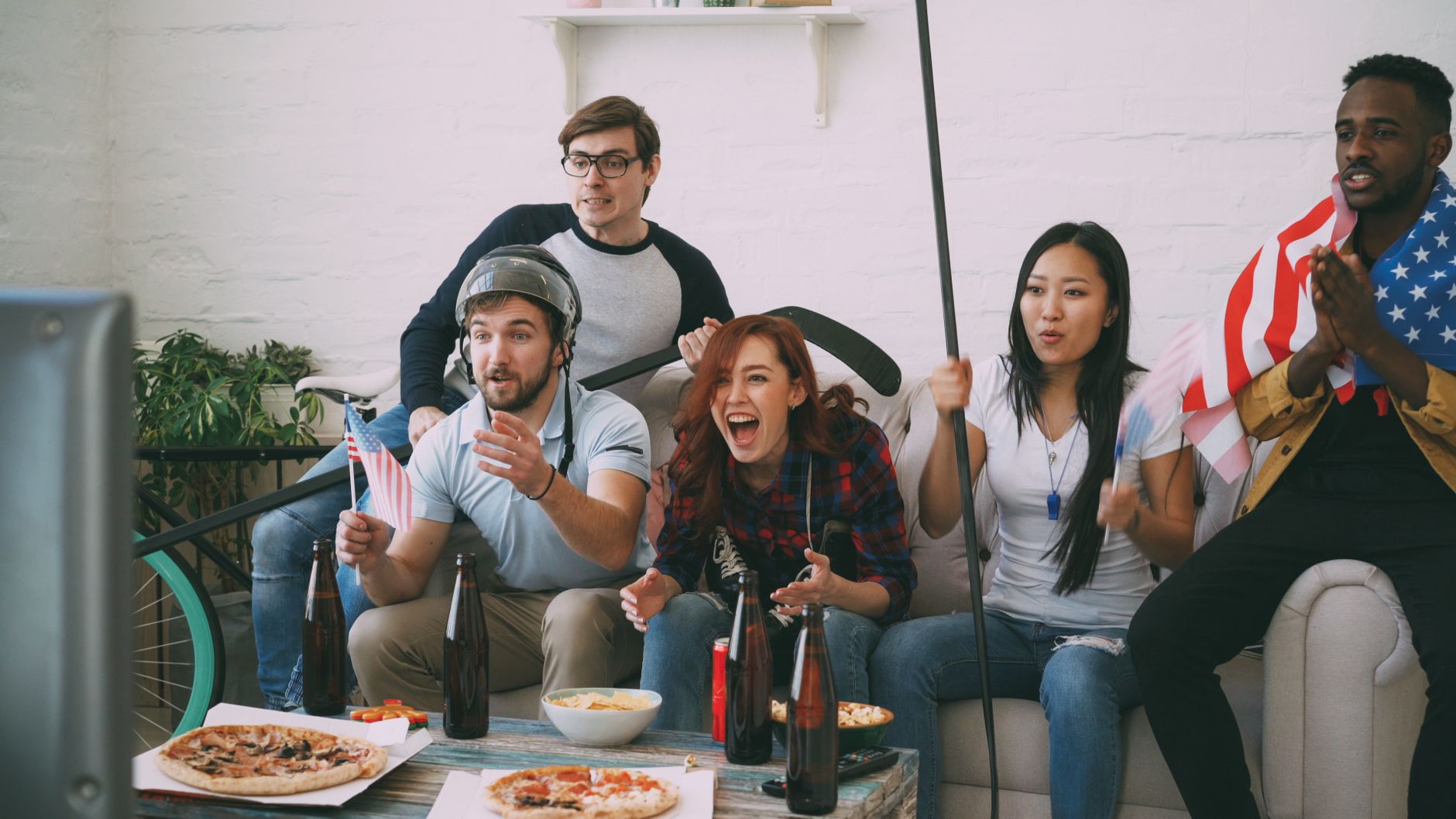
Watch parties have quietly moved from a pandemic workaround into a permanent fixture of how audiences consume video online. The format, which synchronises playback for multiple viewers while layering real-time chat or voice over the top, is now a built-in feature on platforms ranging from Amazon Prime Video to YouTube. For creators and brands, it's a genuinely new distribution behaviour, not just a novelty.
What a watch party actually is
At its simplest, a watch party is synchronised co-viewing. One person starts a stream and invites others to join. Everyone's playback stays locked together, and a side channel, usually text chat or a voice overlay, runs alongside it. The result is closer to a cinema screening than a solo scroll. The social layer doesn't interrupt the content; it runs parallel to it.
Platforms have built native tools for this. Discord's Go Live feature, Teleparty's browser extension, and Twitch's co-stream infrastructure all solve the same problem differently. The technical details vary, but the viewer behaviour is consistent: people want to react, comment, and share a moment without being in the same room.
This connects directly to what researchers call second-screen behaviour. Watch parties internalise that impulse. Instead of switching between a show and a Twitter thread, the conversation is embedded in the viewing session itself. It's worth noting how this differs from the patterns described in how second-screen behaviour is changing content consumption, where the commentary lives on a separate device entirely.
Why audiences are reaching for it
The short answer is that shared viewing is more satisfying than solo viewing for a specific class of content. Reaction, surprise, and collective tension all hit harder when someone else is there for them. Sports, reality television, live events, and serialised drama with weekly cliffhangers suit the format naturally. A slow documentary generally doesn't.
There's also a scheduling logic. Streaming destroyed the shared broadcast moment: the episode that dropped at midnight no longer had everyone watching simultaneously. Watch parties rebuild that synchrony deliberately, among a chosen group rather than a mass audience. You don't need millions of people watching at once. Ten friends watching together is enough to recreate the communal experience.
For younger audiences, the format also reduces passive viewing. Watching alone, phone in hand, it's easy to half-attend. Watching with people, even remotely, creates social accountability. You're present because others are counting on you to be.
What this means for creators and production studios
West Melbourne Studios works with brands and creators who are rethinking how their video content lives in the world. Watch parties introduce a new distribution layer that most content strategies haven't planned for. A few things follow from that.
First, content designed for communal viewing needs to earn its emotional peaks in real time. The slow-burn structure that works beautifully on a solo rewatch can lose a live group within the first ten minutes. Pacing becomes more theatrical. Moments that reward collective reaction, reveals, jokes, callbacks, carry more weight than quiet introspection. The craft behind how interactive live streaming is redefining audience engagement applies here too: the audience's participation is itself part of the product.
Second, watch parties generate a different kind of data. Clip timestamps, chat volume spikes, and reaction density tell you exactly which moments landed. That's richer feedback than aggregate view counts, and it has direct implications for how a creator edits the next piece of content.
Third, brands have an emerging sponsorship surface. A watch party hosted by a creator with 50,000 subscribers isn't a broadcast to 50,000 passive viewers. It's an intimate session where the host's commentary, product placement, or mid-stream mention arrives inside a social moment. Recall tends to be higher. The conversion window is compressed.
The production implications nobody talks about
Most discussions of watch parties focus on platforms and audiences. The production side gets less attention. But the format creates specific challenges for studios.
Audio mixing is one. In a solo viewing context, a quiet scene can breathe. In a group chat session, ambient silence tends to trigger nervous commentary that then drowns the next line of dialogue. Productions intended for watch-party distribution benefit from slightly more aggressive audio separation, keeping dialogue clean even if it sacrifices some atmospheric subtlety.
Visual pacing is another. Watch parties skew toward content with a clear beat: something happens, the group reacts, attention resets. Long tracking shots and non-verbal performance sequences, the kind of work that rewards a focused solo viewer, can fragment a group viewing session.
Neither of these is a reason to produce blunter content. It's a reason to know your distribution context before the shoot, not after.
Where platforms are taking the format next
Platform investment in watch-party infrastructure has accelerated. Amazon, Disney+, and Plex all added co-viewing tools over the past few years. The competitive logic is straightforward: a viewer who watches with friends is stickier than one who watches alone. Social obligations keep them subscribed.
The next stage is likely spatial. Apple Vision Pro's shared viewing environments and Meta's Horizon Worlds both prototype a version where co-viewers share a virtual room rather than a chat sidebar. That's a material shift in the social texture of the experience, though the format remains: synchronised playback plus a communication layer.
For Australian creators and brands, the practical implication is that watch parties are no longer an edge case. They're a mainstream distribution context that deserves the same pre-production thinking as any other. The studios that design for it deliberately will make content that performs better in it.