
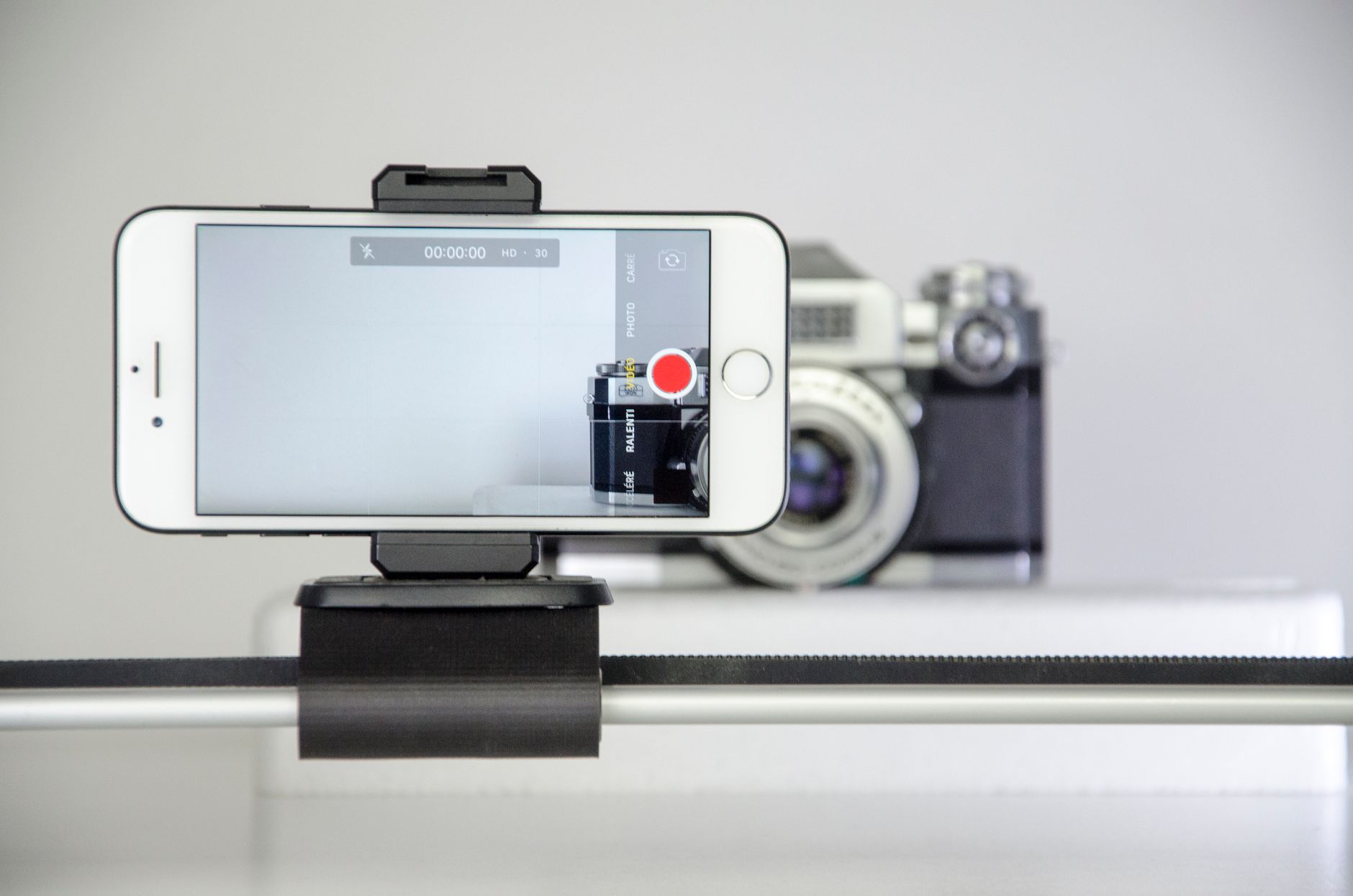
Social media stories have become one of the most-watched video formats on the internet, yet most production teams still treat them as an afterthought. A repurposed landscape clip, cropped to fit, posted without captions. The results are predictable: low completion rates and audiences who tap past within two seconds. The studios and brands producing genuinely effective stories are building them from scratch, with a different set of production principles entirely.
Stories have their own visual grammar
A 9:16 vertical frame isn't just a rotated camera. It changes what the lens can show, where the subject sits, and how much negative space the composition demands. Faces fill the frame differently. Text overlays need to land in the safe zones above the profile icon and below the reply bar. On-screen motion reads differently when the screen is held in a hand, centimetres from a viewer's face, rather than watched from a couch.
This matters for West Melbourne Studios clients thinking about production. Shooting for stories means making decisions on set, not in post. Blocking, camera distance, and background depth all shift. A subject standing in the left third of a 16:9 frame looks stranded in a 9:16 crop. Deliberate vertical framing requires its own shot list, sometimes its own camera operator working alongside the main unit.
The vertical video format is rewriting production standards across the industry, and stories are the primary driver. What started as a phone-native format is now influencing how studios plan commercial shoots, right down to lens selection and lighting placement.
The 15-second constraint forces real creative discipline
Most stories run between 5 and 15 seconds per card. That's not a limitation. It's a forcing function. A 15-second story card has room for one idea, not three. The brand, the message, and the call to action all have to coexist in a window shorter than most TV commercials. Producers who've spent years writing 60-second scripts often find this harder than it looks.
The constraint changes scripting, too. There's no room for a warm-up. The opening frame has to earn the viewer's attention before their thumb moves. A product shot that lingers for four seconds in a 30-second ad becomes a catastrophic waste in a 12-second story card. Every second of screen time carries more weight.
This compression also affects pacing. Stories cut faster than conventional video. Jump cuts that would feel jarring in a longer format read as energetic in a 10-second window. Music tracks are chosen for their ability to hook within the first beat, not the first chorus. West Melbourne Studios approaches story production as a distinct edit discipline, not a trim of the long-form.
Captions are no longer optional
A viewer watching a story in a waiting room, on a tram, or at a desk often has the sound off. Closed captions solve that problem in long-form video. In stories, the solution is different: text that's designed into the frame from the start, not added as an accessibility layer after the fact. Short, punchy words in large type, timed to match the cut, not subtitling a voiceover.
The shift in how closed captions are reshaping video engagement shows up clearly in stories analytics. Cards with readable on-screen text consistently outperform muted-audio-only equivalents on completion rate. The design implication is that the motion graphics pass on a story isn't decoration. It's load-bearing content.
Multi-card storytelling changes the structure of a campaign
A single story post isn't a video. It's a sequence. Brands that understand this build multi-card arcs: a hook on card one, context on card two, proof on card three, and a call to action on card four. The drop-off between cards is steep, which means the hook has to be strong enough to pull viewers through to card two, and card two has to earn card three.
This structure is closer to a storyboard exercise than a video script. Each card functions as a standalone frame that also connects to the one before and after it. Producing a multi-card story campaign requires a production team that thinks in sequences, not in minutes. It also requires a clear strategic brief. Productions that start with "we need a story" without specifying how many cards, what the arc is, and what action the final card drives rarely produce content that performs.
For businesses planning a campaign that includes stories alongside longer-form content, the production brief matters as much as the budget. The principles behind writing a video marketing brief that gets results apply directly here: define the objective, the audience, the single message, and the format-specific constraints before the camera rolls.
Authenticity outperforms polish in the format
Stories emerged from a culture of casual, real-time sharing. That cultural context still influences what audiences accept and what they reject. Overproduced stories, with broadcast-quality lighting and corporate voiceover, often perform worse than handheld, less-polished alternatives. This isn't an argument against production quality. It's an argument for format-appropriate production quality.
The practical implication: stories shot on a Sony FX3 with a skilled operator and minimal set dressing often outperform stories that look like they were repurposed from a TV commercial. The aesthetic of authenticity is a deliberate production choice, not an accident. It requires shooting specifically for the format, choosing environments that read as real rather than constructed, and writing scripts that sound like a person talking rather than a brand broadcasting.
West Melbourne Studios treats story production as a distinct creative brief for exactly this reason. The skills that make a compelling 3-minute brand film don't automatically transfer to a 12-second story card. Both require craft. They just require different kinds of it.
What this means for production budgets
Stories don't need to be cheap. They need to be planned. A common mistake is allocating a small portion of a shoot day to "grab some vertical content" at the end. The results are rushed, poorly composed, and rarely match the quality of the primary content. Effective story production treats the format as a first-class deliverable, with its own blocking time, its own lighting setup where needed, and its own edit pass.
That doesn't mean doubling the budget. It means planning the shoot so that vertical content isn't an afterthought. A dual-camera setup, one shooting 16:9 and one shooting 9:16, is one approach. Shooting with enough frame headroom to reframe in post is another. The most important thing is making the decision before the crew arrives on location, not after the main camera wraps.
Audiences spend enormous amounts of time inside stories. The format rewards producers who take it seriously. The brands and studios still treating it as a repurposing exercise are leaving real performance on the table.