
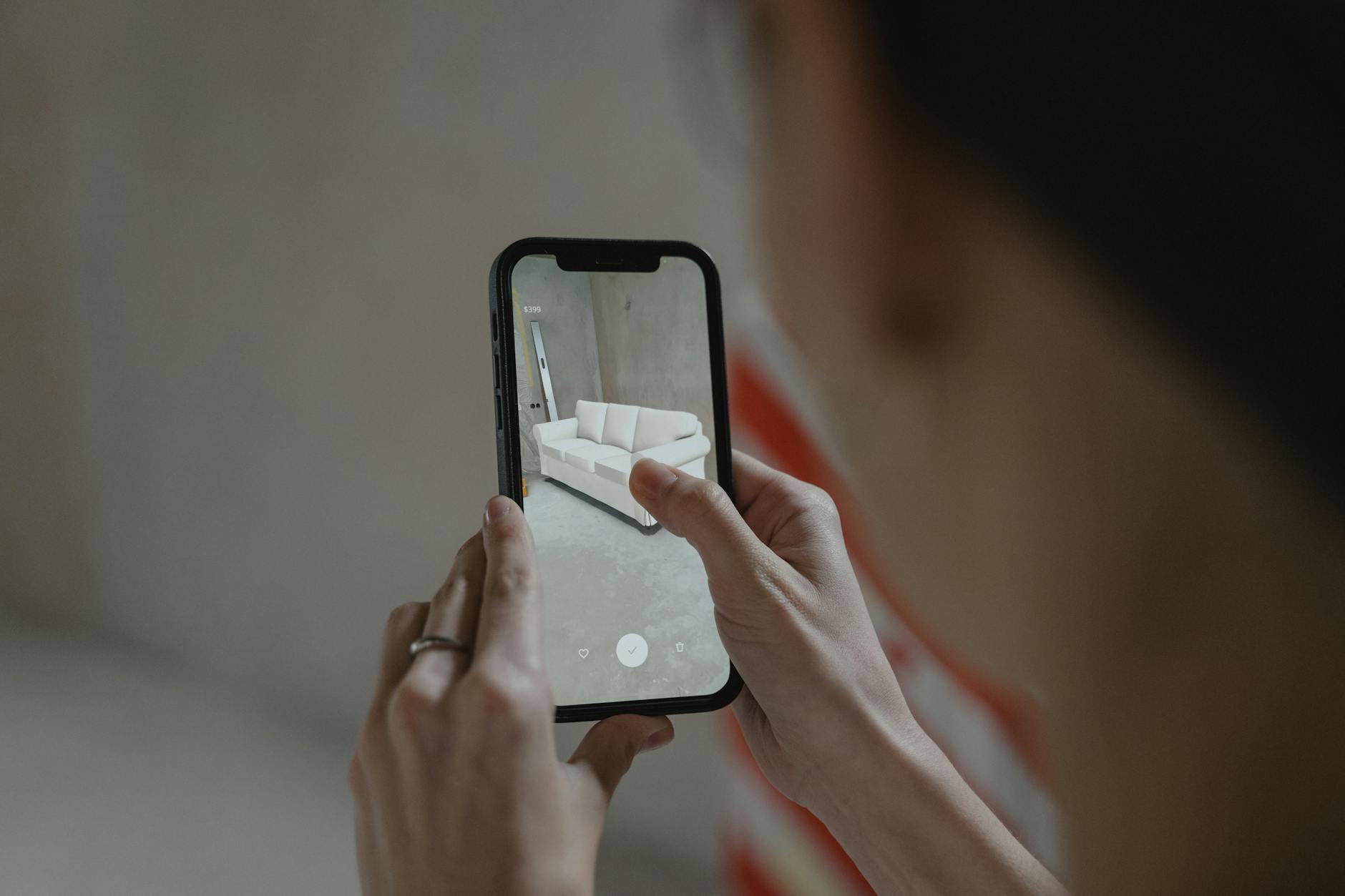
Augmented reality in digital marketing is no longer reserved for big-budget tech launches and experimental brand stunts. Over the past few years the technology has become accessible enough that mid-sized businesses, retailers, and content creators are using it routinely to let customers try before they buy, visualise products in their own space, and engage with brand stories in ways that flat video and static images simply cannot replicate. The shift is significant, and it is accelerating.
What augmented reality actually does for a brand
At its most practical, AR overlays digital information onto the real world through a smartphone camera or a headset. For marketing, that means a customer can see how a piece of furniture fits in their living room before ordering it, try on sunglasses through an Instagram filter, or point a phone at a product package to trigger an interactive story. The technology bridges the gap between browsing and owning, and that gap is where most purchase hesitation lives.
The confidence boost is real. When a consumer can visualise a product in their own environment, or interact with it in a way that feels personal rather than broadcast, the psychological friction of buying drops considerably. This is closely related to what the consumer psychology behind video ads has long demonstrated: engagement that feels participatory converts better than passive consumption. AR takes that principle one step further by making the audience an active part of the content itself.
Where AR is being used right now
The applications are broader than most marketers expect. Here are the formats gaining the most traction in 2026:
- Social AR filters. Branded filters on Instagram, TikTok, and Snapchat let users interact with a product or character and share the result with their networks. The organic reach generated by a well-designed filter can dwarf what a standard paid post achieves.
- Virtual try-on. Fashion, eyewear, cosmetics, and even furniture retailers are embedding try-on tools directly into their product pages. The technology has matured to the point where lighting and proportion are handled well enough that the result is genuinely useful rather than decorative.
- Packaging and print activation. Pointing a phone at a label, poster, or business card can trigger video, animation, or product information. This has become particularly popular in food and beverage, where storytelling about origin and craft adds real value to the purchase decision.
- In-store AR. Physical retail is using AR to extend the experience beyond the shelf, offering style guides, customer reviews, and product comparisons triggered by scanning a barcode or QR code.
- AR in video advertising. Some brands are now embedding AR entry points directly into connected TV and streaming ads, allowing viewers to scan a code and continue the experience on their phone. This crossover between screen types is one of the more interesting developments in the rise of connected TV advertising.
Why AR tends to outperform passive content
The performance case for AR rests on a simple insight: people remember what they do far more than what they watch. When a consumer interacts with a brand through an AR experience, they are making micro-decisions, moving objects around, choosing colours, responding to prompts. That active engagement encodes the brand memory more deeply than a passive 30-second ad.
Dwell time is another factor. An AR filter or a virtual try-on tool keeps a user engaged for significantly longer than a standard display ad or even a short-form video. Longer dwell time signals intent to most digital advertising platforms, which affects how the algorithm distributes the content and how the attribution model reads the result.
Return rate is a third argument. Retailers using virtual try-on consistently report lower return rates on items that were visualised through AR before purchase. Fewer returns means a better customer experience and a better margin outcome. That is a straightforward business case that requires no leap of faith.
The production side: what good AR marketing actually takes
The creative quality of an AR experience matters enormously. Poorly rendered assets, clunky interactions, or a filter that does not track well to a face will do more damage than good. The brand association formed in those few seconds of a bad experience is a negative one.
Building a compelling AR activation requires the same discipline as any high-quality video production. The 3D assets need to be modelled and lit correctly. The interaction logic needs to feel intuitive. The overall experience needs to reflect the brand's visual identity consistently. Studios that have invested in strong visual storytelling, including the framing and lighting principles that underpin great cinematography, tend to produce better AR work precisely because those foundational skills translate directly.
Brands coming to this medium for the first time should think of AR as an extension of their broader content strategy rather than a standalone tactic. The most effective activations are those where the AR moment fits naturally into a customer journey that includes video, social content, and real-world touchpoints. That integrated thinking is what separates a memorable brand experience from a novelty that gets opened once and forgotten.
What to watch as the technology develops
The arrival of spatial computing hardware, including lighter and more capable AR glasses, will shift the medium again. Experiences that currently require a phone held up in front of the face will eventually happen hands-free, in the field of view, without friction. That transition will open AR to contexts, outdoor events, retail floors, live performances, where phone-based activation has always been awkward.
Artificial intelligence is also changing how AR content is generated. Procedurally generated overlays, real-time personalisation based on user data, and AI-driven asset creation are all reducing the cost and lead time of producing AR marketing material. What previously required a specialist 3D studio can now be approximated in a fraction of the time. The gap between concept and deployment is narrowing fast.
For brands and studios thinking about where digital marketing is heading, augmented reality deserves a prominent place in that conversation. The technology is no longer speculative. The consumer appetite is there, the tools are available, and the performance data is encouraging. The question now is not whether AR belongs in a marketing strategy, but how soon to start building the capability to use it well.