
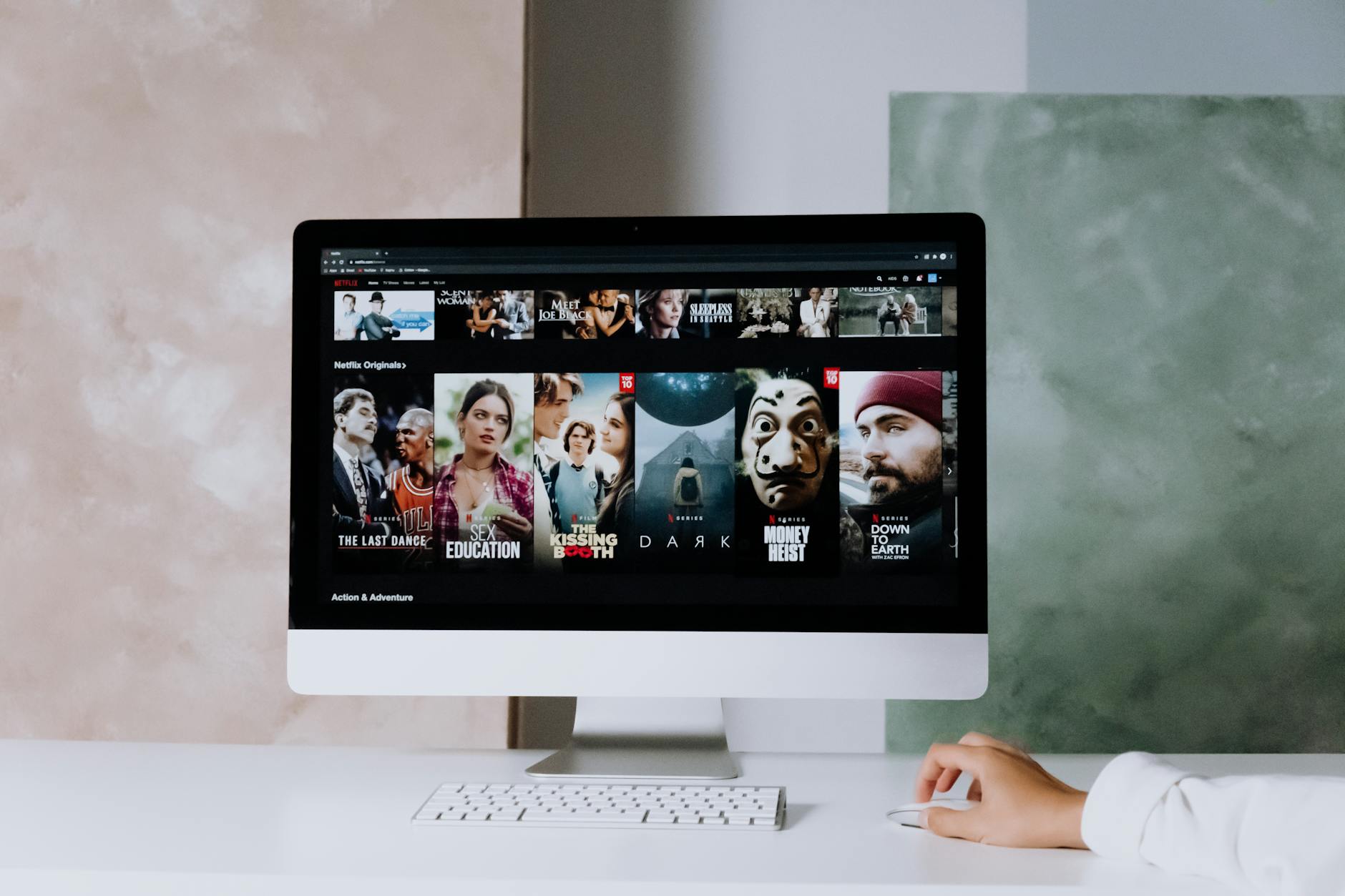
Personalised content is now the default expectation, not a bonus feature. Algorithms on every major platform, from YouTube to TikTok to Netflix, decide what each viewer sees next based on behaviour signals that number in the thousands. For creators and brands, that shift changes the game at a structural level. You're no longer competing for a slot in a programme guide. You're competing for a slot inside a recommendation engine that never sleeps.
How personalisation actually works at scale
The mechanics are worth understanding clearly, because they dictate what gets rewarded. Platforms build a model of each viewer using watch time, replays, skip behaviour, search history, and even the time of day they're watching. That model gets compared against millions of others to find patterns. A viewer who watches three cooking videos in a row at 7pm on a Tuesday gets served a fourth one, not because a human decided that, but because the model predicts it converts to more watch time.
Netflix has published enough detail about its recommendation system to confirm that more than 80 per cent of content watched on the platform comes from a recommendation, not a user search. YouTube's internal figures, cited in various engineering blogs, suggest the recommendation engine drives more than 70 per cent of total watch time. The content that wins isn't necessarily the best content. It's the content that fits a slot the algorithm has already predicted.
For video producers, this is a structural reality, not a complaint. Short-form video has reshaped digital content strategy partly because the algorithm cycles through short pieces faster, generating more signals per session and allowing the engine to calibrate recommendations more quickly. That's why two-minute videos often outperform ten-minute ones, even when the longer version is technically superior.
What personalisation means for how content gets made
The production implication is real and it's already affecting briefs at studios like West Melbourne Studios. Clients increasingly ask for content families rather than single pieces: a hero video, a 60-second cut, a 15-second cut, a vertical version. Each variation feeds a different placement, and each placement is serving a different audience segment the algorithm has identified.
This approach has a name in media planning circles: modular content production. You shoot once, cut multiple ways, and let the platform's personalisation layer decide which version reaches which viewer. It's more expensive upfront than producing a single piece. It's considerably cheaper than producing five separate campaigns.
The other production shift is specificity. Algorithmic recommendation rewards niche content more than broad content, because niche content creates a stronger audience signal. A video about indoor plant lighting in Melbourne apartments will find its audience faster than a video about "home design tips." The algorithm can place it precisely. Broad content gets placed vaguely and loses.
The tension between reach and relevance
There's a genuine tension at the centre of personalised content that brands haven't fully worked through. Personalisation narrows reach by definition. A piece of content tuned perfectly for a specific audience segment won't land for everyone else. That's the point. But marketing teams trained on reach metrics find this uncomfortable.
The answer isn't to abandon reach. It's to accept that reach now happens through a portfolio of targeted pieces rather than a single mass-market campaign. Brands that understand how data powers video personalisation at scale are already building content libraries with this logic baked in. Those libraries give the algorithm something to work with, and the algorithm does the distribution work.
Small studios face a version of the same tension. If you publish general-purpose content about video production, you compete against every other studio doing the same. If you publish specific content about, say, video production for medical clinics in Melbourne, the algorithm places you in front of exactly the people who would hire you. Narrower is frequently more effective.
What AI is adding to the personalisation layer
Personalisation in 2026 is no longer just about content selection. AI tools now allow content itself to be dynamically assembled for individual viewers. Product videos can swap out colour variants, pricing, or regional details based on viewer data. Long-form documentary content can be cut into different narrative sequences depending on what the viewer has already watched. Email video embeds can auto-select a thumbnail based on the recipient's past behaviour.
This is genuinely new territory. For most of the past decade, personalisation meant the algorithm choosing between pieces of fixed content. Now it can mean the content itself changing. That creates a production challenge: the raw footage and modular assets need to be planned in advance, with personalisation possibilities in mind. A shoot that doesn't capture multiple product angles, multiple spokesperson takes, or multiple ending options can't be personalised after the fact. The brief has to account for it from the start.
West Melbourne Studios works with clients on this kind of modular production planning, particularly for brands that run campaigns across multiple Australian markets where regional variation matters. Getting the production architecture right early costs less than trying to retrofit it.
The creator side of the equation
For independent creators, personalised content creates a real opportunity that didn't exist when distribution was controlled by broadcasters. A creator who finds a specific niche and serves it consistently will get surfaced by the algorithm to exactly the right audience, without needing a network deal or a publicist.
The risk is the filter bubble. A creator who leans too hard into what the algorithm currently rewards can become trapped serving one narrow audience with increasingly similar content. That's stable until the algorithm shifts, which it always does. The creators who survive platform changes tend to be those who built genuine audience relationships alongside their algorithmic reach, through newsletters, community platforms, or direct engagement. The algorithm gets you in the door. The relationship keeps you in the room.
The same logic applies to brands. Personalised content distribution is a tool, not a strategy. Knowing how AI video tools are changing content creation is useful context, but it doesn't replace the underlying question of what you're actually trying to say and to whom. The platforms will optimise whatever you put into them. Putting in something worth watching is still the creator's job.