
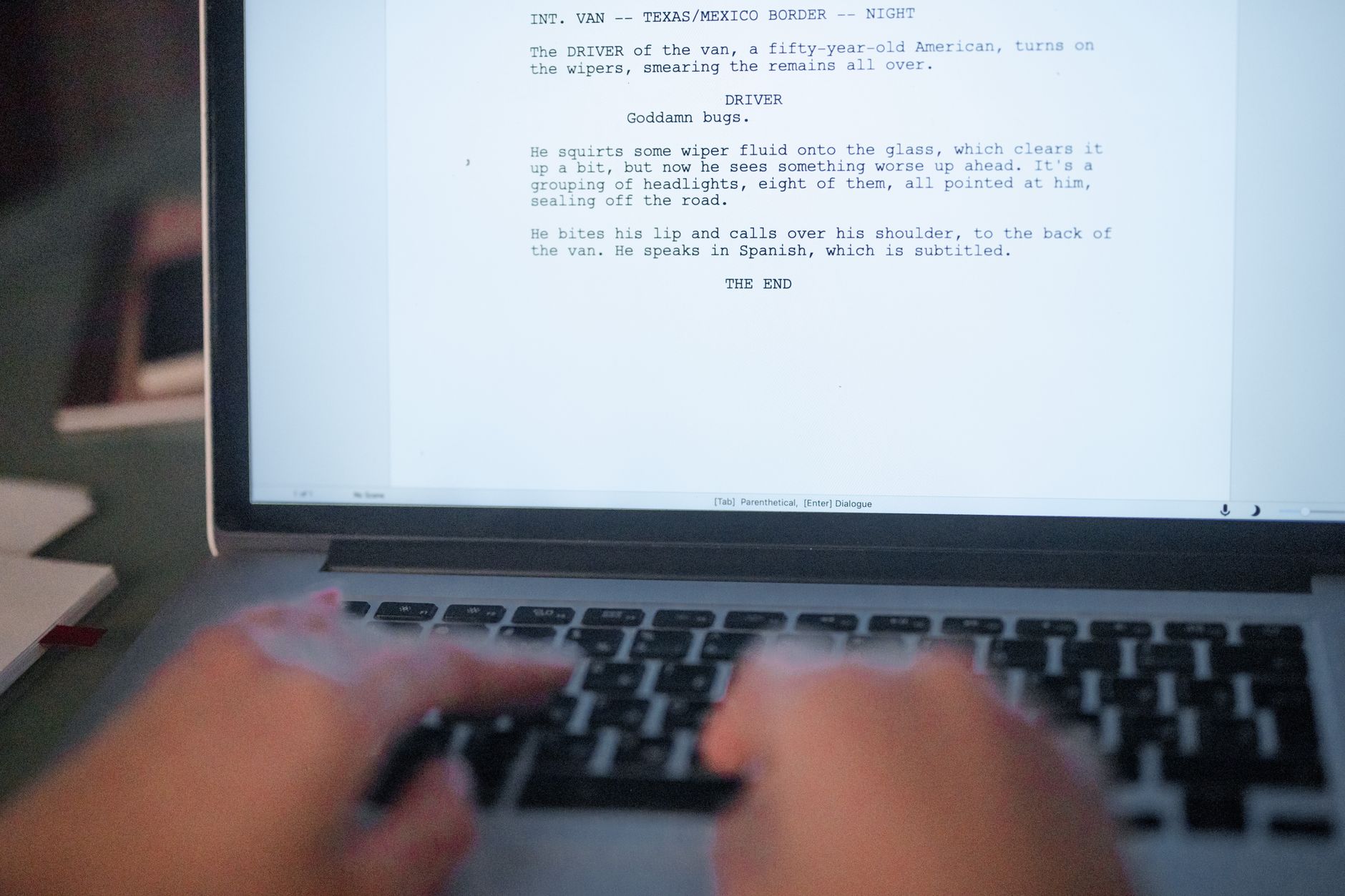
Video script generation using AI has quietly become one of the most adopted applications in production workflows this year. Where a copywriter or director once spent hours shaping a brief into a draft, language models can now produce a rough script in minutes. For studios and brands under constant pressure to produce more content with the same headcount, that speed is genuinely compelling. But the gap between a generated script and a great one is wider than the demos suggest.
What AI script tools actually do well
The best AI script tools in 2026 handle structure reliably. Feed one a solid brief with a clear audience, a desired length, and a core message, and it will produce a coherent scene or sequence that hits the basic beats. For formats with rigid conventions, like a 30-second product ad or a two-minute explainer, AI output can get a writer 60 to 70 per cent of the way there on a first pass. That's real time saved on the mechanical work of drafting.
Pacing cues have improved significantly too. Early AI-generated scripts read as continuous prose with no sense of rhythm or on-screen duration. Current tools trained on production scripts have absorbed enough formatting convention to include action lines, speaker cues, and rough timing markers that a production team can actually use. Generative AI is changing the storyboarding stage for the same reason: once a script draft exists, visual planning tools can build on it faster than ever before.
Localisation and volume are the other obvious wins. If a brand needs 12 regional versions of a campaign script with different city references, pricing, and offers, AI handles that variation in a fraction of the time it takes a human team. The logic and structure stay consistent; the variables swap in cleanly.
Where the tools still fall short
Specificity is the clearest gap. AI-generated scripts tend to reach for the safest, most general version of an idea. They produce "a small business owner who wants to grow" rather than a character with a name, a specific problem, and a recognisable point of view. That's not a minor flaw. Vague characters and abstract stakes are exactly what makes video marketing forgettable. Any writer reviewing AI output has to push every abstraction down to a concrete detail before the script is usable.
Tone consistency across a long-form piece is also weak. A three-minute script might open with dry wit, shift into earnest sincerity by the second minute, and land on generic inspiration by the close. The model hasn't lost the plot, it just hasn't kept a consistent voice across the arc. Human writers hold tone by feel, by re-reading, by understanding the brand at a level the brief doesn't fully capture. That instinct doesn't transfer cleanly into a prompt.
Dialogue is the hardest problem. AI-written conversations sound written. Characters say exactly what they mean, without interruption, subtext, or the kind of incomplete sentence that actual people use on camera. This matters enormously in documentary-style and interview formats, where scripted lines read on screen as stilted the moment they're delivered. Writing a script that converts still requires a person who understands how viewers process spoken language differently from text on a page.
How professional studios are using AI-generated scripts right now
The pattern that works best in practice treats AI as a first-draft engine, not a finished product. A producer feeds the model a detailed brief, pulls the structural output, and hands it to a writer who rewrites every line from scratch using the AI draft as a scaffold. The result is faster than a blank-page process, but every word that appears on screen is a human choice. Studios that skip the rewrite stage are cutting the wrong corner.
Some teams use AI specifically for iteration rather than origination. They write a first human draft, then prompt a model to produce three alternative approaches to the opening 30 seconds, or to rewrite the call to action for a different emotional register. Used that way, the tool is an idea-pressure system rather than a replacement for craft.
Brief quality determines output quality more than any other variable. Studios that invest time in a detailed, specific brief get dramatically better first drafts. A prompt that includes the brand voice, specific audience pain points, real product names, and a preferred structural format will outperform a vague instruction by a wide margin. This is shifting how some agencies handle content localisation at scale: the work moves upstream into brief-writing, because that's where the output quality is actually determined.
The copyright and attribution question
AI-generated scripts sit in genuinely unresolved legal territory in Australia. The Arts Law Centre of Australia has flagged that content produced entirely by an AI tool may not attract copyright protection in the same way human-authored work does, since the Copyright Act 1968 requires a human author. For studios producing commercial content, that creates a practical question: if the generated script is substantially unchanged from AI output, who owns it?
The safe position for now is to treat AI-generated material as a resource rather than a deliverable. Rewriting the draft substantially, documenting the human creative contribution, and retaining the editing history all help establish authorship if the question ever arises. This isn't hypothetical caution. It's a real consideration for any studio handing over a final script to a client.
What this means for writers and directors
Script writers who've engaged seriously with AI tools report that the work hasn't disappeared. It's shifted. The hours spent producing a rough draft now go into sharpening the second draft, deepening character specificity, and rebuilding the dialogue that the model couldn't pull off. That's not obviously a worse outcome for writers who want to spend their time on craft rather than blank-page paralysis.
For directors, the more interesting development is speed of iteration during pre-production. Getting to a scriptable version of an idea faster means more time to test structural assumptions before the shoot, adjust for talent, and pressure-test the narrative against the storyboard. The script becomes a working document earlier in the process, which is where it belongs. West Melbourne Studios treats generated output as a starting point, never a finish line. The camera doesn't lie about whether the words actually worked.