
How video agencies price commercial projects is a question that confuses clients and frustrates junior producers in equal measure. Unlike software or print, video production has no single pricing standard. A thirty-second commercial can cost eight thousand dollars or eight hundred thousand, depending on who makes it, what it requires, and what it's ultimately worth to the brand commissioning it. Understanding the logic behind those numbers makes it easier to budget accurately, negotiate fairly, and avoid being blindsided mid-production.
The three main pricing models agencies use
Most video agencies fall into one of three pricing approaches, or a hybrid of all three.
Day rate and time-based pricing
The most traditional model bills by the day. A director, camera operator, or producer each carry an individual day rate, and the agency aggregates those rates, adds a margin, and presents a project total. Day rates in Australia vary widely by discipline and experience level. Senior directors of photography in Melbourne or Sydney typically command between $1,200 and $2,500 per day. Producers, editors, and colourists sit in comparable brackets depending on credits and specialisation. This model is transparent and easy for clients to audit, but it doesn't account for the value a piece delivers once it goes live.
Project-based flat fees
Project pricing bundles all creative and production labour into a single quoted figure. The agency absorbs the scheduling risk: if the shoot runs long or the edit requires extra rounds, that cost comes out of margin rather than being passed back to the client. Flat fees are popular for commercial work because clients can budget with certainty. The agency, in turn, prices in contingency (usually 10 to 20 per cent) and relies on its own efficiency to protect the margin.
Value-based pricing
Value-based pricing anchors the fee to what the deliverable is worth to the client, not what it costs to produce. A brand launching a national television campaign expects a measurable return on that investment. An agency that can credibly tie its work to that return has grounds to price well above a cost-plus calculation. This model is more common among senior creative agencies and requires a frank conversation about the client's revenue targets, media buy, and expected reach. It's the model that best rewards agencies for genuine creative quality, and it's the one most clients are least prepared for.
What actually drives the final number
Within any pricing model, several variables shape the final quote. Knowing these helps both sides of the table have a more productive conversation.
- Concept complexity. A single-location product shoot with two talent has a completely different overhead to a multi-location brand film requiring location permits, stunt coordination, or CGI integration.
- Crew size. A lean two-person crew can capture a polished talking-head interview. A broadcast-grade commercial typically involves a director, DOP, first and second AC, gaffer, grip, sound recordist, stylist, and production assistants. Each role adds to the line item.
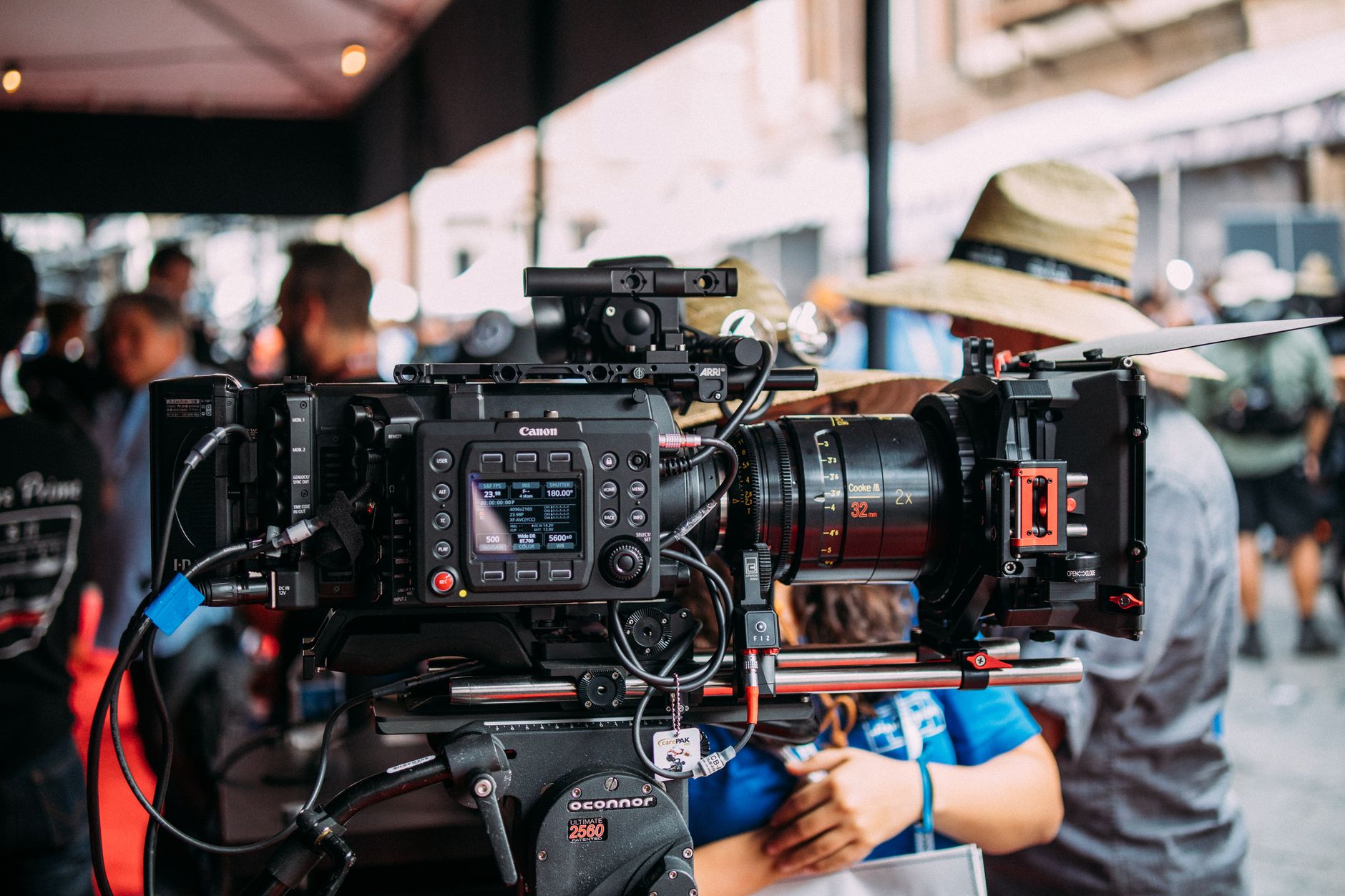
- Equipment and facilities. Camera packages, lighting rigs, specialised lenses, drones, jibs, and studio hire all appear as above-the-line costs. High-end agencies may own much of this infrastructure and pass it through at internal rates; others source it externally at market hire rates.
- Post-production depth. Editing is rarely the biggest cost, but colour grading, sound design, music licensing, motion graphics, and VFX can collectively exceed the shoot budget on effects-heavy work.
- Talent and usage rights. Onscreen talent is quoted separately from crew, and usage rights (how long, in which territories, across which platforms) are negotiated as a distinct line item. A thirty-second ad running nationally for twelve months costs significantly more in talent fees than the same ad used only on a brand's own website.
- Revisions and approvals. Most agencies build one or two rounds of revisions into their flat fee. Additional rounds are billable. Projects with large internal stakeholder lists tend to need more revision rounds, and experienced agencies factor this into their risk assessment when quoting.
How agencies build a quote in practice
A detailed brief from the client is the starting point for any accurate quote. Agencies that price without a brief are usually padding heavily to cover unknowns, or they're cutting corners they haven't told the client about. A good brief covers the deliverable format, intended platform, shoot locations, talent requirements, timeline, and any brand or legal constraints on the creative.
From there, the agency builds a production schedule: how many shoot days, how many edit days, what post pipeline is required. Each line in that schedule carries a cost, and the agency aggregates those costs before applying its overhead and margin. Overhead includes the cost of running the business (studio rent, insurance, software, admin staff) spread across billable projects. Margin is the profit the agency needs to remain viable and reinvest in its capabilities.
Agencies that are serious about pricing video production services properly maintain internal rate cards and review them annually. They know their break-even cost per project type and can identify quickly when a brief is under-budgeted for what the client actually wants.
Where clients and agencies tend to misalign
The most common point of friction is the gap between a client's perception of video cost and the actual market rate for what they're describing. This gap has narrowed somewhat as brands have gained more exposure to production realities through the growth of in-house content teams, but it persists. A client who has seen a competitor's polished thirty-second ad may not realise that ad had a three-day shoot, a twelve-person crew, and four weeks of post-production behind it.
The second tension point is scope creep. A project quoted at one deliverable often expands to three or four as internal stakeholders see early cuts and identify new applications. Agencies should define deliverables precisely in their contracts, and clients should be prepared to pay for genuine additions to scope rather than treating revisions and add-ons as included by default.
Understanding the ROI of branded video helps clients reframe the conversation from "why does this cost so much" to "what does this need to deliver." When the commercial is positioned correctly, the production budget becomes an investment with a measurable return, not an overhead to minimise.
Retainers and ongoing relationships
Beyond project-by-project pricing, many agencies offer retainer arrangements for clients with consistent production needs. A retainer typically guarantees the client a set number of production days or deliverables per month in exchange for a predictable monthly fee. The agency benefits from revenue certainty and reduced sales overhead. The client benefits from priority scheduling and a team that builds deep familiarity with the brand over time.
Retainers work best when the client's content calendar is stable and the brief types are relatively consistent. They're less suited to clients whose needs spike around campaigns and go quiet in between. For those clients, a well-structured project rate with a preferred-supplier arrangement often serves both parties better.
What a fair brief looks like from an agency's perspective
Agencies price most accurately, and most competitively, when the brief is honest about budget. Many clients withhold their budget range out of fear that the agency will simply quote up to that ceiling. In practice, the opposite happens more often: without a budget range, the agency either over-engineers the quote (because it can't calibrate complexity to resources) or under-scopes the creative (because it's guessing low to win the job). Telling an agency the rough budget range doesn't cap quality. It focuses the creative conversation on what's genuinely achievable.
The agencies doing the most interesting commercial work right now are also tracking broader shifts in how content gets made and distributed. AI tooling is beginning to affect parts of the post-production pipeline, and understanding how AI is changing commercial video production matters for any client trying to understand why pricing is evolving as quickly as it is.
Pricing is ultimately a negotiation between what a project requires and what a relationship can sustain. Agencies that price transparently, explain their methodology, and treat a quote as the start of a conversation tend to build the long-term client relationships where the best commercial work actually gets made.