
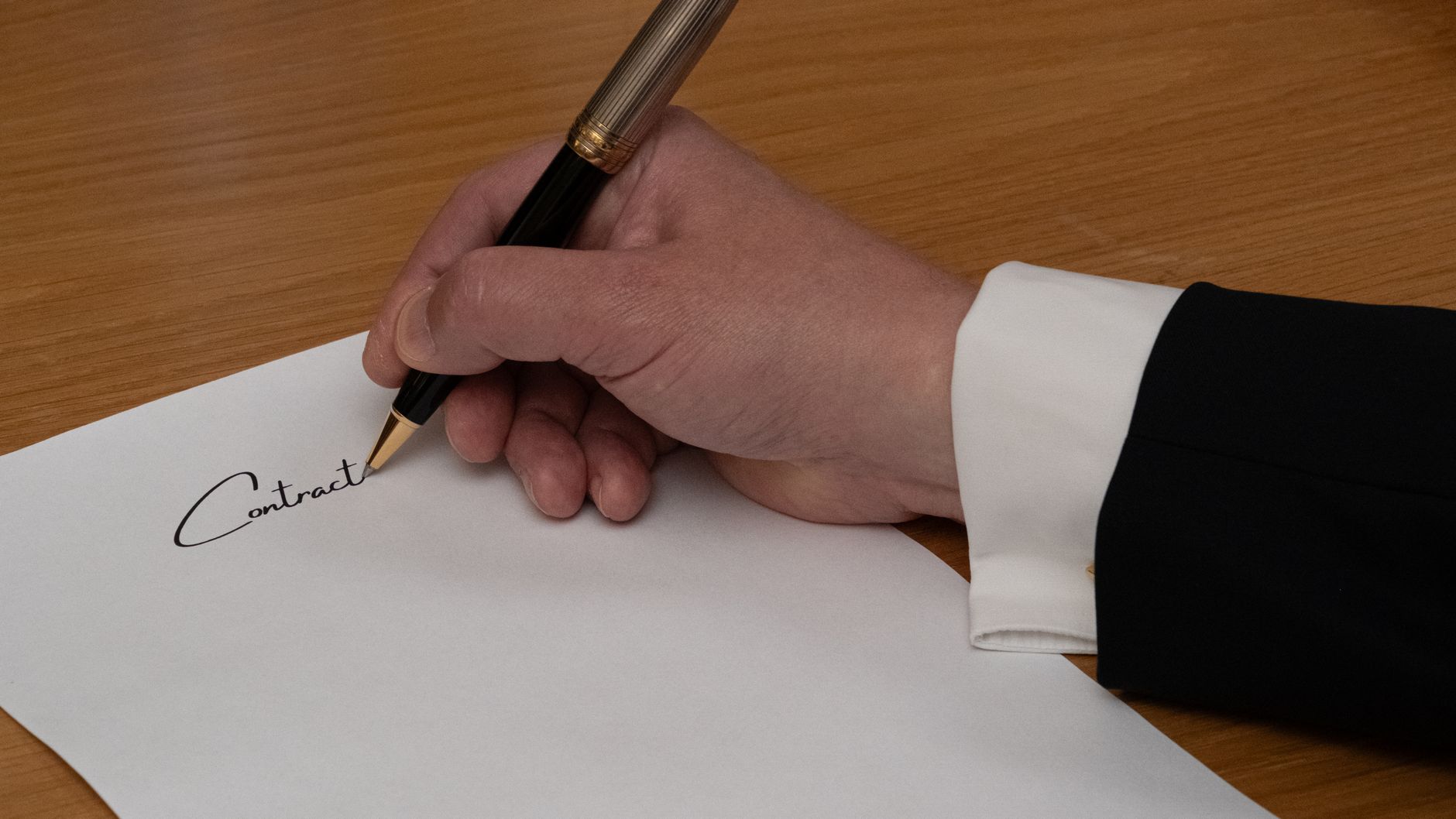
A client deposit policy is one of the simplest financial protections a creative agency can put in writing, and one of the most commonly skipped. Without it, studios routinely begin production, allocate team time, and book external resources before a single dollar has changed hands. When the relationship sours or the client disappears, there's nothing to fall back on. A clearly written deposit policy changes that by anchoring every new engagement to a financial commitment from the outset.
What a deposit policy actually does
A deposit policy isn't just about collecting money upfront. It performs three distinct functions. First, it qualifies the client: a prospect who refuses to pay a deposit before work begins is signalling something worth knowing early. Second, it covers the agency's real costs during pre-production, including discovery sessions, creative strategy, and talent coordination. Third, it removes the ambiguity that causes disputes later.
West Melbourne Studios treats the deposit as the official start signal for every project. No brief gets actioned, no crew gets booked, and no pre-production resource gets allocated until the deposit has cleared. That's not bureaucracy. It's a boundary that keeps the studio's work commercially viable. If you're still figuring out how to structure the broader payment terms around this, our guide on how to write a creative agency's payment terms covers the full payment schedule in detail.
How much to charge as a deposit
The right deposit amount depends on project size, client history, and risk. For most creative agencies, 50% upfront is the standard starting point for new clients. For projects exceeding $20,000 in production value, a staged structure works better: 40% at signing, 40% at the halfway milestone, and 20% on delivery. For returning clients with a clean payment record, 30% is defensible.
What you shouldn't do is charge a flat dollar amount that doesn't scale with project scope. A $500 deposit on a $30,000 production job covers almost nothing if the client cancels two weeks into pre-production. The deposit should reflect the real financial exposure the agency carries from the moment work begins.
Some studios tie the deposit percentage directly to their overhead budget, calculating how much it costs to run the studio for the duration of pre-production on a given project and ensuring the deposit at least covers that figure. It's a sensible floor.
What to include in the written policy
A strong deposit policy covers four things directly:
- Deposit amount or percentage, stated clearly for different project tiers (small, medium, large).
- Payment timing, specifying that the deposit must clear before any work, booking, or resource allocation begins.
- Refund conditions, explaining under what circumstances the deposit is refundable (typically non-refundable if the agency has begun work) and what happens if the client cancels at different project stages.
- Payment method, naming accepted methods and any bank transfer instructions, so there's no delay waiting on a client to figure out how to pay.
The refund clause deserves particular care. Many agencies write vague language like "deposits may be retained at the agency's discretion." That holds up poorly in a dispute. Write it specifically: if cancellation occurs after the discovery session but before the first draft, the deposit is retained in full. If cancellation occurs before the discovery session, 50% is refunded. Specific language protects you and shows the client you've thought this through.
How to present the policy to new clients
The deposit policy should live in two places: your services agreement and your client welcome pack. It's not a document to surprise someone with after they've verbally agreed to work with you. Present it during the proposal stage, explain it briefly, and treat it as a normal part of doing business rather than an unusual demand.
Framing matters. Studios that position the deposit as a "project commencement fee" or "production start payment" encounter less resistance than those who frame it as a protection mechanism. Both are true. Only one of those framings makes the client feel like a partner rather than a risk to be managed.
When a client pushes back, the most effective response is a direct one: explain that the deposit covers the real costs the agency incurs before any deliverable is produced, and that without it the studio can't fairly allocate its team. Most professional clients accept this without further discussion. Those who don't are worth noting.
Common mistakes that undermine the policy
Writing a deposit policy and then failing to enforce it is the most common mistake. Studios get excited about landing a large client, start work before the deposit arrives, and find themselves in a weak negotiating position when payment is delayed. The policy only works if it's applied consistently.
Three other mistakes come up regularly. Starting work "while the invoice is processing" is a phrase that costs agencies money. Accepting partial deposits on the assumption the remainder will follow before invoicing is due tends to create a precedent for irregular payment. And invoicing for the deposit separately from the services agreement, rather than including it as a line item within the signed contract, creates a gap where clients can claim they never formally agreed to the terms.
Keep the deposit clause inside your signed services agreement. When the client signs, they're agreeing to the deposit structure at the same time. That single step removes the most common points of friction.
Deposit policy for retainer clients
Retainer relationships work differently. Rather than a project deposit, many agencies charge one month's retainer fee in advance before the engagement begins. This performs the same function: it covers the agency's initial costs and signals genuine commitment from the client.
Some studios extend this to require a minimum initial term, so that the client can't cancel in month one after the agency has restructured its workload to accommodate them. If you haven't set a minimum retainer period yet, that's a separate but related boundary worth formalising before the deposit policy alone does all the work.
Deposits and retainer structures are both expressions of the same principle: creative work has real financial weight before the first deliverable exists. A written policy makes that visible, enforceable, and professional. Build it into your agency's standard documentation and it stops being a conversation you have to have every time a new project lands.