
Safety and compliance training is the one area of business communication where getting it wrong has real consequences. A staff member who misunderstands an evacuation procedure, a new warehouse worker who skips the manual handling steps, a contractor who assumes they know the site rules: these aren't just training failures, they're liability events. Video closes the gap between knowing a policy exists and actually understanding it, and it does so more reliably than a printed document handed over at induction.
West Melbourne Studios produces safety and compliance video for businesses across manufacturing, construction, healthcare, and professional services. The formats, the production approach, and the distribution method all vary by industry. But the underlying problem is always the same: procedures that sit in folders don't change behaviour. Video that's watched, retained, and revisited does.
Why written procedures fail compliance training
A written procedure is a legal record. It proves a policy exists. It doesn't prove comprehension, and it certainly doesn't prove retention. Studies in occupational health and safety consistently show that people retain far more from video than from text alone, particularly when a skill has a physical component. Watching someone correctly don PPE, operate a forklift, or run a fire warden sweep is categorically different from reading the same steps in a numbered list.
There's also a language and literacy dimension most businesses don't account for. A multilingual workforce or team with varying reading levels can miss critical safety content entirely when it's delivered only in text. Video with clear visuals, captions, and narration reaches those team members in a way that a compliance document doesn't.
The third problem is proof. Compliance frameworks in Australia, particularly those governed by Safe Work Australia and industry-specific codes of practice, require demonstrable training. A video platform that records completion, timestamps views, and logs quiz results gives businesses a defensible audit trail. A printed induction checklist signed by a distracted new starter does not.
What types of safety training work best on video
Not every safety topic needs the same treatment. Some lend themselves to scenario-based drama. Others work best as step-by-step procedure walkthroughs. A few are better served by animation, particularly when the subject involves internal processes the camera can't easily reach.
Scenario-based training shows a workplace situation unfolding, often incorrectly first, then correctly. This format works well for things like manual handling posture, hazard reporting culture, and how to respond to a near-miss. Watching a character make the wrong call and face consequences is more memorable than being told not to do the same thing.
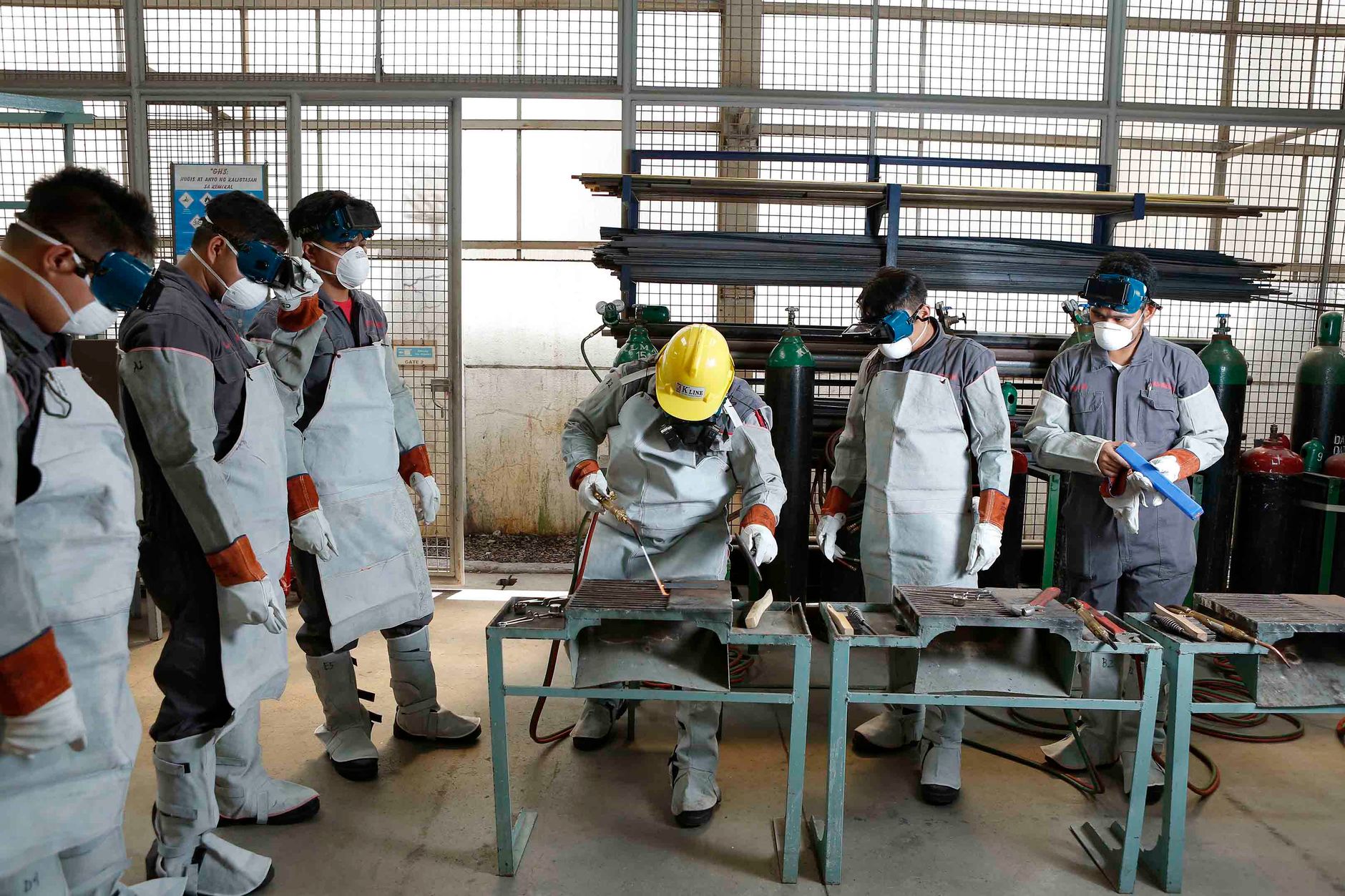
Procedure walkthroughs are exactly what they sound like. A trainer on camera, in the real environment, moves through a process step by step. Lockout/tagout procedures, chemical handling protocols, machine guarding checks. These need to be shot on location, not in a studio, because the environment itself is part of what staff need to recognise.
Animation suits topics like fire load management, electrical safety principles, or the mechanics of manual handling injury. When the process is invisible to the naked eye, animation makes it concrete. It's also the right choice when the subject matter is too hazardous to recreate safely on camera.
How to structure a safety training video
The structure of a compliance training video differs from a marketing video in one important way: it has to survive being watched at 1.5x speed by someone on their lunch break. That's not a complaint, it's a production constraint. The content needs to be tight enough to respect that reality while being specific enough to actually train the viewer.
Keep each video to a single topic. A 25-minute induction that covers fire safety, first aid locations, hazard reporting, PPE requirements, and emergency contacts is too much. Four 6-minute videos covering those topics individually are far more effective and can be rewatched selectively when someone needs a refresher on one area.
Open with the consequence, not the procedure. Starting with "this video covers our manual handling policy" prompts a mental check-out. Starting with "last year, musculoskeletal injuries cost Australian businesses 4.1 billion dollars in workers' compensation" prompts attention. The stakes have to land before the procedure will stick.
End with a knowledge check. A short quiz embedded in the platform, or linked directly from the video, confirms comprehension and feeds the audit trail. Three or four questions covering the critical points is enough. The goal isn't to test memory, it's to make the viewer engage one more time with the content they just watched.
Production considerations specific to compliance video
Safety training video is shot in real workplaces, and that creates production challenges marketing video doesn't face. Access to live production environments, coordination with shift schedules, and the need for actual equipment rather than props all add complexity to the shoot.
Talent is another consideration. Using real staff as on-screen talent rather than actors has significant advantages in compliance video: the environment is familiar to them, the procedures are authentic, and other staff respond better to seeing a colleague than a stranger. It also reduces scripting time because subject matter experts don't need to be taught what they're demonstrating. The production team at West Melbourne Studios typically does a thorough pre-production walkthrough with a safety officer or operations manager before a single camera is set up.
Accessibility is non-negotiable in this format. Every safety training video should carry closed captions as a baseline. For businesses with multilingual workforces, dubbed versions or captioned alternatives in relevant languages are worth the additional production cost, particularly in high-risk industries where a misunderstood instruction can cause serious harm. If you're thinking through how video for professional development and skills training fits into your broader learning strategy, the same accessibility principles apply there.
Distribution and version control matter more than most businesses realise
Safety and compliance training video has a shelf life. Regulations change. Procedures are updated. Equipment is replaced. A video that accurately reflects your 2023 site layout is potentially misleading once the layout changes in 2026. This is a problem businesses frequently underestimate, and it's one of the reasons version control is a core part of any compliant training video library.
Every video should carry a version date on screen, not buried in the metadata but visible to the viewer. When procedures change, the old version should be retired in the distribution platform, not just replaced, so it can't be accessed by a contractor who bookmarked it two years ago.
Distribution platform choice matters too. For internal staff training, a learning management system that records completion is standard. For contractors and site visitors, a QR-code-triggered video that lives on a company intranet or a password-protected landing page is often more practical. The key requirement is that the record of who watched what, and when, is preserved and exportable for audits.
If your business is already using video for franchise onboarding and compliance training, the same distribution architecture applies across both use cases and can often share the same platform infrastructure.
Getting sign-off from safety officers before production starts
The most expensive mistake in safety training video is producing content that a work health and safety officer or compliance manager then requires to be reshot. This happens when production begins before the subject matter expert has reviewed and approved the script and procedure walkthrough in detail.
West Melbourne Studios builds a formal sign-off stage into every safety video project before camera ever rolls. The safety officer or operations lead reviews the script, the shot list, and the planned on-screen demonstrations. Any inaccuracies in the proposed procedure are caught at this stage, not in the edit suite.
The same approval rigour applies to finished content. Before distribution, the completed video should be reviewed by the responsible person in the business who can confirm that every procedure shown is current, accurate, and compliant with applicable standards. A signed approval document dated at that review is part of the audit trail, not optional paperwork.
Safety and compliance training video is one of the highest-return investments a business can make in video content. It reduces incident rates, strengthens audit readiness, and reaches staff in a way that written documents consistently fail to do. The production investment is real, but so is the cost of the alternative.