
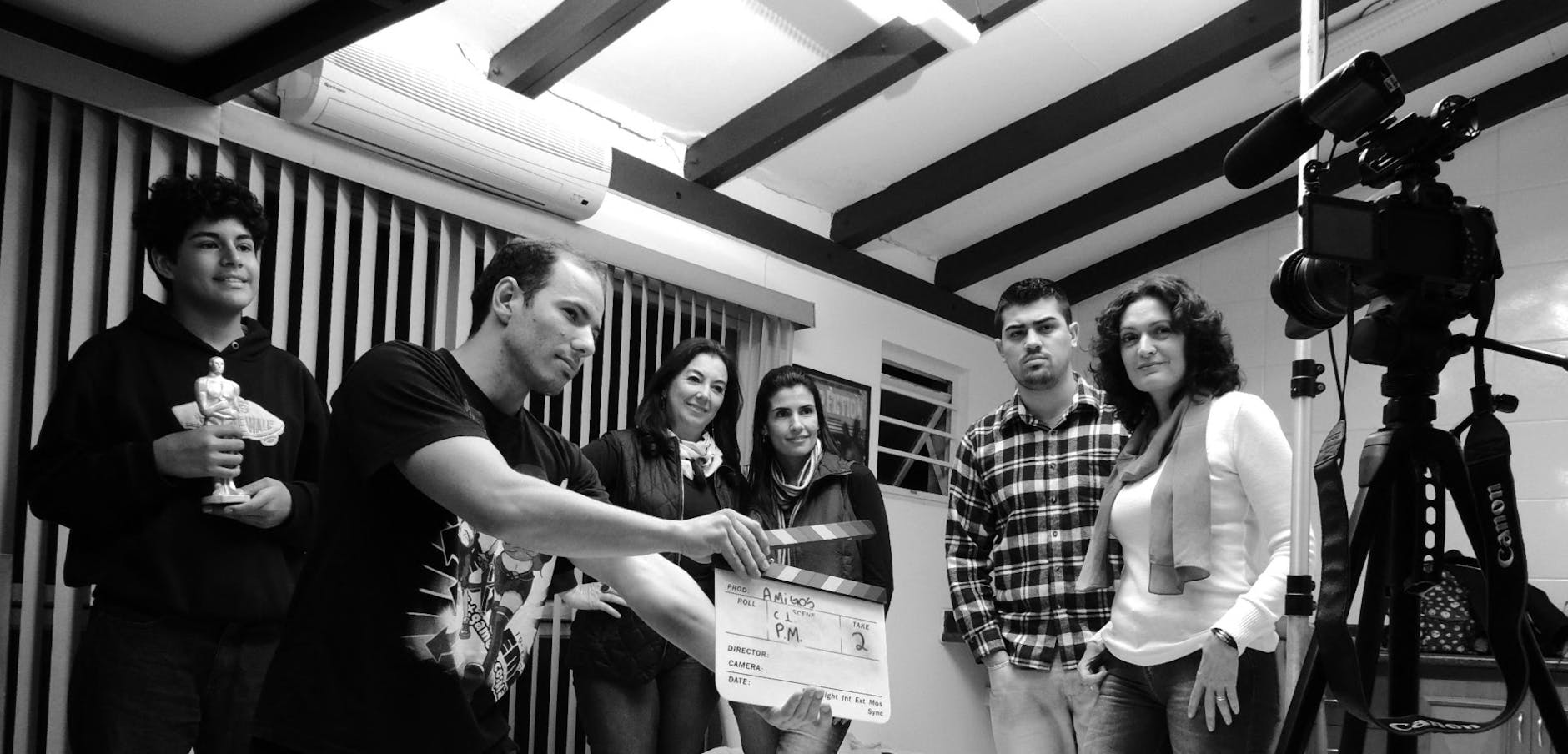
Most investor pitches don't fail on the idea. They fail on the delivery. A founder who believes in their business but stumbles over the traction slide, loses the room during financial projections, or closes without a clear ask rarely knows any of this happened. The feedback from colleagues is vague. The panel's body language is hard to read in the moment. Video changes that calculus entirely. Recording your pitch rehearsals gives you something no room full of supportive colleagues can: an honest, repeatable record of exactly what you looked and sounded like.
Why rehearsal footage works where live feedback doesn't
When someone watches you pitch and then tells you it "felt a bit slow in the middle," that's almost useless. Which slide? Which sentence? How slow? Video turns a subjective impression into a specific, timestamped moment you can return to and fix.
West Melbourne Studios works with businesses preparing high-stakes presentation content, and the pattern is consistent: founders who review their own rehearsal footage improve their delivery faster than those who rely on verbal coaching alone. Watching yourself on screen forces a kind of objectivity that's simply not available in real time. You notice the filler words. You see the moment your eye contact drops. You catch the five seconds of dead air after a question you weren't expecting.
Recording also creates a baseline. Your third rehearsal should look measurably different from your first. Without footage, that progression is invisible. With it, you can track specific improvements: fewer "um" fillers, tighter transitions between slides, a stronger close.
What to capture in a rehearsal recording
A phone propped on a stack of books will do more than nothing, but it won't give you what you actually need. To make rehearsal footage genuinely useful, capture the following from the start:
- A wide shot that shows your full body, so you can assess posture, hand gestures, and whether you're moving purposefully or fidgeting
- A second angle from slightly above eye level, simulating what a panel on the other side of a boardroom table actually sees
- Clean audio, which often means a clip-on microphone rather than relying on a laptop's built-in mic
If you're pitching remotely via video call, record the screen output directly. The framing a panel sees through a webcam is a different problem to solve than an in-person delivery, and the footage should reflect the actual context.
How to review footage without crushing your confidence
The first time most founders watch themselves pitch, they focus on surface-level discomfort: their voice sounds different, they don't like how they look. That reaction is universal and completely irrelevant to improving the pitch. You need a review framework that keeps attention on the variables that actually affect investor decisions.
Watch each recording three times, each time looking for something different. On the first pass, track the narrative: does the story flow logically from problem to solution to traction to ask? On the second, mute the audio and watch only the visual delivery. On the third, close your eyes and listen only to the words and tone. Each pass reveals a different layer of what's working and what isn't.
This is the same discipline West Melbourne Studios applies when reviewing corporate video content during production. Separating picture from sound in the review process surfaces problems that watching both together lets you overlook.
The specific pitch elements video reveals most clearly
Some parts of an investor pitch are harder to self-assess than others. Rehearsal footage is particularly revealing for three areas.
The opening 90 seconds. Investors decide quickly whether a founder commands the room. Watch your opening without reading from your notes. Are you making eye contact? Is the first sentence a hook or a preamble? This is the segment that most benefits from being recorded, reviewed, and reshot at least four or five times.
The Q&A simulation. Ask a colleague to throw you hard questions mid-rehearsal. Record the whole exchange. What you say matters less than how you say it. Defensiveness, long pauses, and deflection all show up clearly on video in ways they don't register to the person asking the question in real time.
The close. Every pitch should end with a specific, confident ask. Watch how you land it. Does your energy drop in the final 30 seconds? Do you trail off or finish with a question when you should be making a statement? A weak close is one of the most common pitch killers, and it's almost invisible without footage.
Using timestamps as a revision tool
After each review pass, create a simple timestamp log: the minute and second where something needs work, and a single-line note on what to fix. Don't write essays. "2:14 — lost eye contact during market size slide" is enough. "4:50 — said 'um' four times in 20 seconds" is enough. The log gives you a concrete agenda for the next rehearsal session rather than a vague sense that things need to be better.
Compare timestamp logs across multiple rehearsals. If the same problems appear at the same moments in recordings one through three, that section needs a structural rewrite, not just more practice. Video makes that pattern visible in a way that no amount of verbal feedback will.
When to bring in a professional video team
Self-recorded rehearsals will take you far. For pitches involving significant capital, an acquisition conversation, or a presentation to a panel with very little margin for a second chance, a professionally shot and reviewed session adds a different layer of value.
A production team can set up broadcast-quality multi-camera coverage, give you the experience of presenting under proper studio lighting (which changes how you carry yourself), and produce a clean edit you can share with a communications coach for remote feedback. West Melbourne Studios builds this kind of rehearsal package for founders and executives who are weeks out from high-stakes presentations.
The production investment is a fraction of what's at stake in the room. If you're asking for $2 million and you spend $3,000 getting the delivery right, that's not an expense. It's preparation with a clear return.
For founders who want to go deeper on how video can support the broader capital-raising process, the approach to investor relations and fundraising video covers how to build credibility with investors before and after the pitch meeting itself. And if you're preparing a formal pitch document to accompany the presentation, the guidance on video for tender and pitch submissions is directly applicable to investor decks and summary reels.
Record the rehearsal. Watch it properly. Fix the specific moments. Repeat until the footage shows a founder who knows exactly what they're asking for and why the answer should be yes.